
This is the CHamoru Culture Through the Eyes of Cultural Dance
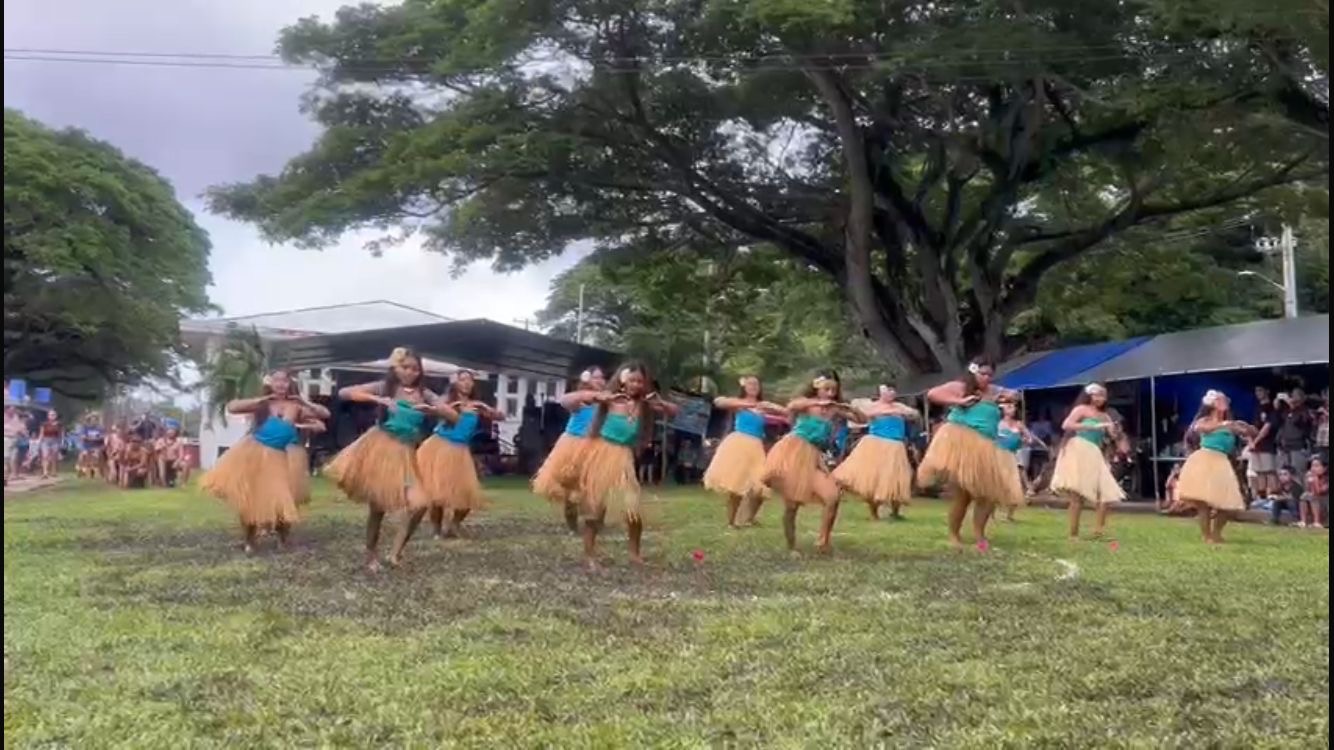
Hundreds of years of colonization on Guam have led to the erasure of many aspects of its culture. One of those aspects is CHamoru cultural dance, which is still in its infancy, or its neni (baby) stages today.
Despite their recent development, cultural dance groups are still making moves, and not only during March, which is Mes CHamoru (CHamoru month). Every group has their respective titles, but they all convene under one term: guma’ (house/home).
Guma Nina’en Acho Latte and Guma’ Kinalamten i Taotao Tano’ shared what their respective guma’s mean to them and what it does for Guåhan (Guam) with The Independent.
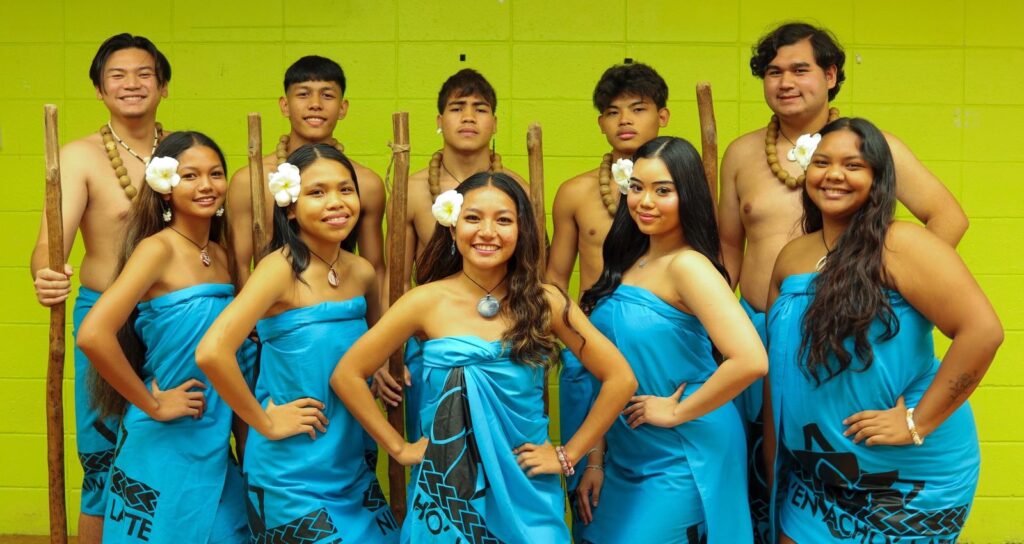
The leader of Guma’ Nina’en Acho Latte is Fafanague (teacher), Raymond Lujan. He shared that he thinks of the guma’ as something that was gifted to him. “They are blessings to me,” Lujan said. “I always like to use the word Nina’en (gift), and the Acho Latte (latte stone pillar) is the foundation.”
This guma’ has been active for close to 15 years. It is fueled by inspiration, but not just the kind that just manifests.
“I like to draw inspiration. It’s kind of on the whim,” Lujan said. “We don’t sit there and wait for inspiration to come. As we go about our lives, everything starts to inspire.. I mean, even as far as just when we’re sitting down to have dinner, have lunch, something will start to move — somebody will pick up a guitar.”
This inspiration influenced a song that the group created, which is now a part of their routine. While they were at Guåhan’s annual Liberation Parade in the summer celebrating the liberation of their island, Lujan “picked up the guitar and started singing the song version of a chant, and then we added to it. And so now it’s now a song that we do as part of our routine. Inspiration comes from anywhere,” he said.
The atmosphere of komunidat (community), familia (family) and kottura (culture) helps to inspire cultural artistic expression. “It’s just more of the feeling that you have from a certain thing in life,” said Eden Cruz, a dancer from this guma. “When you have that feeling, and you really cannot put it into words, you could put it into a song form, and not just a song form, but you could also put it into a dance form, which is telling the story through another aspect that people wouldn’t see it as.”
This guma hopes that people don’t only “celebrate Mes CHamoru during Mes CHamoru,” Lujan said.
Dancer Caleb Cruz said that March isn’t just the month to “implement Mes CHamoru [just] because it’s so widely accepted that this is CHamoru Month…you don’t have to be just a dancer to be CHamoru, you don’t have to be just a weaver. There are different art forms, there’s different styles…there is nothing more powerful than a group of people who are willing to make a change”
As a CHamoru woman, I believe being CHamoru isn’t just about celebrating CHamoru pride during the month of March. It’s about celebrating that pride all the time, wherever you are in life.
The CHamoru culture has so many kinds of cultural expressions. Whether it be music, art, weaving, chanting or dancing, it’s all meant to serve one purpose — to hold onto who we are as a CHamoru people so that going forward no one can take anything else away from us and our culture.
“[This community] reminds me of why I do this,” Caleb Cruz said. “There’s a lot to defend, but what is special to me is that most, if not all, practitioners who fall under a guma, who fall under a fafanague, understand and are so willing and at the ready to defend what they do, what their teachers do, what we all do… There’s nothing more powerful than a group of people who are willing to make a change.”
Guam’s cultural dance educates their people. “In all of these presentations when we do them, we are educating our people about where we come from.. and give them a sense of that pride.” Lujan said. “I’m going to be CHamoru until the day I die, and it’s not only during Mes CHamoru.”
Part of the reason why CHamoru cultural dance is still in its neni stage is because “none of this dancing was really documented [before],” Eden Cruz said. Francisco “Frank” Rabon, who is the Master of Cultural Dance on Guam, told Cruz that “no one really knows what we used to do, but this is our way of defending who the CHamoru people were. We get to write our own story, and we get to tell future generations this is what we did.”
Although all Pacific Island cultures are considered to be relatives of one another, the CHamoru culture isn’t like other Pacific Island cultures in a way. Lujan said, “The other Pacific Islands have had their culture, their language, their dance, for thousands of years,” he said. “We were here for thousands of years, but right in the middle, we ended up with 300 years of colonialism. Every colonizer that came in erased a part of our culture. Most people don’t understand that.”
It’s important to acknowledge and appreciate these guma’s for what they do and for the dedication and passion shown while they do it. Lujan said they will continue to build this practice so that it will eventually become a part of their history.
“We get to write our own story, and we get to tell future generations this is what we did,” Lujan said. “Our culture will continue to thrive through my students, through the students who belong to other guma. And that’s the special thing about it is for us right now we’re writing that history. And it’ll eventually become a tradition. And then we won’t have to defend anything.”
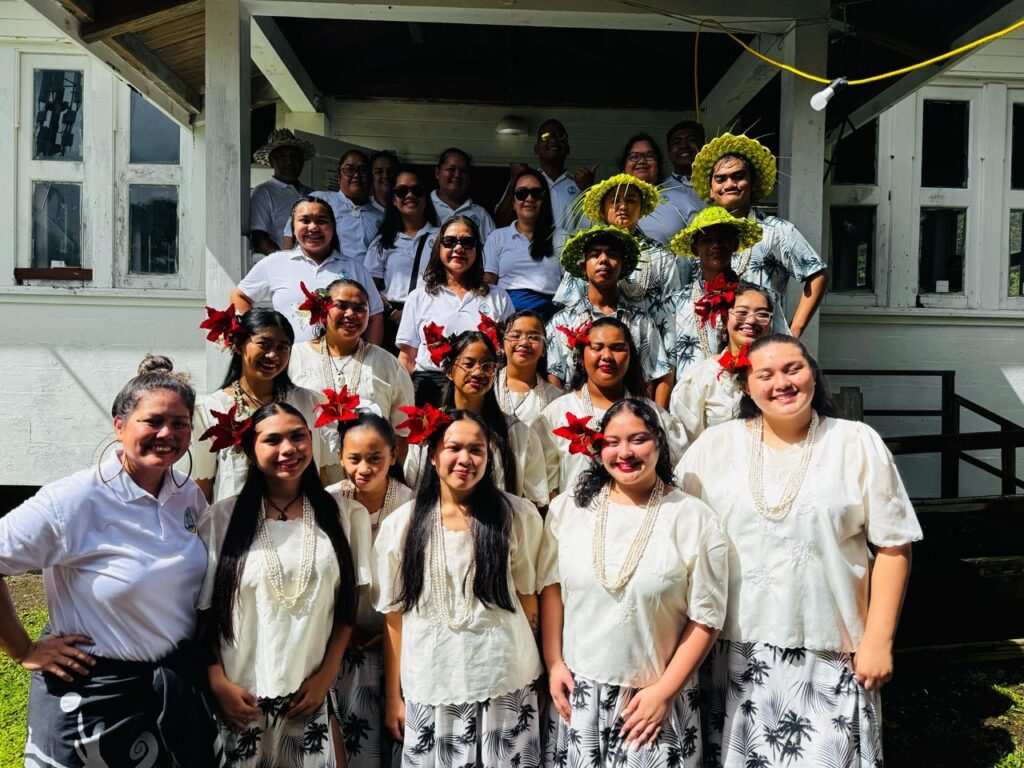
The leader of Guma’ Kinalamten i Taotao Tåno’, Saina Maxine Bigler-Tainatongo, started her guma’ after her students represented the island at the Saipan Flame Tree Festival, which is a festival that celebrates Sapan’s culture through the arts and food.
The group of kids and parents that came together for these practices showed the dedication and commitment,” Bigler-Tainatongo said, “which then made me turn to them and ask, is this something that we want to continue?”
Abreanna Cruz, a dancer from Guma’ Kinalamten i Taotao Tåno’, said, “The love and the passion is here and it’s kind of like an indescribable feeling to be together to share a common belief.” She said to her guma’ means showing up and doing her part in carrying forth the message that they want to share with their people.
Message is an integral part of cultural dance, as it carries stories for the CHamoru people.
Dancer Daniel Repolla found his way to Guma’ Kinalamten i Taotao Tåno’ by the desire to immerse himself in the culture, the way the generation after him had. The flame of this desire was born on a day he went to pick up his younger brother from dance practice.
“[The students] were really speaking the language, and they were dancing and having fun and here I am, mid-20 year old person [who] doesn’t know the language,” Repolla said. “My inspiration [to dance] comes from the dancers and how they enjoyed it, and that’s how I tell my story because I didn’t have the luxury to learn the language growing up.”
Through this cultural expression the CHamoru people are able to embrace who they are.
“I just want everyone to be able to feel proud to be CHamoru,” dancer Iyanna Lujan said. “I want others to want to put their feet in there, too, and want to explore the culture more and who they are. That’s what I’m doing with dancing.”
Her older sister Kianna Lujan, with whom she dances in Guma’ Kinalamten i Taotao Tåno’, said, “I would like people to know that this actually does really strengthen us to continue and keep our culture and language alive. Even learning a simple chant or sımple song.. . you can learn so much with just understanding what it means.”
Abreanna Cruz said that you don’t only need one designated month to celebrate who you are. “I think that’s a big thing that we try to convey to the island is to educate the youth,” she said. “You don’t need to wait so long to learn how to speak your language, [to] sit down and practice because, honestly, there’s more to being CHamoru than just singing and dancing. It’s your entire lifestyle.”
In this guma’ dancers earn names, “kind of like a baptismal,”Bigler-Tainatongo said. Kianna Cruz’s CHamoru name is sinahi, Iyanna Cruz’s name is kalatsutsa, Lujan’s name is lina’la, and Repolla’s name is huli. These names are used while executing their demonstrations, and cach name is determined by the individual’s personality and how they carry themselves.
The CHamoru culture isn’t exactly like other Pacific Island cultures. There is still a lot left to fight for, defend and rebuild. The art of cultural dance is one part of the beautiful island culture that Guam carries, maintains and takes care of. It’s guma’s like Guma’ Kinalamten i Taotao Tåno’ and Guma’ Nina’en Acho Latte that help to keep the culture alive, to avenge what was lost, and rebuild what is left. This is the CHamoru culture through the eyes of cultural dance.
Regions: guam