
Lost & Found Film and Independent Arthouse Cinemas: In Conversation with Leslie McMichael
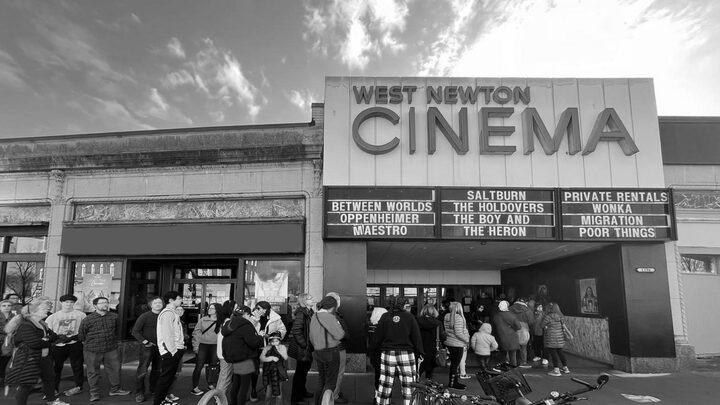
“Snow White” (1916) was shown for one night only — and not one more — on Screen One of The West Newton Cinema, an independent theater nestled between a massage parlor and audiologist ten miles west of Downtown Boston. Current showings are pasted on the low marquee and the ticket booths are covered in multicolored post-its and flyers. It has stood on Washington Street for nearly 90 years, and was recently saved by the West Newton Cinema Foundation (or WNCF), a nonprofit organization formed by the local community to keep the theater alive through financial difficulties and the age of streaming.
A group of women sat in front of me, their hair varying shades of gray, and they were all saying the same thing to each other: they were so glad to be in a real theater. A real theater indeed, the West Newton Cinema never abandoned the old squeaky chairs, with patterned cushions and mint tile below; the walls, art deco, were adorned with gold trim. I caught a glimpse of the soundcheck being conducted by the cinema staff and guest performers. Sisters Leslie McMichael, harpist and composer, and Barbara McMichael, violinist, have brought an original score to accompany the film that had previously been lost for over 75 years.
As I sat in the audience before the show, Leslie plucked at her harp (I heard her go “doiiing!”). “This movie has such great characters to bring to life with our music. People in the audience will hear jaunty music for the dwarves, grand fanfares for the Prince and Queen, some dark, dramatic music when Snow White is threatened by evil forces,” the harpist said. The McMichael sisters and the West Newton Cinema staff were immersed in conversation about the night to come. The audience was enamored by their craft, and it was this special showing that brought them all together.
Their project was inspired “entirely from me watching and re-watching the 1916 movie,” Leslie said. “Inspired by the expressive faces and acting of the silent [film], I started notating musical ideas and develop[ing] themes for both harp and viola until I have a score for the 63 minute film.”
I thought it was bizarre that I had never ventured out to West Newton to see a showing of anything, or heard of my peers doing the same. Without traffic, it was a 15 minute drive east and accessible by the commuter rail. Its size and screenings rival those of other small, Boston and Boston-area arthouse cinemas. So, what is it? Why did the WNCF have to be created in the first place?
INTERVIEW WITH LESLIE MCMICHAEL
LILIYA SHAFIR: Your original score for “Snow White” is what so badly made me want to come to this screening. I’m really intrigued by the “recurring musical themes” used for each character. Tonally, how does each arrangement accentuate each character?
LESLIE MCMICHAEL: This movie has such great characters to bring to life with our music. People in the audience will hear jaunty music for the dwarves, grand fanfares for the Prince and Queen, some dark, dramatic music when Snow White is threatened by evil forces. And there are some lovely themes for Snow White that pop up a couple of times.
LS: Did your score take inspiration from the Disney animated film, or any of the many live action remakes – or anywhere? Another score from a completely separate film or performance?
LMcM: As you know, the silent film preceded the Disney one by 20 years. There are many scenes in the silent [film] that also appear in very similar fashion in the animated movie. But this score came entirely from me watching and re-watching the 1916 movie. Inspired by the expressive faces and acting of the silent [film], I started notating musical ideas and develop[ing] themes for both harp and viola until I have a score for the 63 minute film!
LS: I see that you’ll be performing with your sister, Barbara. With yourself as a harpist and her on the viola, what is the relationship between the two instruments in your eyes, particularly in the “Snow White” score?
LMcM: I am so lucky that my violist sister Barbara helps me bring this movie alive with her viola. I know the harp really well, but I do not play viola, so she is able to tell me if the viola part I composed work[s] for her instrument! I think harp and viola blend so beautifully together. It’s just a joy to play music with my sister.
Regions: Boston