
‘Z’: How a Single Letter Paved the Way for Government Criticism
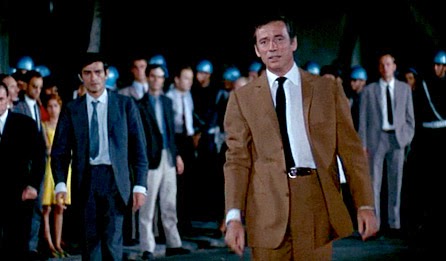
Post-WWII, the sixties were a period of military dictatorships and one-party governments around the world. In Europe, one of the only countries that had a military dictatorship, or junta, was Greece, after a bloodless coup orchestrated by the leadership of army colonel and subsequent Prime Minister Georgios Papadopoulos. This military junta inspired French-Greek filmmaker, Costa-Gavras, to create the film “Z” in 1969. Due to its critique of the government, the film would not be released in Greece until after the fall of the junta.
“Z” starts with a left-wing politician, The Deputy (Yves Montand), giving an anti-governmental speech in an unspecified city. Immediately following the speech, The Deputy is assassinated by an anti-Communist man in the back of a delivery van. Once the Deputy’s death is confirmed, an investigator, referred to as the Examining Magistrate (Jean-Louis Trintignant), takes the case in an attempt to uncover the truth. Through his interrogation, it is revealed that military leaders orchestrated the assassination, ultimately leading to their imprisonment.

The film concludes in a pessimistic tone. Despite their imprisonment, the military leaders are put in a position of power in the government once the bloodless coup is orchestrated due to the lack of prosecution. Severe consequences are given to the investigators that helped bring the truth to light; the Examining Magistrate is taken out of office, and the journalist covering the events is arrested. Meanwhile, a number of political opponents belonging to the left-wing party die under mysterious circumstances.
The film’s narrative is based on the real-life investigation of the murder of Grigoris Lambrakis, who was killed by the Greek government in 1963. Lambrakis was a Greek left-wing politician and member of the Hellenic Parliament; similarly, the Examining Magistrate was based on jurist Christos Sartzetakis. Lambrakis was against the involvement of Greece in NATO, and the reliance on the U.S. for economic aid. He also advocated for Thessaloniki’s military base to be disarmed. Lambrakis’ pacifist views and leftist opinions made him an enemy of right-wing forces.
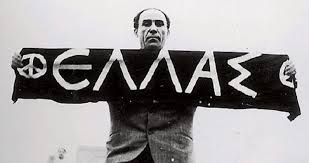
Credit: Marathon Run Museum
The seven years spent under junta rule was a period of repression for the Greeks. The government placed restrictions on music, strictly regulated large meetings of students, barred the existence of opposing political parties in the parliament, and mandated clothing for men and women; women couldn’t wear miniskirts and men would be thrown to jail if their hair was considered to be too long. To defy this censorship, Costa-Gavras gave his film the title “Z” for its multi-entendre significance. In Greek, “Z” is pronounced as “Zei,” which translates to “he lives,” an allusion to Lambrakis’ disappearance which the government failed to bury. It is a sentiment also captured in the film’s closing scene, where “Z” is superimposed over The Deputy’s photo.
The letter became a leftist political insignia, and was used as a slogan by Lambrakis’ followers in protest of his murder by the government.
“Z” gained international recognition upon its release, helping establish the political thriller genre. The film was nominated for Best Foreign Language Film at the Academy Awards in 1970, and The New York Film Critics Circle awarded it Best Film of the Year in 1969, making it the first foreign language film to receive this accolade.
In 1967, martial law was introduced in Greece. Due to the public’s general dissatisfaction with the junta, there was an attempt to assassinate the party’s leader, Papadopoulos. The perpetrator, Greek politician and poet Alekos Panagoulis, was unsuccessful in killing Papadopoulos, leading to his arrest and torture.
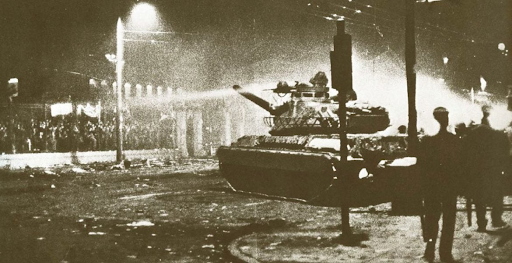
Credit: Greek City Times
Continuous small efforts of resistance and defiance eventually led to the downfall of the junta. The biggest event of opposition towards the government was the Polytechnic uprising on Nov. 17, 1973, when many students and citizens overtook the National Technical University of Athens, demanding the Regime of the Colonels step down from power. In response to the uprising, the junta used military tanks to barge into the university’s premises, killing the protestors. All the same, the junta later collapsed in 1974.
Though “Z” is an allegorical depiction of Greece’s struggle under totalitarianism, the nondescript nation makes the message of the film timeless — and relevant today.
Regions: Boston