
The United States, Its Secret Origins, and the Deflation of ‘Killers of the Flower Moon’
I have a vivid memory of sitting in my Advanced Placement U.S. History class in 2008 and running my finger along the single line of text covering Indigenous People. It was about the Trail of Tears. Years later, I relearned American history through the book “An Indigenous Peoples’ History of the United States” by Roxanne Dunbar-Ortiz and unlearned propagandas like “manifest destiny” and the lyrics to “This Land is Your Land.”
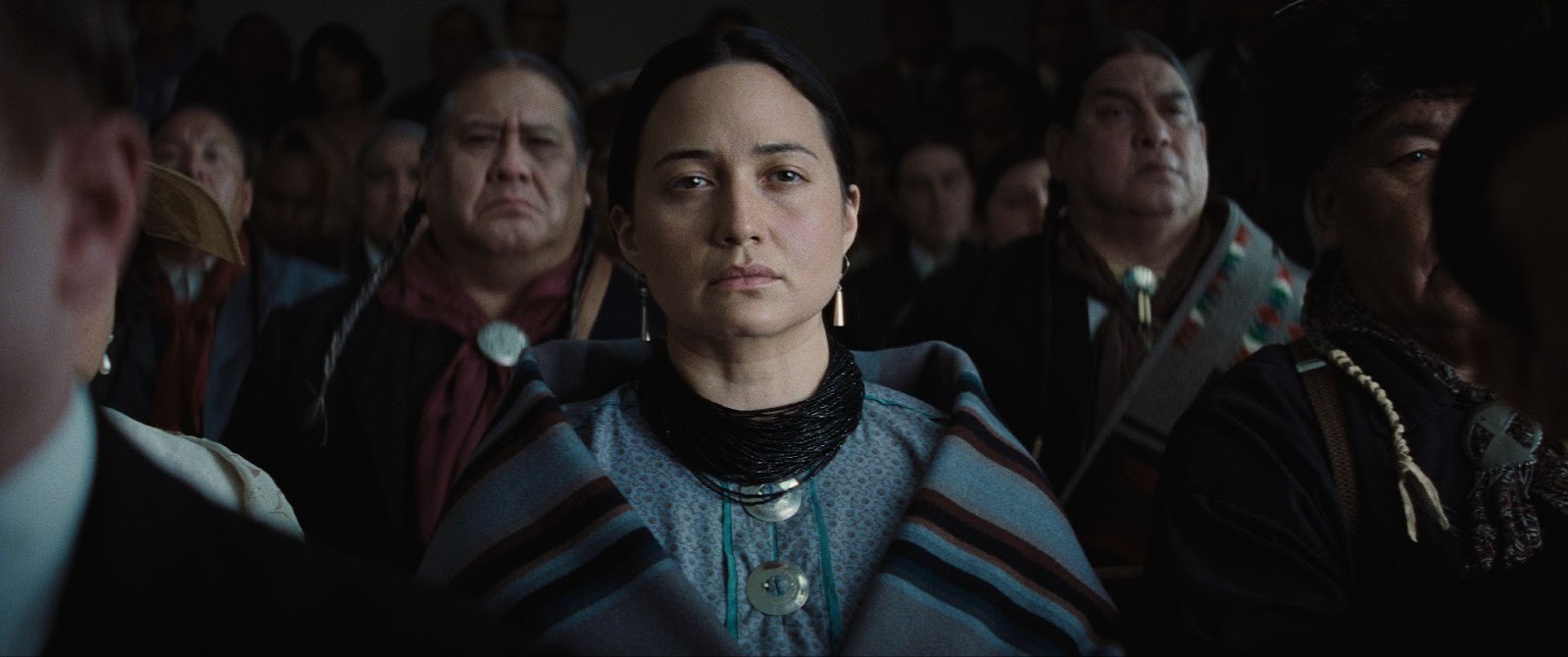
At last year’s Academy Awards, Lily Gladstone was the first Indigenous American to be nominated for Best Actress. Her nomination was one of 10 Oscar nominations for Martin Scorsese’s film “Killers of the Flower Moon,” which many celebrated as progress for Indigenous representation in Hollywood.
Scorsese is largely considered one of the best Hollywood directors. That, combined with the film’s three-hour runtime and big-league stars Leonardo DiCaprio and Robert De Niro, makes “Flower Moon” the most broad-reaching and cutting-edge piece of native representation to date.
Gladstone is of Piegan Blackfeet, Nez Perce and European descent. She was largely considered the Oscars front-runner after her performance clinched the Golden Globe Award for Best Actress and the Screen Actors Guild Award for Best Female Actor in a Leading Role — Gladstone became the first Indigenous woman to win either.
But by the end of the Oscars ceremony, “Flower Moon” left empty-handed.
“Killers of the Flower Moon” is an adaptation of David Grann’s award-winning true crime book of the same title, chronicling the Indigenous Osage Nation’s rise to wealth. The Osage were forced to move from their original land, modern-day Kansas, to Oklahoma. In the 1920s, when vast oil reserves were discovered beneath their land, the Osage people went “from being among America’s poorest to the richest people, per capita, in the world.”
An ensuing period of unceremonious, frequent Osage murders became known as the Reign of Terror.
“Flower Moon” is the first major portrayal of the atrocities white settlers committed against this land’s original people. The lack of public exposure to the Reign of Terror reflects the United States’ pattern of silencing its Indigenous people. A Reclaiming Native Truth study showed that “78% of Americans knew little to nothing about Indigenous people.” Many Americans “weren’t even sure Indigenous Americans still existed.”
For the film, members of the Osage Nation were hired both on- and off-screen to ensure the accuracy of dress, language and visual representation, setting new precedents for Indigenous American representation in pop culture.
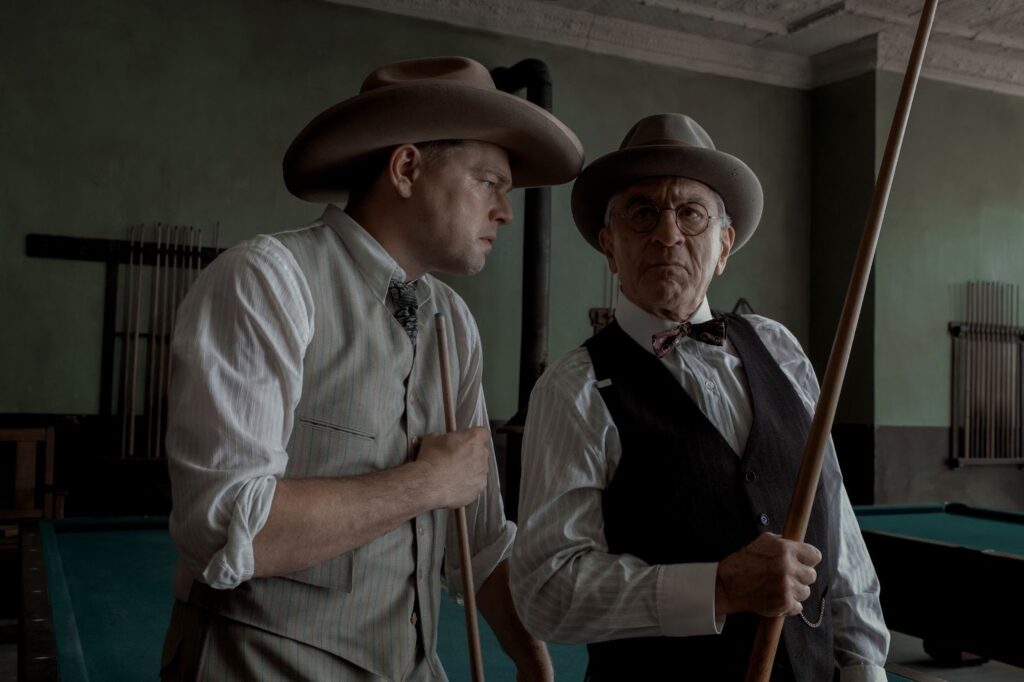
Yet it still misses the mark. The screenplay was both written by and narrated through the eyes of white men. Ernest Burkhart (DiCaprio), a newcomer to Osage territory, is taken in by his uncle, businessman William Hale (De Niro). Under Hale’s guidance, Burkhart courts and marries Mollie (Gladstone), a wealthy Osage woman. Meanwhile, Mollie’s family, all Osage, begin to die one by one. After a drawn-out FBI investigation and court case, Hale and Burkhart are found guilty of the murders.
I walked out of the theater feeling an emptiness from the violence-laden narrative. So I rented Grann’s book from the library and learned that once Hale and Burkhart were firmly behind bars, the FBI case “closed with great triumph, even though the bureau had not yet connected Hale to all twenty-four murders.” Hale and Burkhart weren’t responsible for all the murders — not even close.
It took some digging outside of Grann’s book to find that the FBI’s count of 24 murders was a major deflation. Chief Standing Bear, the current leader of the Osage Nation, estimates that at least 150 people were murdered during the Reign of Terror. To this day, many of those murders remain unsolved.
“My frustration with the film is similar to my frustration with David Grann’s book,” said Robert Warrior, a member of the Osage Nation and professor at the University of Kansas. “It doesn’t provide the context of what enabled these murders and lots of other murders to happen: the federal policy of allotment, including the development of a bureaucracy, which made Native resources available to non-Osagers or non-Natives.”
Racist government legislation forced the Osage people, along with other Indigenous American communities, to be dependent on and vulnerable to outsiders. The killer wasn’t just greedy individuals, it was colonization.
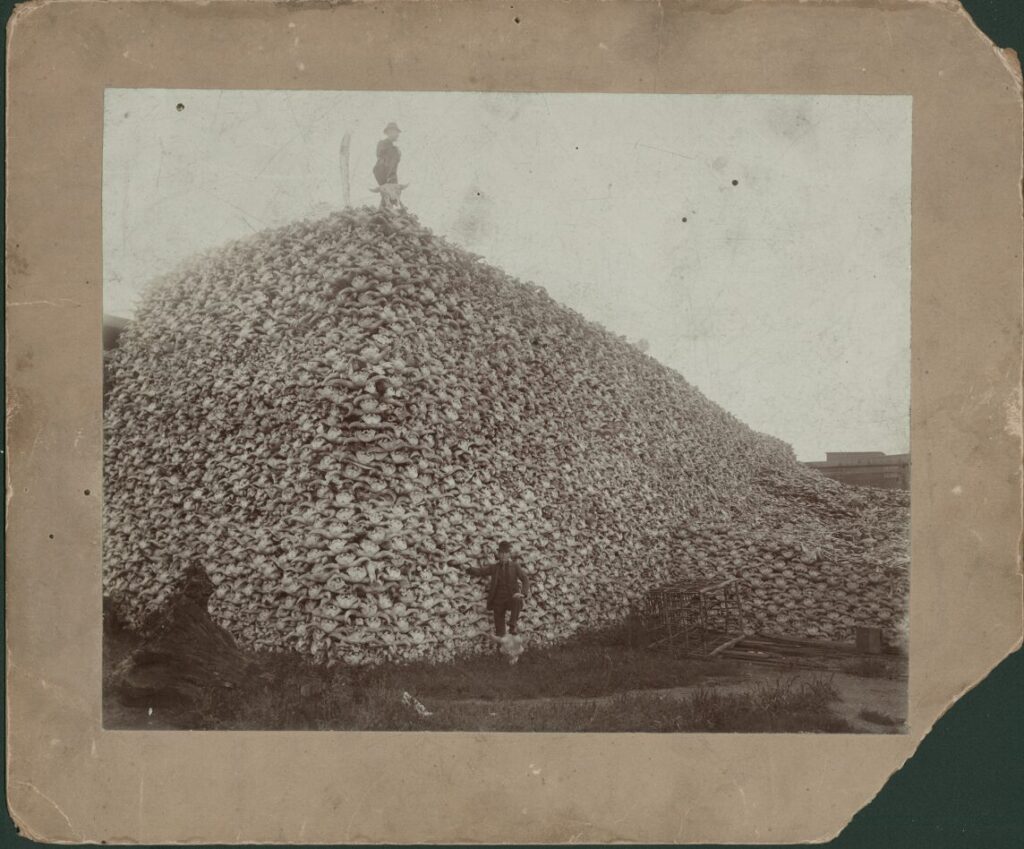
Beyond cinema, neglecting to address or represent colonization is interdisciplinarily true, extending to legislative and academic fields. A 2024 Tennessee state law restricts the instruction of concepts that suggest the U.S. government is “fundamentally or irredeemably racist or sexist.” Pre-purchased stacks of Grann’s “Flower Moon” sit unread in Oklahoma classrooms. This October, President Trump issued a proclamation touting Christopher Columbus as “the original American hero,” blaming recent pushback on the holiday on “left-wing arsonists.” The Columbus Day proclamation makes no mention of Indigenous People.
In this article, I’ve chosen to condense the title “Killers of the Flower Moon” to “Flower Moon” instead of “Killers,” as most news sources have. If this movie were about violence in my community, I wouldn’t want to read the word “Killers” repeatedly to describe it. Likewise, Scorsese’s directorial choices carry much more significance than making a good movie, due to the extreme oppression and violence Indigenous Americans have survived and continue to resist.
Whether intentional or not, Scorsese’s “Flower Moon” aggrandizes white male power and violence, thus perpetuating colonial standards and cultural norms. The film also forgoes the chance to give voice to the unsolved murders and unresolved grief undoubtedly present within the Osage Nation.
Listening to and watching Indigenous communities tell their own stories will likely require the rest of us to face our privilege, inherited identity and stolen land. “If we want to see our stories told from a non-deficit narrative perspective, we need to tell them ourselves,” shared Ras K’dee, a Pomo multimedia artist and co-director of the Nest Community Arts Center. Though it may be uncomfortable, staying receptive will help create a more inclusive, vibrant and mature culture.
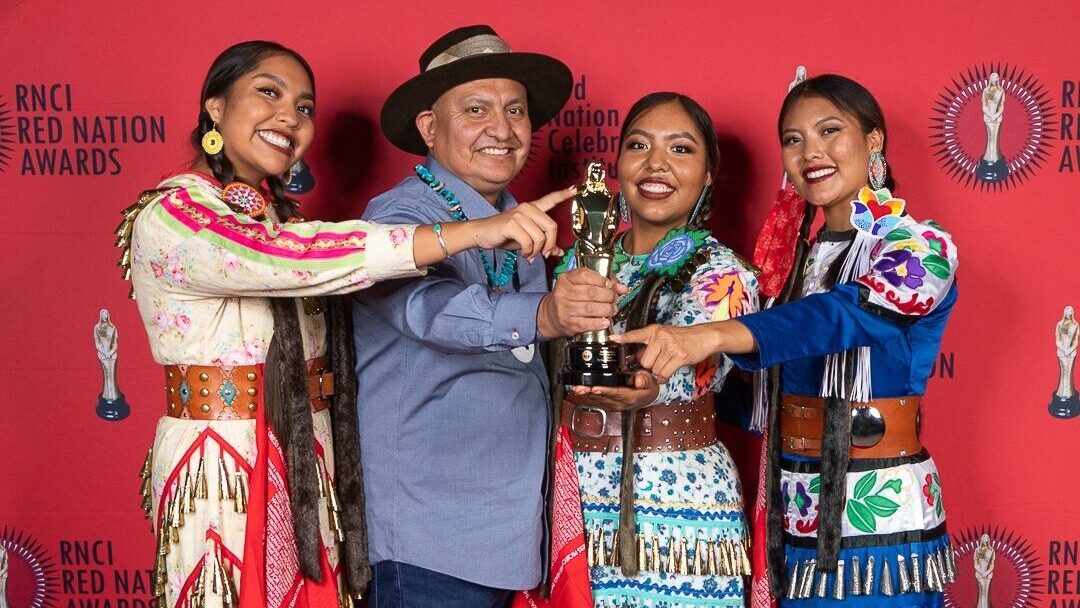
While addressing colonization is important, “Indigenous storytelling shouldn’t be bound to historical nonfiction,” cautioned LaRonn Katchia. Katchia is a filmmaker, director, and cinematographer from the confederated tribes of Warm Springs who attended the “Flower Moon” premiere. “We, as native people, have so many stories that still need to be told within the vast makeup of our tribes and nations. Encouraging and supporting Indigenous voices and giving us the keys to tell our stories from our perspective is essential.”
“To engage with art created from a perspective different from your own is to accept an opportunity to be educated,” said Joel Robinson, an enrolled member of the Osage Nation. “It should be seen as a privilege.”
Regions: Boston