
A comprehensive guide to the music of “Yellowjackets.”
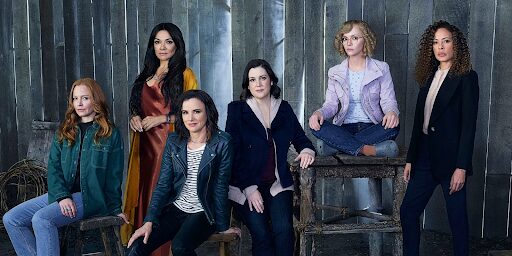
Part of what makes “Yellowjackets” so unforgettable is the way its soundtrack is used as a narrative anchor. The series follows a group of women, both as teenage soccer players enduring a devastating plane crash in the late ‘90s that leaves them stranded in the Canadian wilderness for 19 months, and, 25 years later, as middle-aged women, who are still coping with the effects of what happened when they were younger. Instead of relying on mainstream nostalgia, “Yellowjackets” leans into the grit and vulnerability of ‘90s alt-rock and the reflective nature of indie. To understand “Yellowjackets” in all its depth, one must pay attention to the show’s rich musical world.
Each needle drop hits with surgical precision, flawlessly woven into specific moments to tell the story on a deeper level. The soundtrack acts as a lens, focusing on the characters’ internal worlds (often representing their internal monologues), the plot’s complexity, and the duality of the fractured timeline. The songs chosen are intimate — many viewers either lived through the ‘90s or are familiar with the lush alternative scene of the decade.
Season One
“Today” by The Smashing Pumpkins, a quintessential ‘90s alternative band, starts the pilot with a sonically strong first official needle drop. The song’s overwhelmingly uplifting lyrics and melody ironically foretell clear skies ahead, as the girls win the playoffs and board the plane to nationals in Seattle. As the first guitar chords settle in, the show’s title card fills the screen. From there, the show cuts to a montage of Garden State iconography, showcasing the girls’ roots, with Billy Corgan’s vocals complementing his line, “Today is the greatest.” The moment hooks the audience.
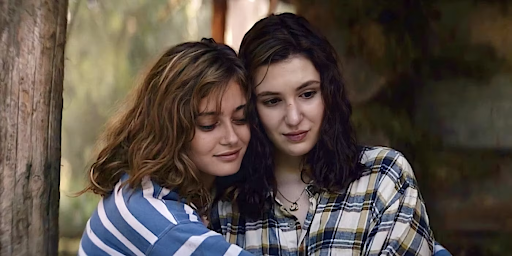
One of the show’s key friendships is between Jackie Taylor and Shauna Shipman, but already in the pilot, there’s tension bubbling beneath the surface. The two girls are teammates and best friends, but since Jackie is the queen bee at school, Shauna can’t help but feel as if she’s living in her shadow. Between the long stolen glances and coy dialogue, it isn’t hard to assume that there’s something deeper going on between them. This assumption is confirmed when Shauna picks Jackie up for school after the girls win the playoffs, playing Liz Phair’s “Supernova” over her car radio. As Jackie comes out of her house and heads toward the car, Shauna watches her quietly with a shy smile. Jackie talks of their future together in college, while Shauna harbors quite a few secrets. Phair’s instrumentals and vocals underscore the scene flawlessly: “Your kisses are as wicked as an M-16 / And you fuck like a volcano / And you’re everything to me.” The song is flirtatious, fierce, and full of love, representing the bond between the girls. They love each other deeply, but there is a fracture in their relationship that they are ignoring — it’s the song that helps bring it to the surface.
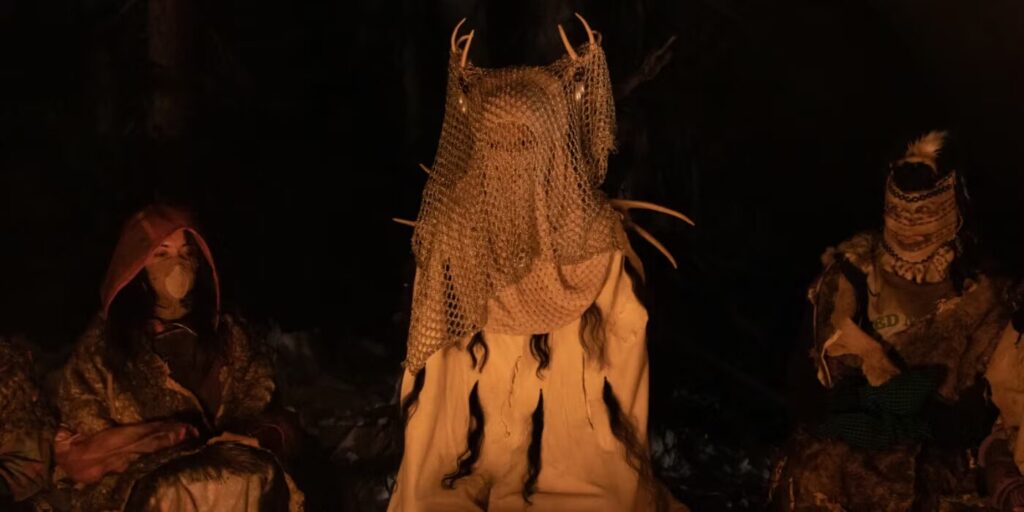
The final epic musical moment from the show’s pilot episode is PJ Harvey’s “Down By The Water.” The ‘90s anthem plays as conflict arises between the girls. Frames cut between a high school party in New Jersey and a brutal bonfire out in the wilderness. We see people donning animal masks and furs out in the snow, eating what we will later find out is human meat. This scene is the first time we see the infamous Antler Queen, the Yellowjackets’ cult leader. She stands proud, her face covered with drapings, antlers positioned atop her head. It’s absolutely horrifying to watch, and contrasts effectively with the scenes of normalcy before the crash. The lyrics “Little fish, big fish, swimming in the water / Come back here, man, gimmie my daughter” impressively underscore the tension, rage, and death that awaits them.
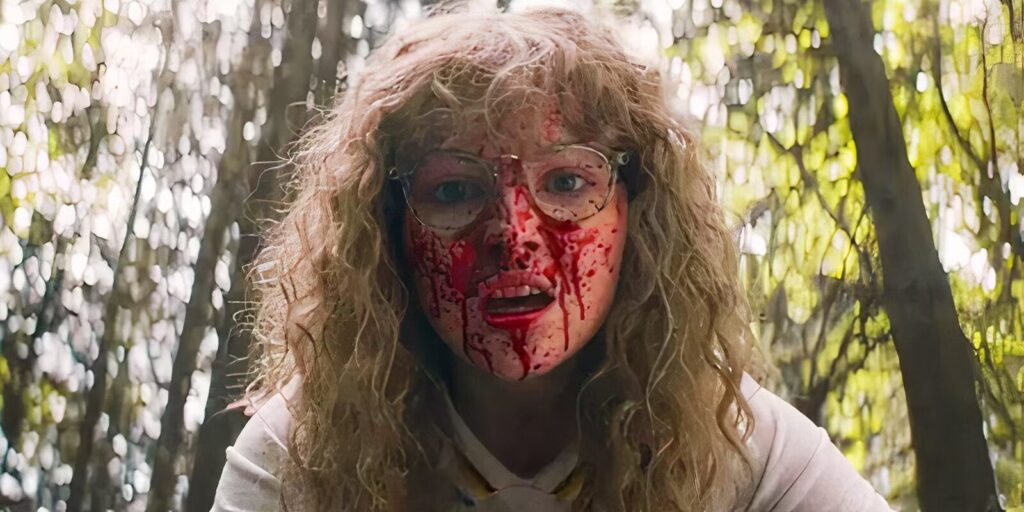
In the second episode of the series, the story shifts to the girls’ post-crash lives. As they scramble to find solutions to injuries, Misty Quigley, the team’s designated “poodle-haired freak,” takes charge as their official medic. When the team finds their coach’s leg stuck under the wing of the plane, Misty is swift to grab an axe and promptly chop it off. Blood splatters across her face, and Tracy Bonham’s “Mother Mother” begins to play. Bonham sings, “I’m hungry, I’m dirty / I’m losing my mind / Everything’s fine!” in classic riot grrrl style: loud, angry, and accompanied by heavy guitars. The song encapsulates the psychological impact of the plane crash and the horror that’s to come.
“Glory Box” by Portishead plays as the girls sit around a fire for warmth on the night of the crash. Misty wanders into the woods and finds the emergency transponder. Then, shockingly, she destroys it. For the first time in her life, she feels valued and needed by her team for her medical knowledge, and wants her time in the wilderness to extend. The song’s aching sensuality mirrors Misty’s own desperation for belonging. It defines her character — she’s childish and lacks boundaries. She’s also kind of a psychopath. “Glory Box” is about craving, love, recognition, and a place to pour yourself into. “Give me a reason to love you / Give me a reason to be a woman,” the lyrics read. At this moment, Misty finally finds just that. As the others huddle close to the fire, clinging to hope, Misty embraces the opposite: the possibility of never going back.
When Natalie Scatorccio — the Yellowjackets’ resident (recovering) junkie — returns to her old trailer park home in the modern timeline, “Feel the Pain” by Dinosaur Jr. drifts out from her battered stereo, pulling her back into the past. Her mind flashes to her teenage years, where she’s sneaking her childhood friend, Kevyn Tan, past her parents and into the sanctuary of her room. There, amid posters and clutter, they talk black nail polish and Nirvana. These are small, intimate rituals that are foundational to their bond. The scene deepens the strain of their adult relationship: Kevyn, now a police detective, is investigating a murder, while Natalie quietly covers it up. The track underscores it all, as J Mascis sings: “I feel the pain of everyone / Then I feel nothing.” It captures both the friends’ shared musical DNA and the empathetic core that defines Natalie.
Another Natalie-focused track used in season one is Mazzy Star’s “Fade Into You.” The tune plays as Natalie heads out of the cabin alone to hunt after Travis Martinez, the coach’s son who crashed with the girls, rejects her. It’s their first major fight and will be far from their last. The episode cuts between teen Natalie in the wilderness and adult Natalie in a motel room as the song plays. The adult texts her drug dealer, signaling a relapse after rehab. The song’s tender melody and hazy vocals mirror Natalie’s vulnerability across timelines, underscoring her ache for wanting connection and the pain of being misunderstood. Another possible interpretation is as a romantic song between her and Travis, her doomed love. The two of them have a mutual understanding that many of the Yellowjackets lack: “I look to you, and I see nothing / I look to you to see the truth.”
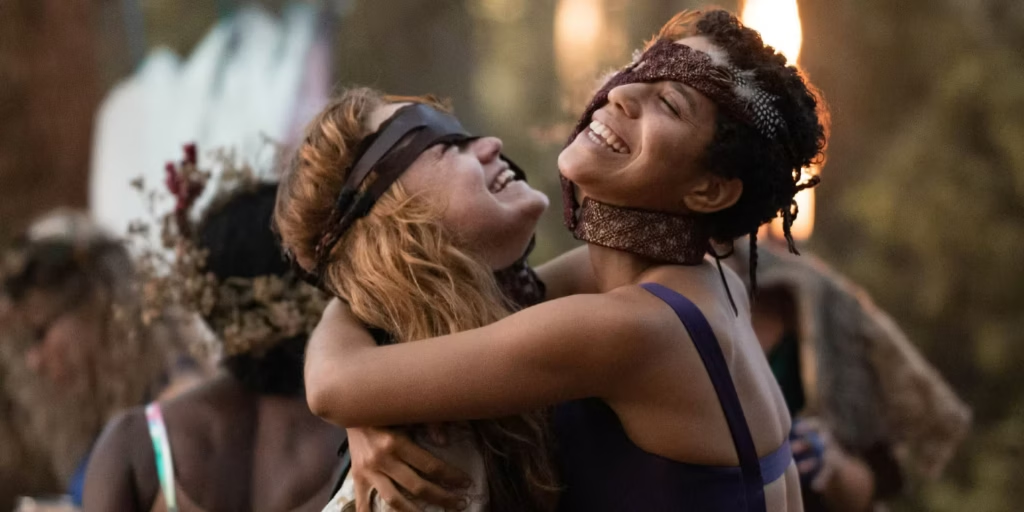
In the season’s penultimate episode, “Doomcoming,” the girls put their formal wear and fermented berries to use. They host a homecoming party in the woods, since they’re missing their own back in Jersey. As the girls enter the party grounds in their dresses, animal masks and stick crowns, “Gepetto” by Belly accompanies the scene. It’s one of the few joyful moments showcased in the series. The audience sees Jackie and Shauna enter side by side. Taissa Turner and Van Palmer, the team’s secret lesbian lovers, make their relationship public. And, in classic “Misty Fucking Quigley” fashion, the mushrooms meant for Coach Ben wind up in the stew for the entire team. Before the chaos of their mushroom trip, this moment is a celebration of their survival. While the song’s melody is uplifting and playful, the lyrics emphasize the manipulation and control between the team and the wilderness’s power: “And if you bore me / You lose your soul to me.”
Season Two
In the premiere episode, Tori Amos’s “Cornflake Girl” highlights a critical moment. As Travis and Natalie take to the snowy mountains to search for Travis’s missing brother, Javi, a pregnant Shauna faces a sinister hunger. She paces back and forth, debating whether or not it’s worth it, before taking a bite of dead Jackie’s frozen ear. It’s the first time cannibalism is portrayed in the show. “Cornflake Girl” is about betrayal between women: “She’s gone to the other side… she knows what’s going on.” In the first season, Shauna’s ultimate betrayal of Jackie led to her death. Not only did Shauna sleep with Jackie’s boyfriend, Jeff, but she became pregnant with his child; when Jackie finds out, she becomes depressed and stops abiding by the “rules” instilled by the team. When the two girls have their final fight, the Yellowjackets vote to kick Jackie out of the cabin, and she freezes to death in the snow. Shauna then continued the betrayal by eating part of her frozen corpse. Amos was absolutely right when she sang “Things are getting kind of gross.” As winter swells around the team, not only are they resorting to gnarly means of survival, but they are quietly losing faith in one another.
“Climbing Up The Walls” by Radiohead plays during the series’s most gruesome moment. After Jackie’s tragic death, a grieving Shauna spends hours in the meat shed talking to her corpse. When Taissa discovers what Shauna has been up to, she decides Jackie’s body must be cremated. As the corpse burns, a gust of wind blows snow atop the scene, bringing her body to a slow roast. The girls are overcome with hunger when they wake to the smell of cooked meat, and they end up feasting wildly on Jackie. Radiohead’s song is not only about mental health struggles, but existential despair: “And either way you turn, I’ll be there / Open up your skull, I’ll be there.” The girls have officially reached the point of no return. They’ve descended into complete and utter madness.
When adult Misty launches her own FBI-style investigation alongside Walter Tattersall, a shy, nerdy citizen detective, “Seether” by Veruca Salt kicks in. Determined to find Natalie, who is missing, Misty embraces her inner sleuth. She stages a fake FBI interrogation with Randy, a former classmate she believes has information about Natalie’s whereabouts. As Misty strides forward, her curly blonde hair blowing behind her, Louise Post belts, “I try to rock her in my cradle / I try to knock her out.” The scene captures Misty at her most confident and unhinged, blending dark humor with the track’s aggressive energy.
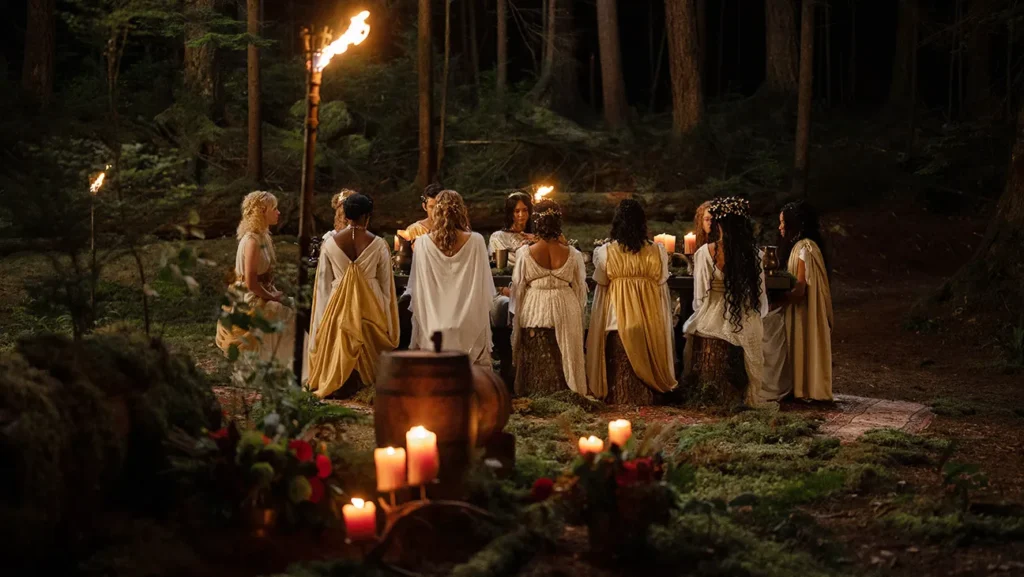
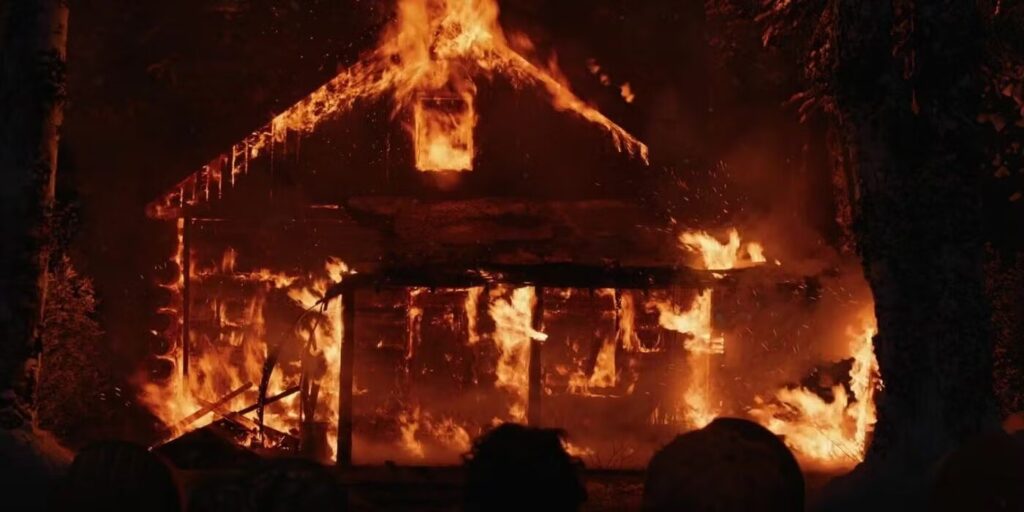
“The Killing Moon” by Echo & The Bunnymen has become iconic through various films and series, including the 2001 film “Donnie Darko.” However, the strongest use of it might just be in the season two finale of “Yellowjackets.” The girls have appointed a leader, or Queen, and the team honors her ceremonially. A cover of the song plays during the scene shortly before tragedy strikes again, and the cabin they call home burns to the ground. During this sequence, the original “Killing Moon” elevates the chaos. The girls stand out in the snow, staring back at the place that was once their sanctuary as it collapses under the flames. The lyrics underline both the chaos and inevitability of tragedy: “Fate / Up against your will / Through the thick and thin / He will wait until / You give yourself to him.”
Conclusion
Time and time again, “Yellowjackets” proves its sharp musical instincts. Each track deepens the story and heightens the emotional impact of the scene it’s placed in, using soundtrack as a powerful narrative tool rather than just background accompaniment. What makes the series especially powerful is how these songs reflect the characters’ inner lives. The ‘90s alt-rock staples and hazy indie tracks mirror their teenage identities. They also haunt their adult selves, serving as a reminder that none of them ever truly escaped their past. By treating music as a storytelling device rather than background filler, “Yellowjackets” turns its soundtrack into a character of its own. Each song is carefully placed, helping the series resonate long after the credits roll.
Regions: Boston