
Liz Sargent Talks Emotional Authenticity and Systemic Fragility for People with Disabilities and Their Caregivers in her Feature Debut, ‘Take Me Home’
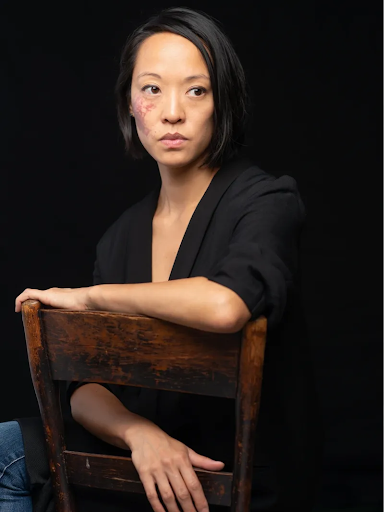
A deeply personal drama anchors the feature version of “Take Me Home,” filmmaker Liz Sargent’s intimate portrait of caregiving, family responsibility and the fragile systems that surround disability in the United States. The film follows Anna — a 38-year-old adoptee with an unnamed cognitive disability — as she navigates independence, desire and the growing uncertainty of her care as her parents age.
Debuting at the beginning of this year in the festival circuit, “Take Me Home” won the Waldo Salt Screenwriting Award: US Dramatic at Sundance Film Festival and went on to screen at other notable global festivals, including Berlinale.
Following the film’s festival run, “The Independent” spoke with Sargent about the deeply personal origins of the project such as the risks of building a film around her own sister’s lived experience and the larger questions around disability, autonomy and care that emerged throughout her filmmaking process.
OLIVIA SMITH: “Take Me Home” feels both deeply personal and socially critical. When you first started developing the story, what was the core question or emotion that you wanted the film to explore?
LIZ SARGENT: It is deeply personal. It was shot in my parents’ house and stars my sister. I wanted to really capture this transitional moment in our lives where caregiving sneaks up on you. There’s just so much anxiety about what the future holds…and we realize that there is a lack of resources. The heart of the question is: “how do we care for people who can’t care for themselves anymore?” And that’s it. How do we do that? What is available?
It came from my own struggles of wondering where my responsibilities lie for my family and what I can do to support them. It became a commentary on what is available in this country. In the end, I didn’t want to fault any of the characters; I wanted to fault the resources that are available in this country…[in] the healthcare system. So, my intention was not to make it political or have a social impact. It just became that way because inherently these lives are political. And you can’t help but make the film [political] in the end.
OS: How did you decide what parts of your personal reality should remain private and what would become part of this story?
LS: Just [through] empathy. I never want to embarrass anybody. I never want to shame anyone. But I also think that seeing a whole complicated human is so important…It is organic to each instance because I do not want to hide things. I think we water down so much in this world and it is so important to show that we are all struggling. We all feel fear and shame — and all of these different emotions and human experiences.
OS: I watched the short film when it came out, and the most notable difference between the two was the shift from a sisterly relationship to a father-daughter relationship. What led you to that shift in the story?
LS: Honestly, the [short] had the sister in the film more. It had this whole transition where the sister brings Anna to New York. I can’t even talk about how embarrassing that script was…I got wrapped up in the structure — how it should grow, Anna’s agency and all these questions of “what does Anna want?” So, I got deep into the heart of it: Anna wants the same thing everybody else wants, which is purpose, fresh air, good food and community — whatever that means. She wants ownership of her own life, and not to be dependent on others.
So, I adjusted the script. I think we have this assumption that the sister would take over — I think that’s really problematic to see on-screen constantly because then we assume that it is the sibling or the family’s responsibility to care for people who need assistance, and that is a problem because it’s the country’s responsibility. We are not asking [for] a ton. It is possible.
Then, the father character came out of this [idea] that there’s something so beautiful and tender about seeing this father as a caregiver. We often see these tropes of the mother and the daughter, and we assume that responsibility. We see enough of women taking care of people in this world. It is not the only thing they do, and men do this work as well. We should see the nuance and the difference in that.
OS: What do you think independent film can do that mainstream cinema struggles with when it comes to portraying things like caregiving and people with disabilities?
LS: I don’t know if we could have made this film with a studio because my sister has very little short-term memory. She hasn’t acted before, except for in the short film. In a way, it’s a big risk. The most important thing to me, in this film, was making sure that she had ownership of her performance and she was the most authentically and dynamically herself. To me, that’s the beauty of this film. People get to spend time with her and relate to her because she’s so honest on camera.
There’s just so much risk that happened in the making of the film that we can see on-screen now. I don’t know if a studio would back that kind of storytelling, because it was a film we knew that we were going to find in the edit. We pivoted daily on what the scene was — where it would be located, what the dialogue was — everything was a constant pivot.
OS: “Take Me Home” addresses topics that are often avoided in mainstream portrayals of people with disabilities, including sexuality. Why was it important to include sexual desires in the overall narrative?
LS: I wanted to equalize Anna. I wanted to normalize her. And that’s it. That was always my intention — to see that she is the same as we all are, as everyone else.
OS: Why do you think depictions of sexuality among people with specifically cognitive disabilities remain so rare on screen?
LS: It makes people uncomfortable. People infantilize [people with disabilities]. I think it challenges people to have to talk about or explain or judge sexuality for themselves. Seeing someone [with] an expansive interior life makes [viewers] treat them as equals and actually give them the rights and services they deserve.
OS: Silence plays a powerful role in many of the scenes throughout the film. How intentional was the use of silence as a storytelling device in the film?
LS: My intention [was always to create] this film around Anna and [to make] sure she was the most powerful version of herself. I wouldn’t push her [in] the way she articulated; I wouldn’t try to speed her up; I wouldn’t try to edit her too much. Her sentence structure is always her own. She would rearrange the idea. If I gave her a line and a prompt, I would let her say it in her own way. So, her speed and her reactions to the other actors are also in real time.
And to me, that was so important for the viewer to get into her rhythms of how she sees and reacts to the world. And also how the family around her reacts to her. Silence just felt natural in a way. With the people that we’re closest to, there is a lot of silence in our lives.
OS: At the end of the film, there’s the sudden shift to this utopian-like dreamscape. Why did you choose to then go into that dreamscape instead of ending it with the fire happening?
LS: It took me a while to debate about how it should end. We know how it ends in real life. It’s a harsh reality. I don’t need to show that. If you have a question about how it ends, then I ask you to explore that for yourself.
We should be wondering about how the people in this world live when they need caregiving, and to create something based in reality that is a solution. Like, having [Anna] be in some ideal assisted living home that doesn’t really exist in this country unless it [costs] a massive amount of money. It feels not okay and dishonest. But, I did want to show that Anna doesn’t ask for much. A better way of living is possible. I wanted to create a world that felt grounded, but unreal. I wanted to create a call to action for the audience to feel like this is possible, and to see the difference that a disabled person’s life isn’t what it should be. It could be so much more.
It’s a debatable ending; It’s an open ending. It says a lot to me when people think that maybe it’s heaven, maybe it’s a dream. Maybe it is a reality — it [tells me a lot] about people’s lived experiences, actually.
OS: As the film begins to reach audiences outside of the festival circuit, what conversations are you most excited to hear people have after watching it?
LS: I feel so moved by people’s love and the way that they take Anna seriously — that means so much to me. That shifts the way that people move through this world.
It is incredible for people who are siblings of people with disabilities. It’s a very specific experience that I’ve only learned as an adult. There’s a term called “Glass Child.” It is about this immense, emotional connection that we grow up having. It is the fear and the protectiveness around our siblings. When a sibling sees this film, they have told me that they have never experienced a film that captured their lived experience so closely — that means so much to me. It is so important for those people to feel like they have a shared interiority. It means a lot because I wrote this film from feeling so alone in that experience and so overwhelmed.
Our hope is to create conversations about what is possible in this world. This ending is about what we can create and what resources do exist. We are working with an organization called Carrying Across Generations , [who] is trying to do 1,000,000 conversations over the year. That is 80% listening and 20% problem solving. They want to take the year after that to propose solutions about how we can shift the way that caregiving exists in this country.
The conversations I’m excited to have are exactly how we can create a better future for all of us — aging into disability or caregiving for our parents or who are independent trying to be an artist and are trapped in this sandwich generation.
Distribution plans for “Take Me Home” have not been made publicly available. Check the film’s official websitefor further updates on the film’s distribution and to donate to the film’s advocacy work.
Regions: Boston