
Selling Sex? Go Fish: Guinevere Turner Talks Authentic Queer Intimacy in “Go Fish”
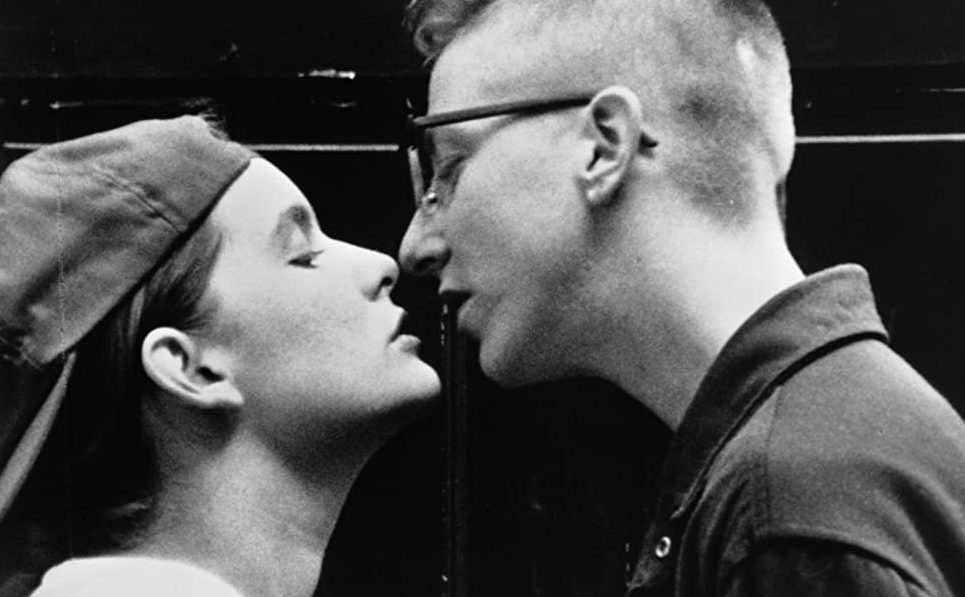
In the early 90s, queer cinema was experiencing a quiet revolution. Independent filmmakers were rejecting the censored or tragic depictions of queer characters that had been dominating mainstream media, and instead chose to tell stories grounded in their own lives and communities. A defining film of this revolution was “Go Fish,” a black-and-white indie film about a group of young lesbians in Chicago as their friendships, gossip and conversations about sex, identity and relationships intertwine with the budding romance between Max (Guinevere Turner) and Ely (V.S. Brodie). The film quickly became a landmark of New Queer Cinema — a movement of independent films between the late 80s and early 90s that challenged heteronormative storytelling by centering queer perspectives.
But, if the phrase “sex sells” has long shaped how films have been marketed to mainstream audiences, “Go Fish” offers a contradiction — a film that distributors attempted to sell with sexual imagery was actually about something far more radical: community and authentic queer intimacy narratives.
“Politically disruptive was kind of our whole vibe back then,” Turner — co-writer and lead actress of “Go Fish” — recalls in an interview with The Independent.
In making “Go Fish,” Turner and Rose Troche — the second co-writer and director — aimed to fill a gap in representation, not create a cultural impact. The two were part of a circle of activists who had met through AIDS activism and queer visibility campaigns in Chicago. For Turner and Troche, filmmaking was another form of political expression.
“We wanted to make the movie because we didn’t see ourselves represented on screen,” Turner said. “There were many lesbian movies, but none of them showed community. They showed isolated women often struggling with their sexuality,” Turner continued.
That absence of community in lesbian films shaped the project. Instead of focusing on a single protagonist wrestling with her identity, “Go Fish” depicts an interconnected group of friends navigating the reality of being a lesbian in 1990s Chicago. The film’s narrative unfolds through conversations — who is sleeping with whom, what counts as a relationship, and what queer intimacy looks like in practice. These conversations feel spontaneous and natural, leading many viewers to assume the film is improvised. In reality, it was carefully written based on real-life experiences and interviews, performed by nonprofessional actors who were friends from the same community. The film feels less like a scripted drama and more like a window into an existing social realm.
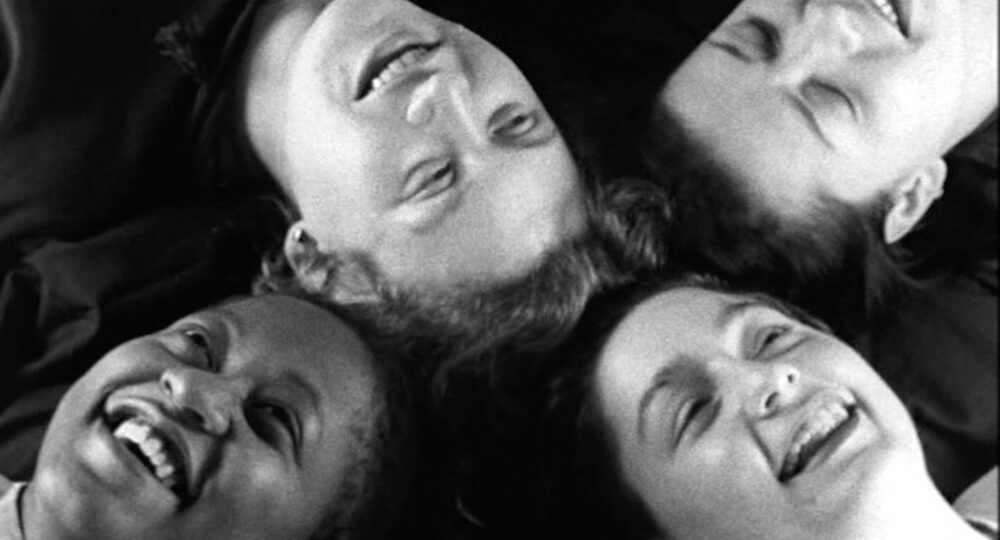
In mainstream cinema, lesbian intimacy has often been framed through a heterosexual male gaze — stylized, romanticized and often distant from the realities of queer relationships. Turner and Troche consciously rejected those normative conventions, specifically the lush, operatic aesthetic of the famous lesbian sequence in “The Hunger” (1983).
“The sort of distant, ladylike depiction of lesbian sex was what we knew we didn’t want to do,” Turner said. Instead, they aimed to create moments that felt recognizable to their own experiences. “Seeing lesbian sex without a male gaze — seeing lesbian sex that’s actually made by and performed by lesbians — was everything to us,” Turner explained. The scenes in “Go Fish” are therefore less about spectacle and more about presence — queer women occupying the screen on their own terms.
This distinction is clear in comparison to modern depictions of lesbian sex in mainstream media that still tend to be distant from lesbians’ reality. Take Turner’s experience seeing “Blue Is the Warmest Color” (2013) for the first time in a theatre filled with a largely heterosexual audience.
“The sex scene was just like — why is it going on for so long?” she remembers thinking. Eventually, the film crossed a line for her. “I was like, this doesn’t feel like women are making this.” For Turner, the difference between authentic intimacy and commodified sexuality often lies not in what is shown, but in who is creating it and for whom.
Ironically, the place where “sex sells” most visibly entered the creation story of “Go Fish” was not in the film’s production itself, but in its marketing by distributors.
“Have you ever seen the DVD cover of ‘Go Fish?’” Turner asked. “If you have seen that and you have seen the movie, you know those two things have nothing to do with each other.” The distributors had hired stylists, makeup artists, and a model to create an image designed to sell the film as erotic entertainment.
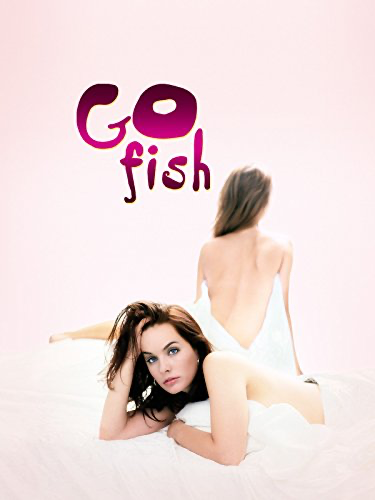
“That was the first photo shoot I ever did… it was also the first time I walked off a photo shoot, but not in time,” Turner uncomfortably recalled.
The disconnect became apparent years later when her co-star Brodie encountered a fan who rented the film expecting something entirely different. A drunk stranger recognized Brodie on a train and told her that he had rented the film expecting explicit lesbian sex. “‘This movie is nothing like the cover,’” Turner recounted him saying. But for Turner, in a strange way, the marketing had worked — he rented the movie.
“Yes, sex sells, but it’s because of that cover that they all essentially just coerced me into doing without my consent,” Turner noted.
Despite this mismatch, “Go Fish” resonated deeply with its intended audience. Its specificity proved to be its strength. At the time, Turner and Troche assumed the film would mostly circulate within queer communities similar to their own. Instead, the film traveled far beyond that context.
Years after the film’s initial release in 2024, Turner attended an anniversary screening at the Sundance Film Festival, where a young queer woman from Brazil approached her in tears. The viewer explained that although she came from a different generation and culture than Turner and Troche, the film felt as if it had been made specifically for her.
That fan’s reaction highlights one of the central paradoxes of “Go Fish.” The filmmakers were simply trying to represent their own lives as honestly as possible, yet that specificity allowed viewers across the world to recognize themselves in the story.
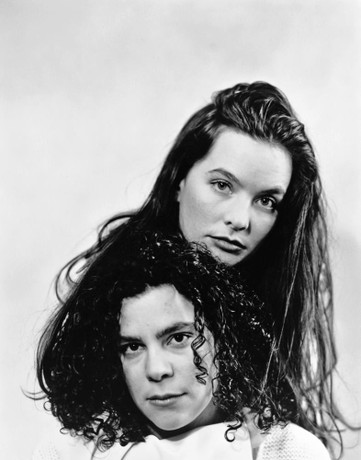
Looking back, Turner believes the film’s power comes from the fact that she and Troche were unaware of the widespread impact it would have. Their creative decisions were not shaped by commercial strategy or mainstream expectations. That freedom allowed the film to capture a moment in queer cultural history with remarkable honesty and integrity.
Today, when discussions of representation often revolve around marketability and audience demographics, “Go Fish” feels refreshingly unconcerned about those calculations. Its characters talk about sex constantly throughout the film, but not in the way that mainstream culture goes about it. The conversations are funny, awkward, political, and deeply embedded in the rhythm of queer social life. Desire is present, but it is not packaged for consumption.
Regions: Boston