
Leather, blood and business men: Inside the head of Izzy Chavez (EXTENDED CUT)
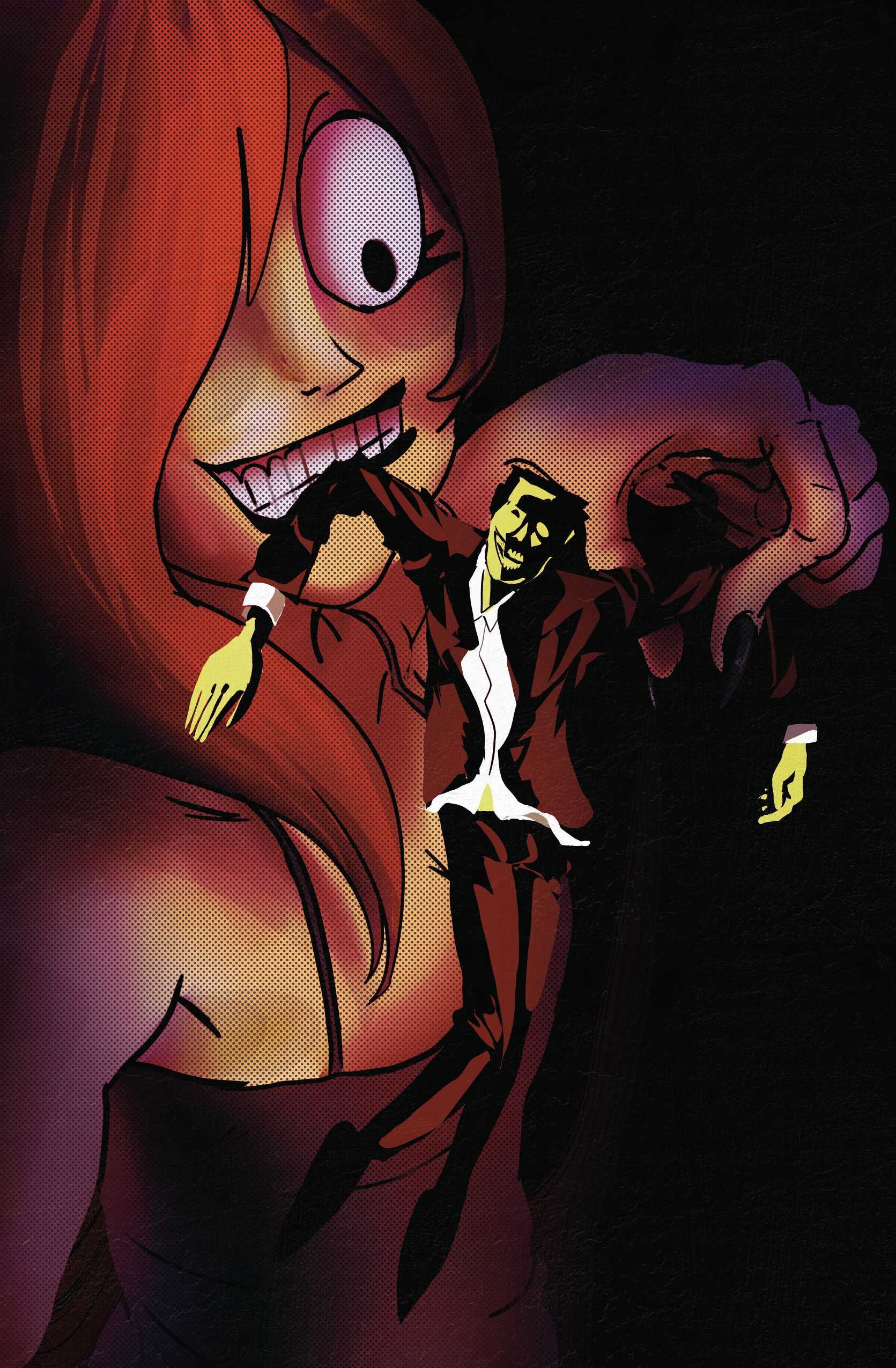
Some artists give power to their viewers, leaving parts of their work up to interpretation — this is not the case for visual artist and dominatrix Izzy Chavez. Known on social media under the handle “filthyguts”, his art invites viewers into his world under his rules.
I first discovered Chavez during a “Jojo’s Bizarre Adventure” (a TV show and comic book series) fixation in 2024. His art of Yoshikage Kira (a villain in Jojo’s Bizarre Adventure who is a hand-obsessed serial killer) was unlike anything I had seen up until that point.
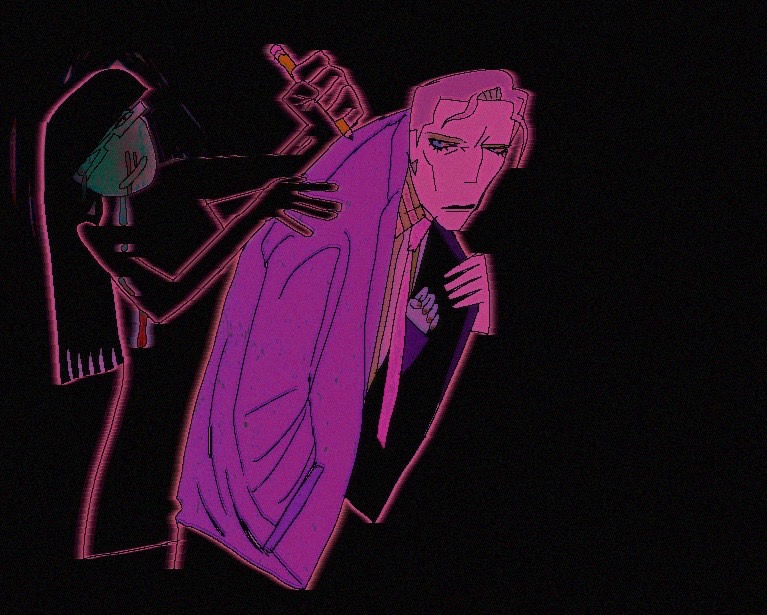
The image above is a drawing Chavez made of his persona and Yoshikage Kira from “Jojo’s Bizarre Adventure.” Chavez’s persona has a pencil to Kira’s back as a means of representing how Kira has served as an artistic and sexual muse for him.
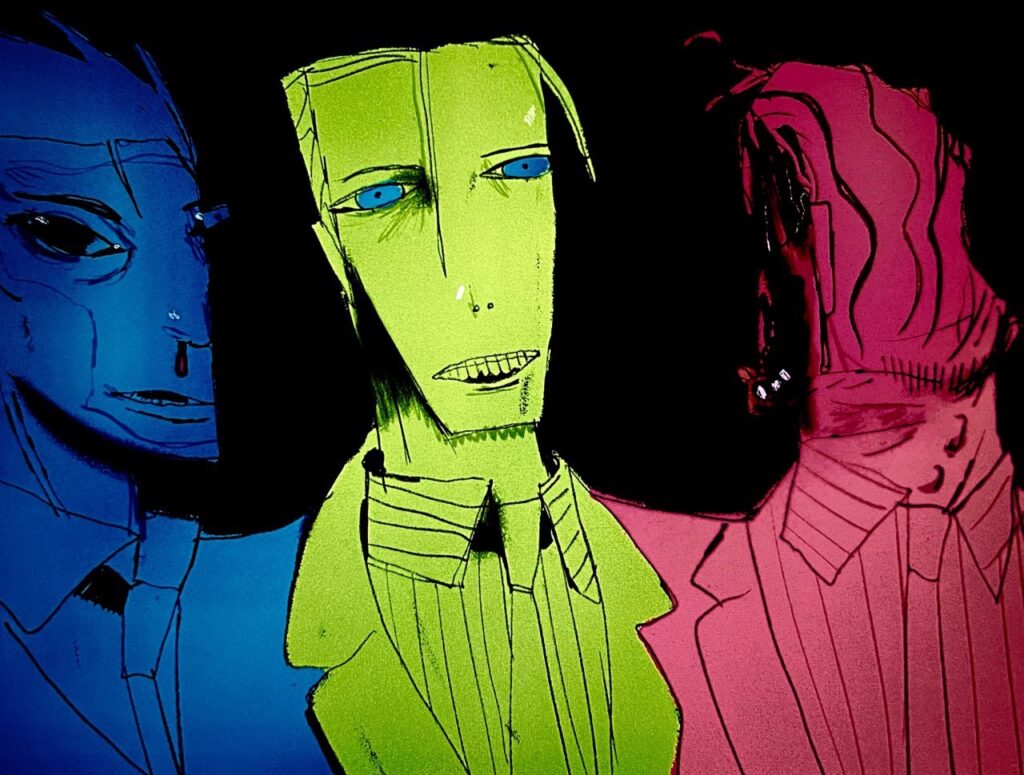
In the image above, there is a drawing depicting Yoshikage Kira in three different states. The figure in blue is his disguise of one of his murder victims, Kosaku Kawajiri, that he began impersonating once he killed him. The yellow figure is his most iconic design that draws heavily from David Bowie’s appearance. The figure in red is his face after his brutal death– his face crushed by the wheel of an ambulance.
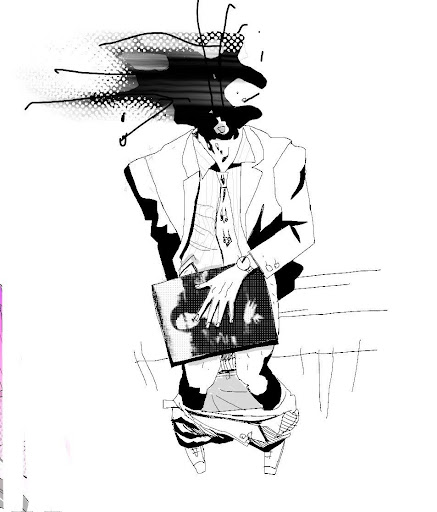
In this image, there is a doodle of Yoshikage Kira. His pants are down, and he is covering his crotch with the Mona Lisa — something in the show he admits to getting aroused by. In place of his head is a dark splatter — clearly blood, referencing how he dies.
Chavez’s work is heavily textured with harsh shadows, thick lines and a masterful grasp of color. His depictions of the human form are as enchanting as they are disturbing. His work of Kira strays from being just fan art. Chavez’s style fully reimagines Kira’s character that beautifully emphasizes his horrific and uncanny traits.
In an interview with The Independent, Chavez reminisced on his early inspiration. Encouragement from his parents and early morning cartoons fostered Chavez’s creativity. He credits “VeggieTales” for inspiring his love for comics, as his family’s DVDs had behind-the-scenes special features that showed artists working on storyboards.
“I thought [storyboarding] was so cool,” Chavez said. “I was like ‘woah it’s like comics but for animation!’ That was when I started doing [my own] comics.”
Aside from serving as a major artistic inspiration, “VeggieTales” played a significant role in drawing him into the dominatrix lifestyle.
“There was an episode about Larry the Cucumber and this sexy domineering apple lady. She sort of seduces Larry and turns him into her slave for a second. As a child, I saw that and I was like ‘wow, I want to be like the beautiful apple lady!’”
Chavez also doms professionally (prodomme) where people pay to be his sub. In many ways, Chavez believes Dominant/submissive (Dom/sub for short) culture goes beyond sexuality and feels he was always meant to be a part of.
Chavez says that domming brings him a deep sense of satisfaction that he doesn’t get from much else; domming allows for a sense of control that he is stripped of by a chronic illness.
“The chronic illness that I have has unpredictable and sometimes embarrassing moments. Being in a space where I have control over that and someone else who has given their control to me — it’s a beautiful gift.”
His sexuality, his work as a prodomme and his past experiences are explicitly reflected in his art. Currently, his artistic focus is on his ongoing comic series, “Miko the Devil Woman.”
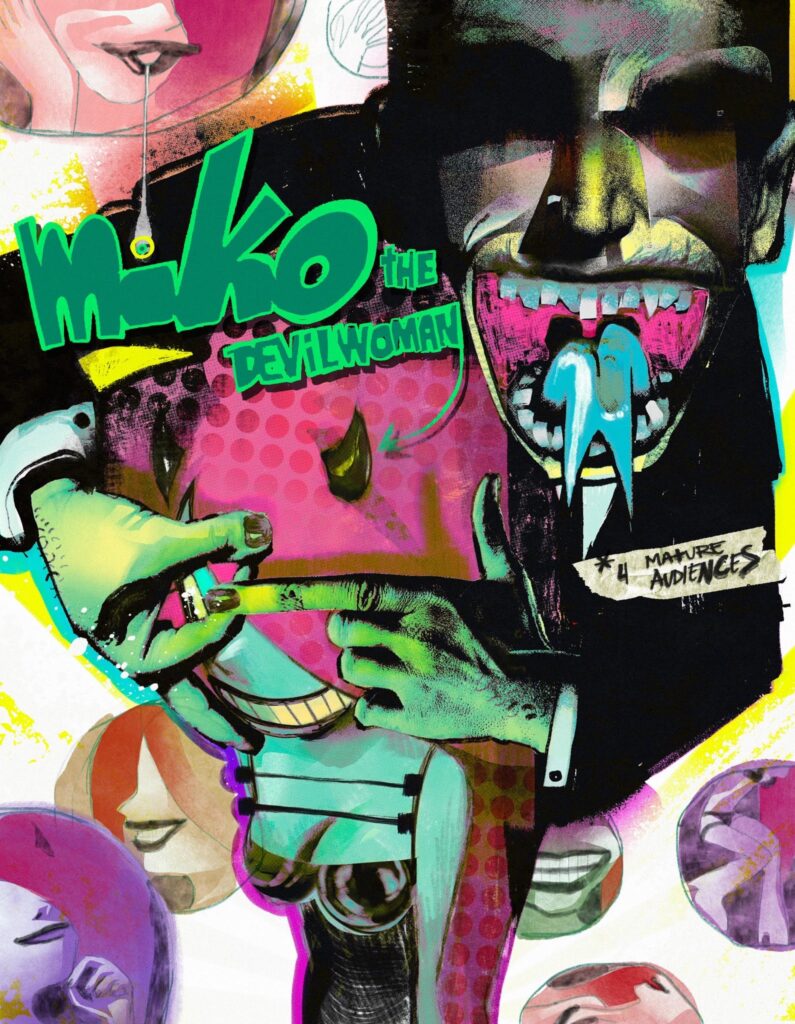
“Miko the Devil Woman” is based on a period in Chavez’s life when he lived in New Jersey. He didn’t have a car, so it was difficult to get around. With this limited mobility, it hindered opportunities for domming. During this time, he started having recurring dreams about a villainous masochist.
“The dreams were so strange and brutal that it felt like something was haunting me,” Chavez said. “It was just a weird, dark period of my life. So to vent this, I started [creating] ‘Miko the Devil Woman.’”
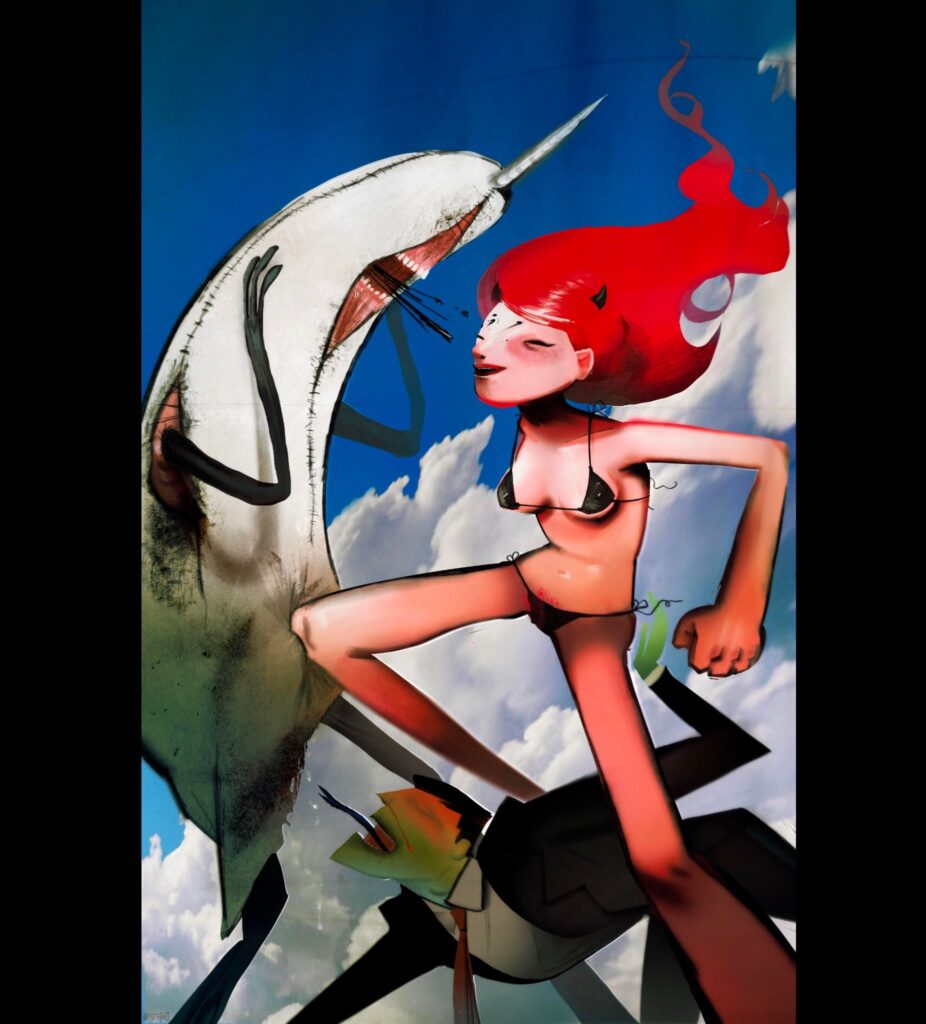
“Miko the Devil Woman” is about Miko, a young woman in her mid-20s who lives on the outskirts of an unnamed city. Depressed and living in filth, Miko takes sleeping pills to help with insomnia. When she sleeps, she enters a place called the ‘White Space.’ There, she meets someone — something — named Mr. Suit. Chavez characterizes Mr. Suit as a combination of the best and worst subs he has worked with. A beautifully twisted dom/sub relationship blooms between these two by carving skin and poking pins and needles into her devoted sub.
Miko begins to realize that these aren’t dreams — the ‘’White Space’’ is a layer in Hell called Pandemonium, and Mr. Suit is a creature called a Pandomite. Regardless, Miko still enjoys her time with Mr. Suit. For how long this enjoyment will last remains to be seen.
Miko’s story very clearly parallels the struggles and emotions that arose from Chavez’s stay in New Jersey. Similarly to Chavez, Miko finds the concept of being a dominatrix to be a means of regaining control over her life.
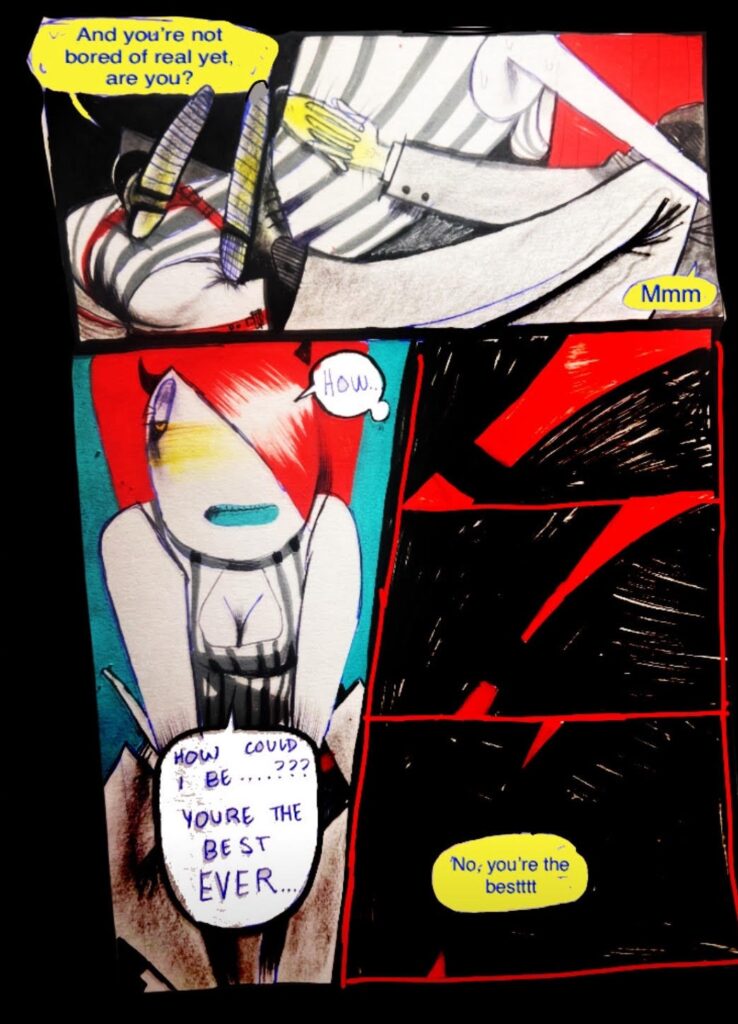
With how personal the story and characters are to Chavez, misrepresentations of the characters by fans can be frustrating. He described frustration surrounding a portrayal of a role reversal between Mr. Suit and Miko.
“How do you see this story that’s strictly about this stone top woman (someone who only “tops” in bed) who goes to [the ‘White Space’] to be safe, so she doesn’t have to worry about a man taking advantage of her,” Chavez asked. “How do you see that and then want to reverse it?”
The role reversal likely stems from a fundamental misunderstanding of what dom/sub culture entails. To people on the outside, being a dom or a sub relates to positions in bed rather than something deeply tied to someone’s identity or lifestyle.
Chavez doesn’t believe the remedy is more mainstream representation of femdom, but he notices prodommes are never characterized as complex people. More often than not, sex workers in media are defined by their sexuality in an outdated and nontransformative sense.
Banmei Takahashi’s “A New Love in Tokyo” (1994) succeeds in the portrayal of sex workers and prodommes in ways many other movies cannot. The movie is a slice of life that follows two Japanese sex workers, a prodomme and a more “regular” call girl. While their work is key to their character, their depiction isn’t done in a way that puts them down or dehumanizes them.
“These characters are in an acting troupe, they go out to get hot pot, and when these men try to get with them but they decide to hang out with each other instead,” Chavez said, recalling the transformative humanizing nature of the film. ”At the end of the movie, nothing bad happens to them.”
In comparison to other films depicting sex work and femdoms, Chavez described this film as “purely human” as opposed to appealing to a male gaze.
With projects like “Miko the Devil Woman”, Chavez is working towards normalizing this more human and complex depiction of prodommes just as Takahashi accomplished in 1994. Although role reversals and other misrepresentations have challenged Chavez’s control over the narrative, he continues to reassert his rules and boundaries within the fandom to ensure the preservation of his created worlds. Chavez’s creations accomplish more than fulfilling his personal creative aspirations or need to cope with his chronic illness — they work to evoke a sense of belonging and identity.
Chavez’s art can be found on his Instagram account.
Regions: Boston