
‘The Match’: When a good film falls short of greatness
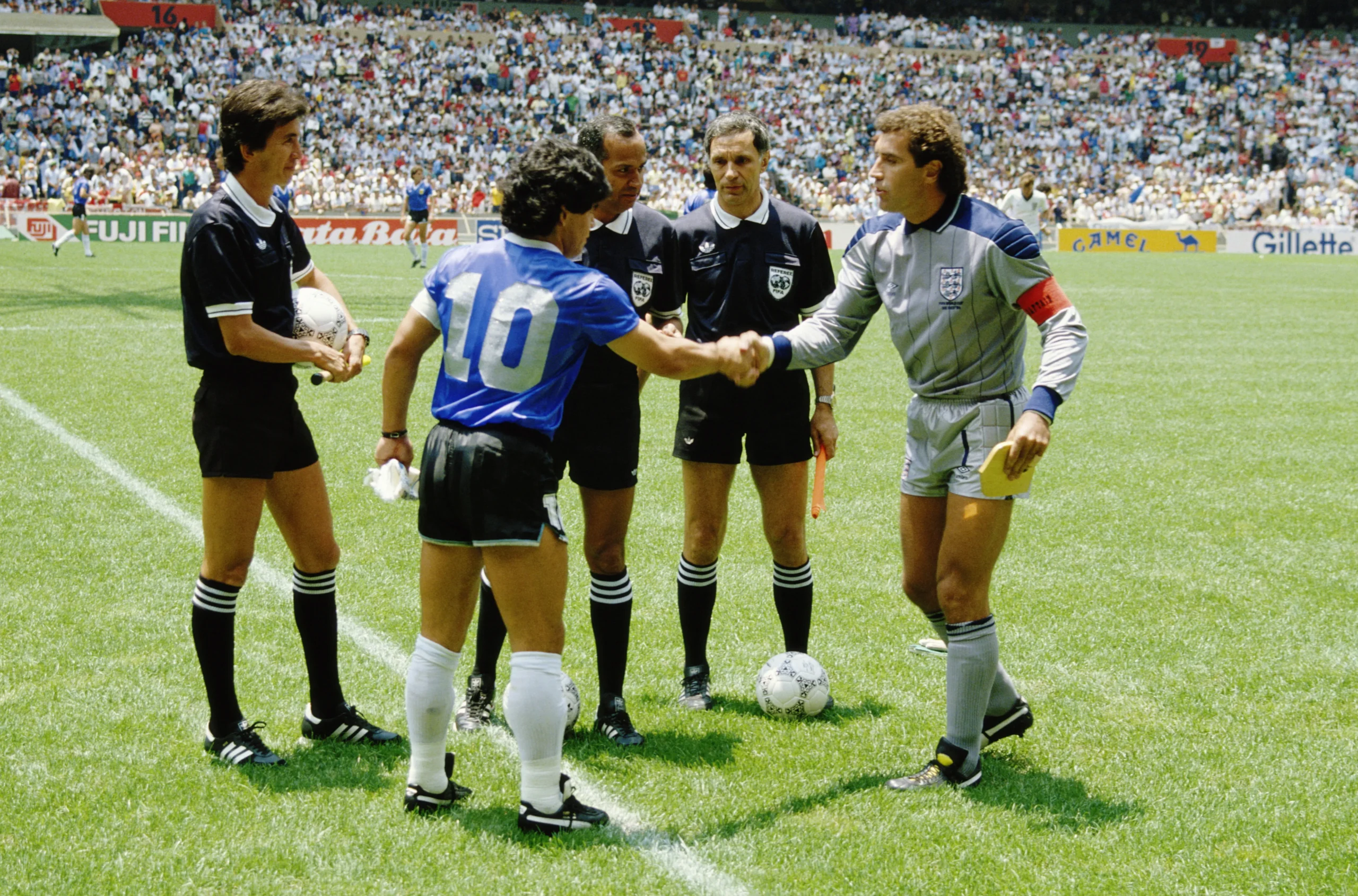
“The Match”, a charged and dynamic Argentine soccer documentary following the 1986 World Cup game between Argentina and England, premiered this week at the Cannes Film Festival.
Its very first screening in Agnes Varda Theater’s plush red velvet seats was met with a full, exuberant crowd whose attention was expertly captivated and held.
Artfully avoiding content-heavy dryness — a common documentary pitfall — “The Match” may be well on its way to significantly elevating the documentary genre. Its humorous narration takes viewers on a dynamic journey punctuated by foreshadowing, directorial cuts, archival footage and dramatic interviews that weave through several time periods, events and storylines.
The film opens with the question:
“When does a match start?”
Followed by a second, “When does it end?”
From here, “The Match” unfolds its complex plotline with deep philosophical undertones. In 91 minutes, it peels apart how the 1982 Falklands War intensified the game-time tension in the World Cup game just four years later.
Exploring topics of war, soccer, athleticism and an infamous match whose win ultimately hinged on foul play, co-writers and directors Juan Cabral and Santiago Franco utilize their film’s metaphysical start to produce profound, universal messages about humanity’s propensity for extreme failings and triumphs.
But a film that seeks to break conventions, elevate its genre and speak to a universal audience requires greater attention to detail. While “The Match” could easily be lauded for its achievements, the audiences and themes it chooses to leave out must not be ignored. And with its great achievement in cultivating aesthetics, narration and complex plot development, a film like this on the brink of being considered a cutting-edge masterpiece, holds a greater responsibility. “The Match” needed to do more.
“The Match” unearths the timeless themes of freedom, struggle and control through the 1982 Falklands War between Argentina and England. But it does little to educate viewers on the island and its inhabitants, instead providing various cameos of breaking waves or rolling, seemingly uninhabited hills. Without providing more context, viewers are left with a sense of the islands being yet another Terra Incognita that resembles ways in which colonial powers described the lands they conquered to obscure the histories and presence of their original people.
In an interview, a British veteran of the war states that, from his perspective, nobody won that war. For him, seeing the other side’s fallen was a massive betrayal to humanity and life itself.
It was, and it is. But these large-scale ethical conversations about humanity fall flat when its representation is one-dimensional.
“The Match” gives a name and voice to one female only: Margaret Thatcher, whose spotlight included three clips totaling around one minute of airtime. Her slow, demanding pattern of speech and pronounced, hypnotizing upward gaze do little to fill the feminine void.
Rather than acknowledge the female perspective to any degree — on soccer, war or any other topic — the film steamrolls ahead, full of emotion, music and men.
The World Cup in question was played in Mexico City. In 1986 there was no automatic replay — fouls, offsides and other calls were made live, entirely by the referees. During the infamous game between Argentina and England, there was no way to review the game’s first goal, made by Argentine team captain Diego Maradona. The referees gave Argentina the goal. Some fans and players saw nothing unusual, while others were convinced that Maradona met the ball with a fist instead of his head.
The British team protested, but the game continued. When it ended in a 2-1 victory for Argentina, the initial goal’s controversy continued. Replaying the game tape didn’t provide enough clarity, so officials sought to review the moment through what the professional photographers there had captured on film. From this search appeared the image that cleared the controversy.
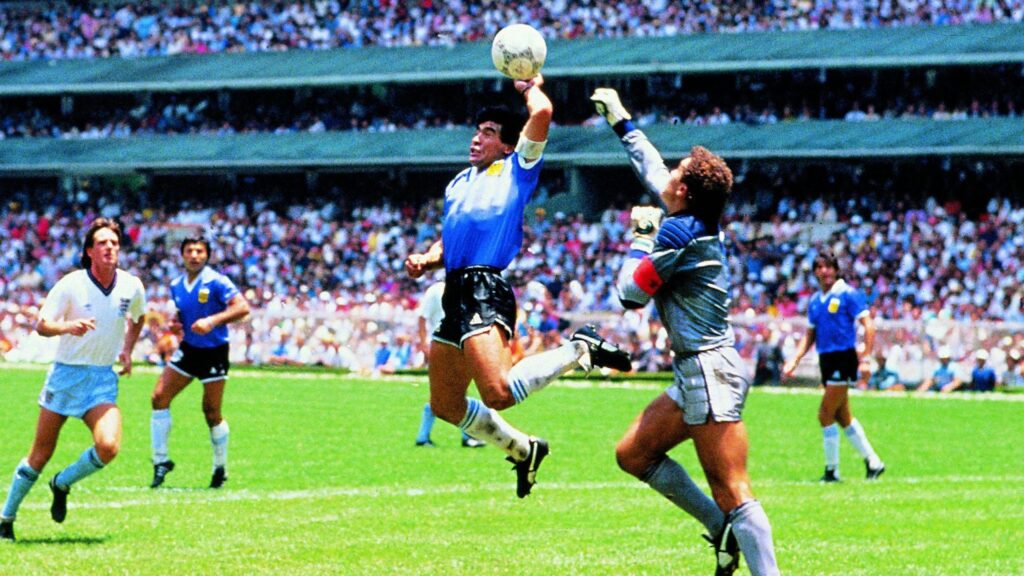
This infamous photo, named “The Hand of God,” was and is still credited to Bob Thomas, a British sports photographer. But the film claims that the actual shot was taken by Mexican photographer, Alejandro Ojeda Carbajal.
“The Match” continues its narrative to discuss the implications of cheating and how Maradona’s initial goal set the tone for the rest of the match. In a series of interviews, several British team members lament and discuss the greater distinctions between good and bad, right and wrong. However, the film could have just as easily discussed the morality behind the historic and continued misuse and misrepresentation of this photograph.

At one point in the film, retired footballer and broadcaster Gary Lineker equates Argentina’s World Cup win to summiting Mount Olympus. Making such grandiose claims about soccer in the likeness of mythical Greek Gods in the context of the film’s overarching underrepresentation of women produces an overwhelming sense of masculine arrogance.
A film containing qualities of a masterpiece should be evaluated on both what it includes and does not. “The Match” is compelling, fast-paced and entertaining, and it brings to light a historic, symbolic and monumental win for Argentina that reaches far beyond the actual soccer game. But when considered as a piece worth establishing a timeless legacy, some of its choices appear rather half-baked.
Regions: Cannes