
Cannes Debut: A Conversation with Filmmaker Lenti Liang Before and After the Screening of ‘Our Secrets’
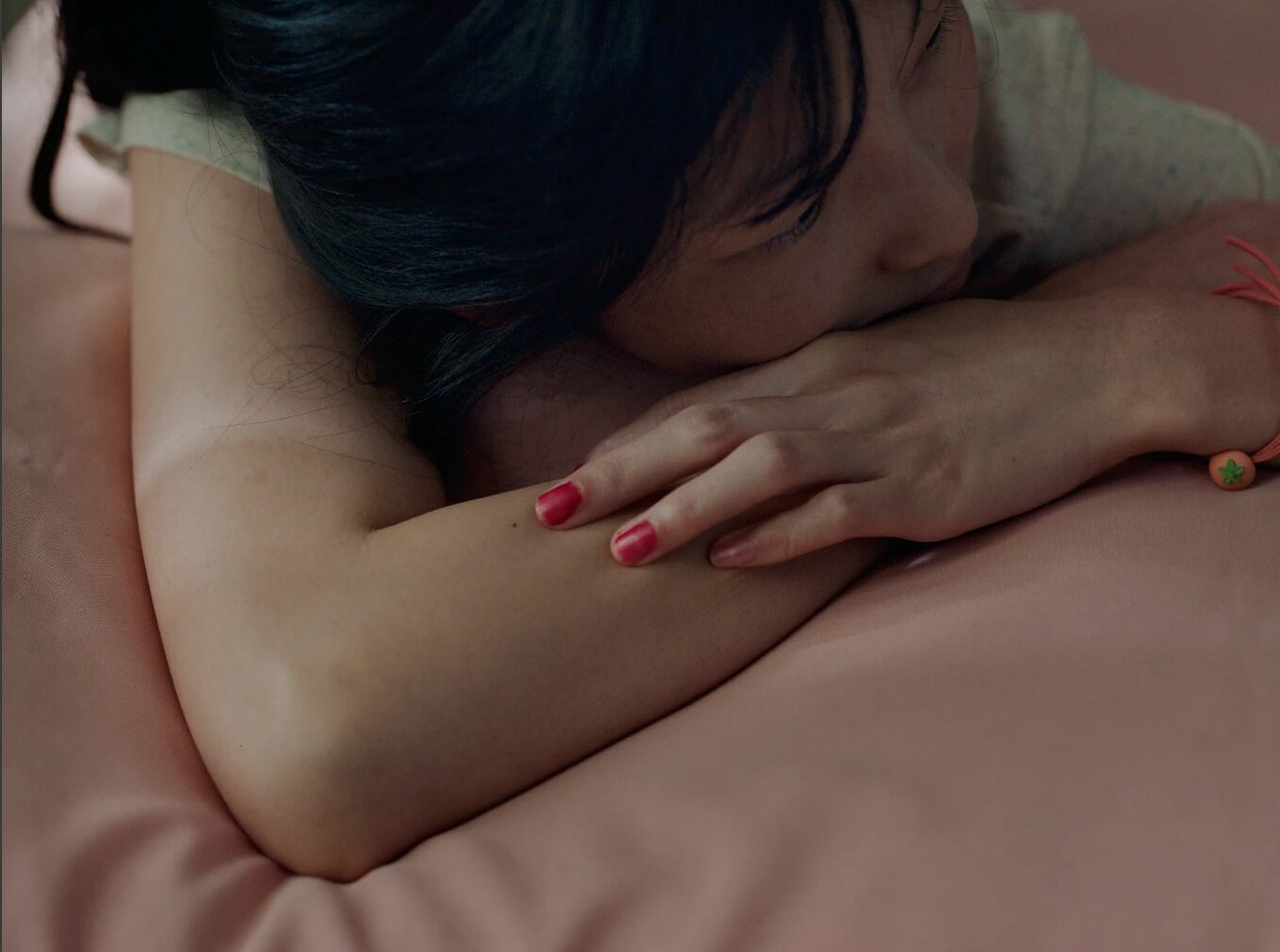
Not many young filmmakers can add a Cannes International Film Festival debut to their resume shortly after graduating — but Lenti Liang can. The spring graduate from the University of Southern California’s Film Production MFA debuted her first short film “Our Secrets” in the LA CINEF Competition at Cannes on Thursday, May 22.
LA CINEF is a section of the festival that highlights exceptional short films and student films from around the world. Liang’s is one of just 19 student films selected from 2,750 submissions.
Liang sets her story in the city of Guangzhou, China, where she was born and raised. “Our Secrets” follows Tian Tian, a teenage girl who begins medical treatment for her chronic scoliosis pain. Halfway through Tian Tian’s doctor’s visit, her mother, Ying, leaves for work at a Mahjong parlor. Once the girl is left alone, the family practitioner Dr. Qi begins to ask her more invasive questions about her body and her period cramps, asserting that he would treat her for those during their session.
The experience quickly devolves into something uncomfortable, intimate and corrupt –– though her assault is only implied through static shots of her shoes and clothes splayed across the patient’s room. Later that night, in a quiet act of bravery, Tian Tian asks her mom if acupuncture treatment in the vagina is typical for period cramps. Without heeding her daughter’s cry for help, Ying dismisses the question and tells Tian Tian to always follow the doctor’s orders.
“Unfortunately, it’s a personal experience story. It happened when I was eighteen,” Liang shared in an interview with The Independent on the phone in early May before the festival. She recalled that when it happened, she didn’t dare question the situation due to her doctor’s authority and the fact that he was recommended by a family friend. “I never talked about this experience to anyone,” she said.
For Liang, this 15-minute film is a direct confrontation of the pain she endured, as well as a stubborn refusal to continue to be silenced by the assault.
Despite the simplicity of the film, “Our Secrets” is a story that speaks boldly. In a careful decision to never show Dr. Qi’s face, Liang centers the film on the two women, a mother and daughter, who silently struggle through different versions of the same thing: the persistent objectification by the men in their community. At work in a Mahjong parlor, Ying is subject to harassment by the male players as she serves them tea. In an effort to stay professional and modest, she smiles politely and absorbs the comments, demonstrating Ying’s learned passivity, which she has internalized.
This further inhibits Ying’s ability to address her daughter’s violation to grave detriment. It’s a frustrating betrayal that is not intentional, but rather a result of a system that has learned to control women by convincing them to control themselves.
“Our Secrets” addresses these cycles of abuse that persist when violations are not addressed. Liang’s act of making the film rebels against the very seed from which it came: silence. “[Making this film] was a healing process,” Liang said, “especially between my mom and me.”
Parallel to the film, Liang attempted to discuss her own experience with her mother, years after the incident, when she finally came to terms with the nature of the situation. Despite her courage and honesty, her mother shut her down, asserting that it was a typical/traditional Chinese practice –– though this is not the case.
“[With this film,] I really want to open up a conversation about the blurry lines between care and control and care and violation. And to empower more women or even men, to recognize discomfort and to speak out to prevent themselves from being manipulated,” Liang said. “It really is about ‘where’s the line, and how we recognize it.’”
One of the biggest takeaways from making the film for Liang is the importance of trusting our bodies, our boundaries and our feelings –– especially feelings of discomfort.
“Bodily perception often precedes language,” Liang said. “I want people to really recognize and try to articulate these kinds of sensations[…] and trust them.”
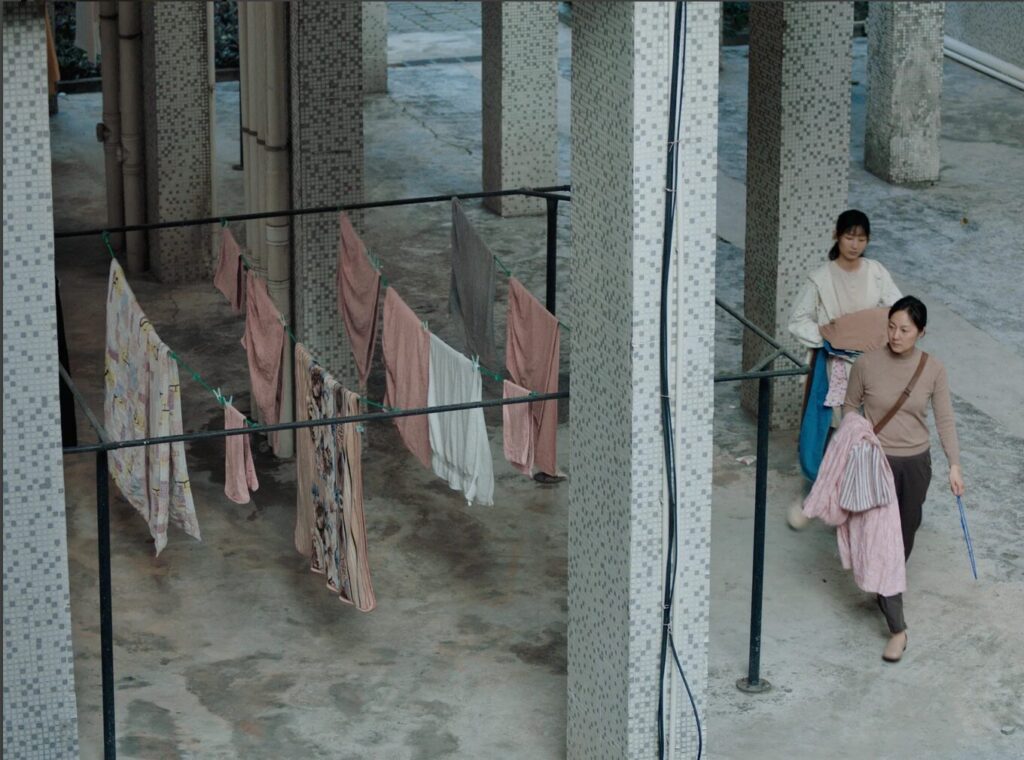
There is an undeniable sense of poetry that permeates the film. The first time we see Tian Tian after her doctor’s appointment, she is leaning against the fence of the local laundry lines. The drying clothes, swaying in the wind, evoke an impression of the body as an article and capture a sense of emptiness. The beauty with which Liang composes her frames adds light to an otherwise dark film. This also allows the story to be more digestible for audiences.
Liang eventually hopes to showcase the film in China, through her distibutors at Parallax, where instances like her own experience remain unregulated in private practices and spaces that don’t have enforced medical standards.
Liang awaits her Cannes debut, the first time the film will be shown to an audience, with nerves and excitement. “I just hope that [this film] can [help] break the silence, because if silence persists, then it can only remain a secret, right? That’s why I made my title ‘Our Secrets.’”
–– CANNES ––
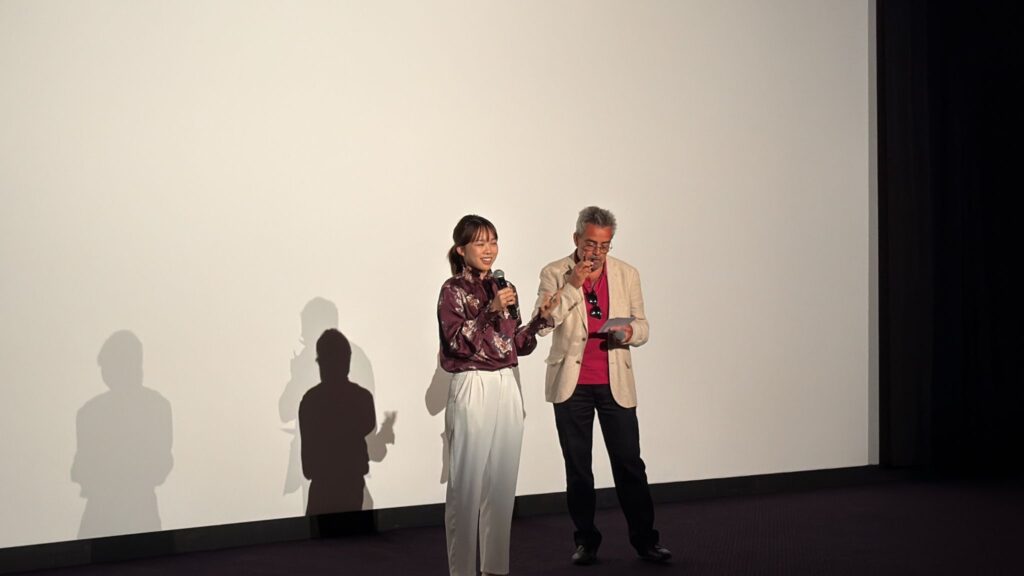
This Thursday at 11 a.m., I made my way to the Bruñel theater of the Palais des Festivals where “Our Secrets” was projected onto a movie screen for the first time ever. Sitting in the front row of the theater, Liang sat among five directors whose films showcased to an audience of students and cinephiles, critics and crewmembers. As the room quieted, Liang stepped on stage to present her film, the first short film of the session.
During the film, I snuck glances at the people in nearby rows, seeking to get a sense of the reception of Liang’s film. In the dark, I found a sea of concentrated faces with soft eyes as they watched Tian Tian’s difficult story. After the screening, Liang was approached by audience members who shared their resonance with the film, as well as producers, reporters and film festival curators who expressed interest in following her endeavors as a filmmaker.
“It was a really fulfilling and immersive experience for me,” Liang shared in an interview with The Independent after the screening. “Filmmaking is such a great way to connect people together. [I met people who] would sit down to just talk about my film for a while […] I can’t wait for them to see me keep growing in this career.”
Alongside Liang, several crewmembers made the trip to Cannes to participate in this unforgettable experience: executive producers Hui She and Luna Zhang, cinematographer Becky Baihui Chen, producer Ji Shuofan, line producer Yalia Huang, wardrobe supervisor Daphne Zhang and production photographer Chen Yongjie.
“I didn’t make this film [seeking out] film festivals or awards. Being selected in the La Cinef section has already been a huge honor and recognition, so I couldn’t ask for any more than that,” said Liang.
I met Lenti Liang in person for the first time the day of “Our Secrets’” screening, having only previously talked with her on the phone. Yet, her natural poise, intelligence and sensitivity permeates her directing in a way that feels like watching the film allows you to meet Liang before you have even met her.
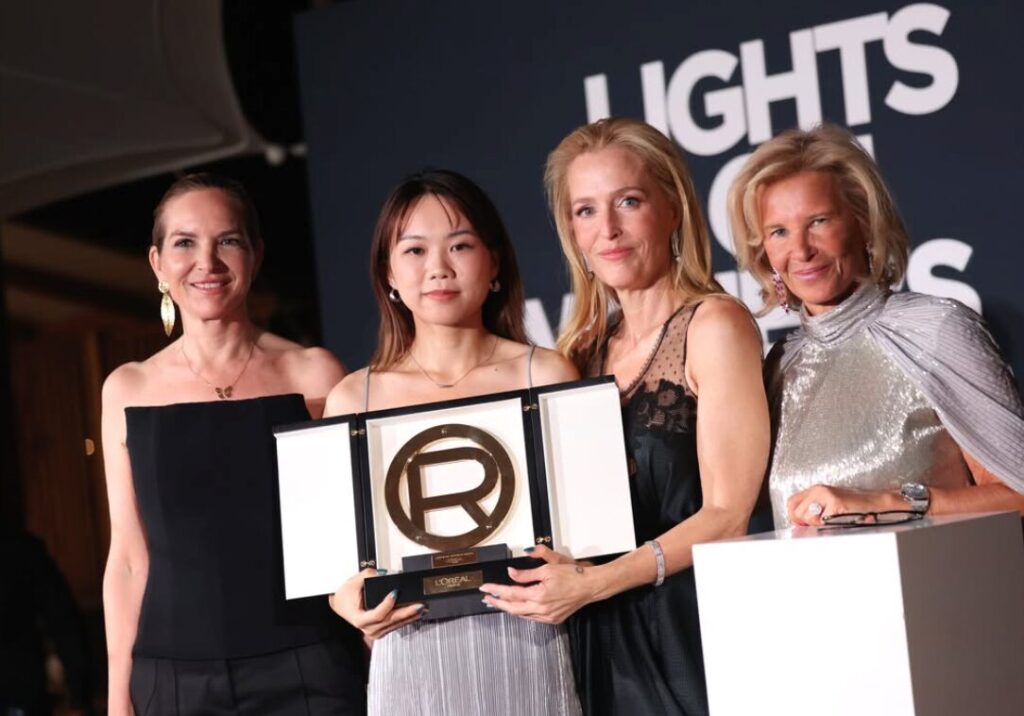
Yesterday, her vulnerability and hard work earned her The Light on Women’s Worth Award, a prize distributed by Loréal Paris to honor a new generation of female short film directors at Cannes telling stories that matter. The award was presented by acclaimed actress, author and feminist Gillian Anderson, alongside L’Oréal Paris ambassadors Eva Longoria and Aishwarya Rai Bachchan. The award comes with a 20,000€ prize donation, and resources to aid the filmmaker with their career.
Liang is grateful for the recognition her film is receiving. Still, she wrestles with the complexity of sharing her own scar with her loved ones.
“I don’t want them to blame themselves, because I’ve already reconciled[…] Hopefully one day I will have the courage to show the film to my mom and my parents to have a deeper conversation.”
Regions: Cannes