
Debut director Tristen Tarp is challenging what “female filmmaking” means
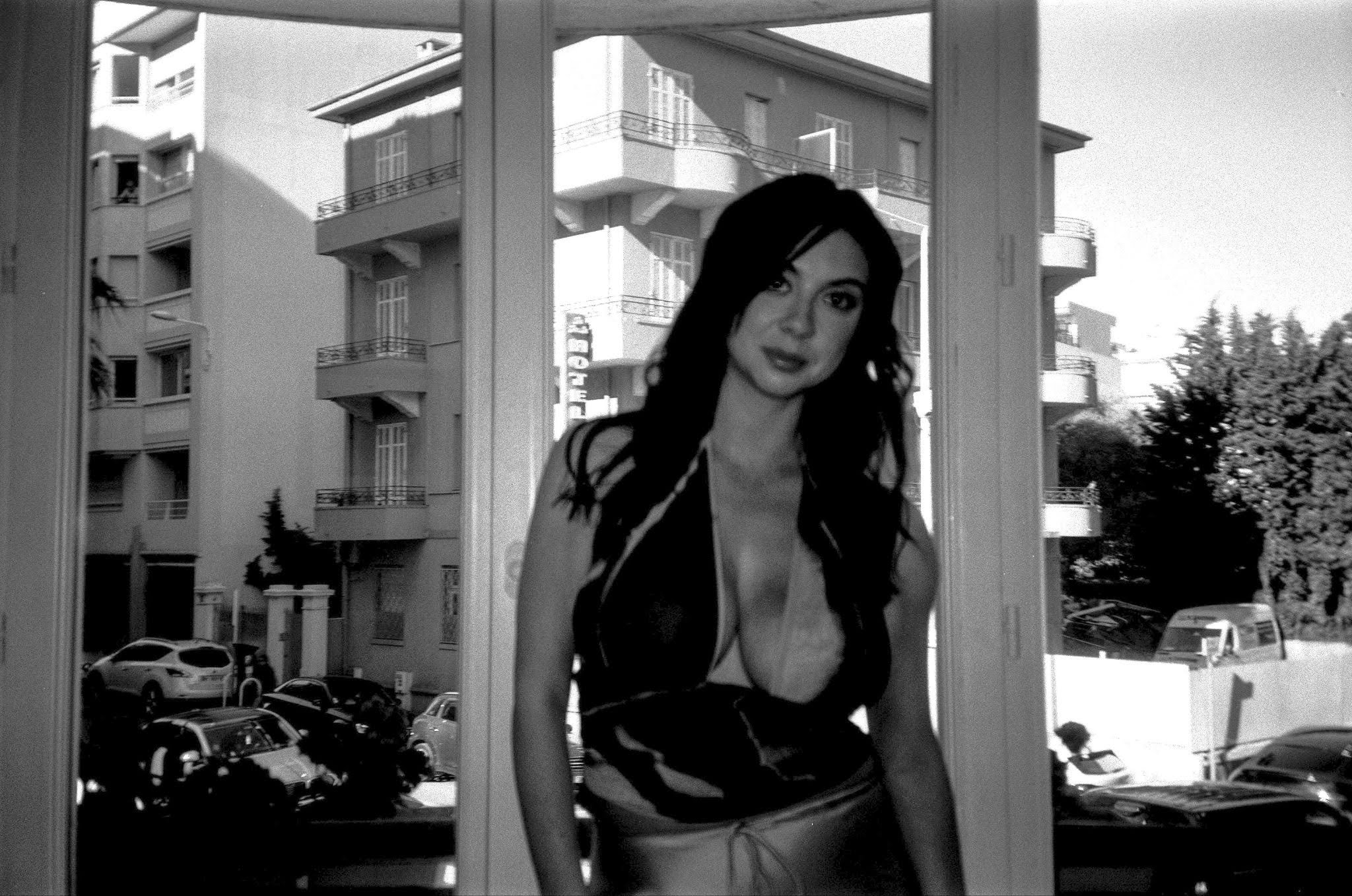
From the moment I met filmmaker and director Tristen Tarp in Cannes, just steps away from the famous Carlton hotel, she felt like a long-lost childhood friend. Her palpable charisma, humor and humility made it clear how she could sustain the long festival days representing stars in her publicist role at Image PR and still have the energy to network for her upcoming film. This was her second year attending the festival.
I got connected with Tristen through an industry colleague after casually mentioning I was heading to the Cannes International Film Festival. A self-described “girl’s girl,” Tristen’s career in the arts started in musical theater and playwriting, and pivoted to film after she moved to Los Angeles.
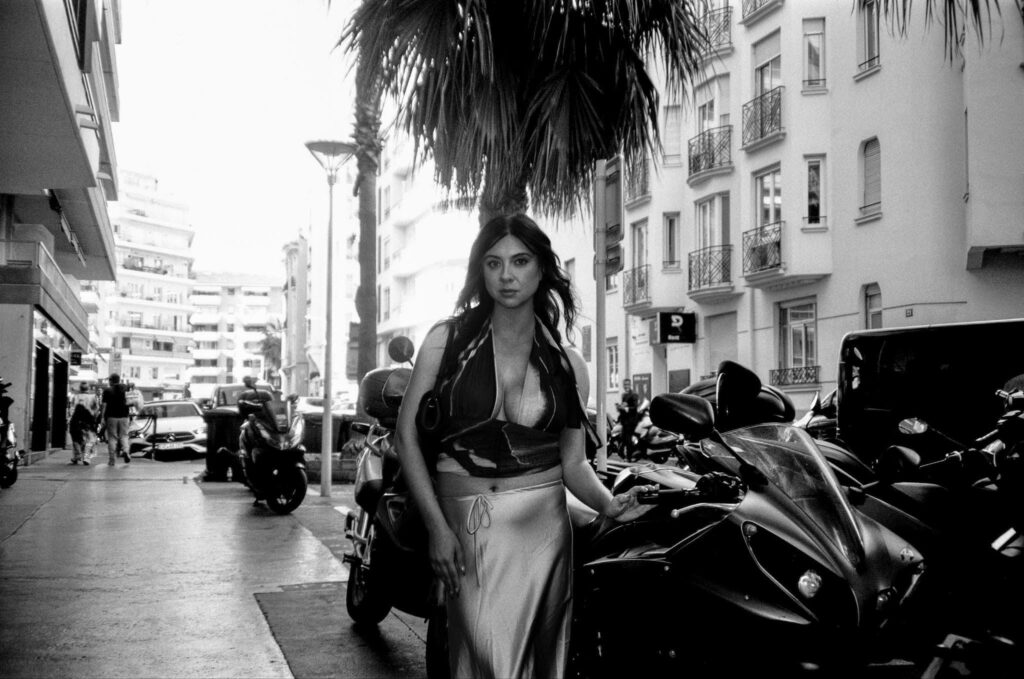
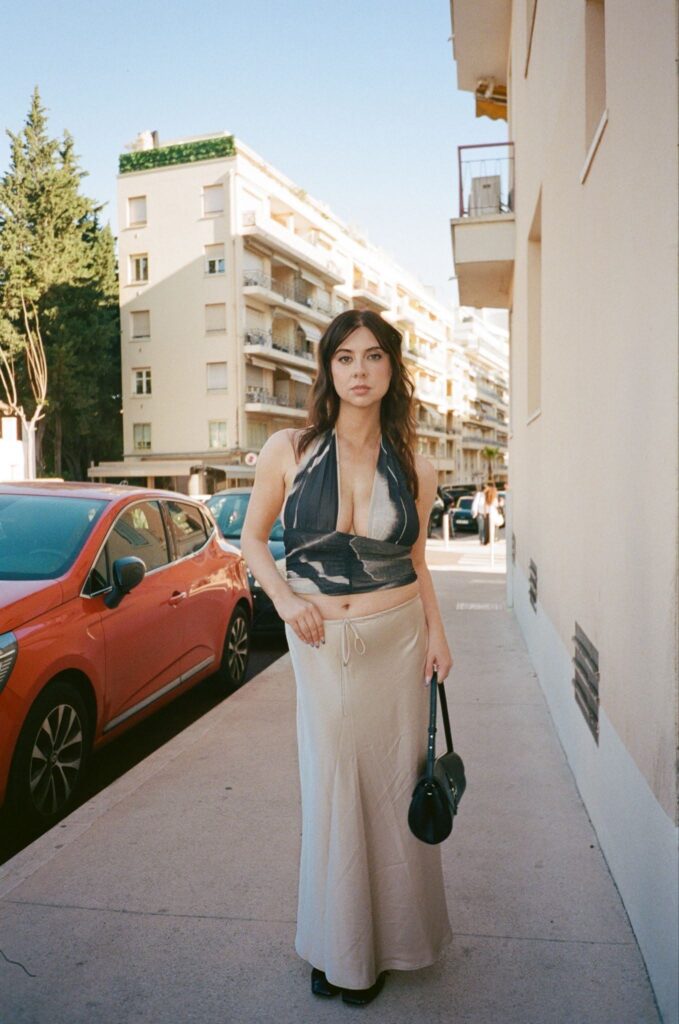
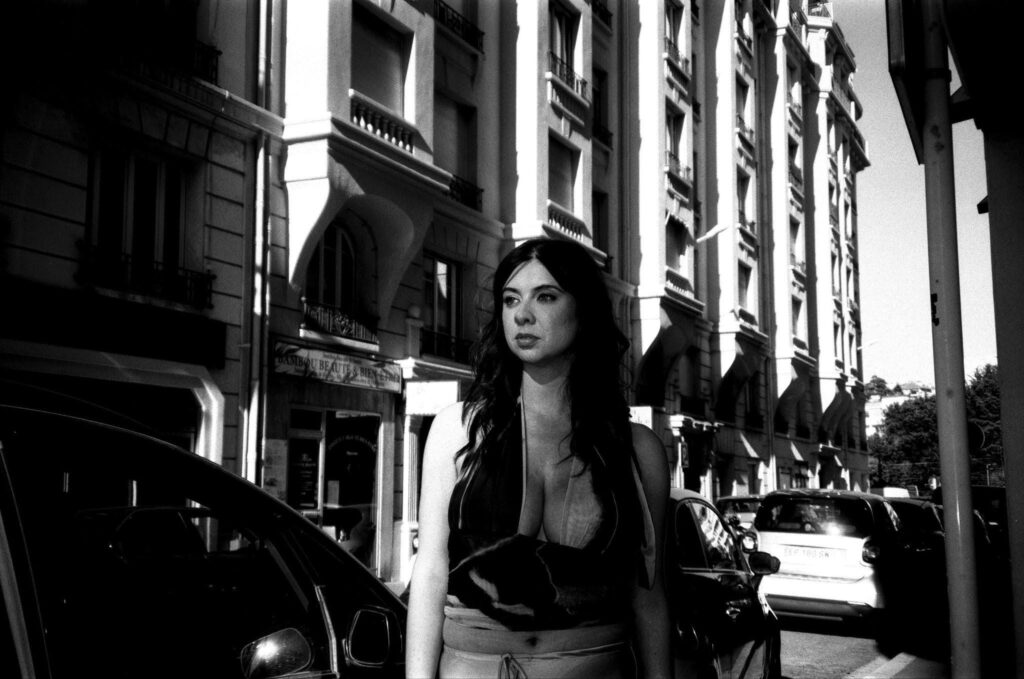
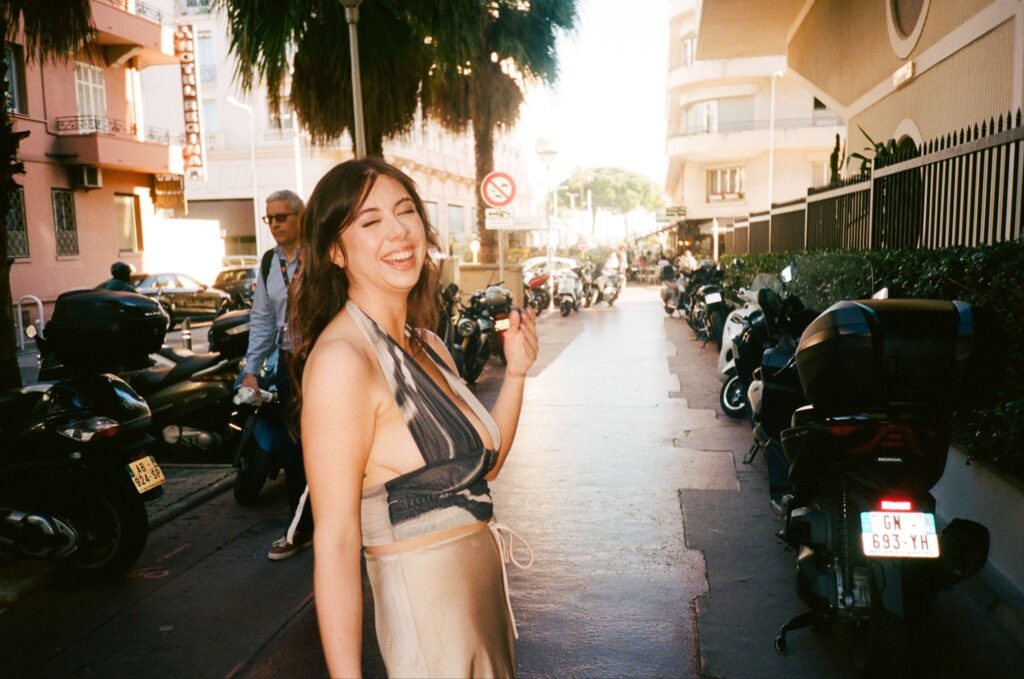
Shortly after she greeted me, we took to the streets for a photoshoot. We chased the French Riviera’s early-evening sunshine and shadows as I shot her on film, giggling the whole way.
The following interview has been edited for readability.
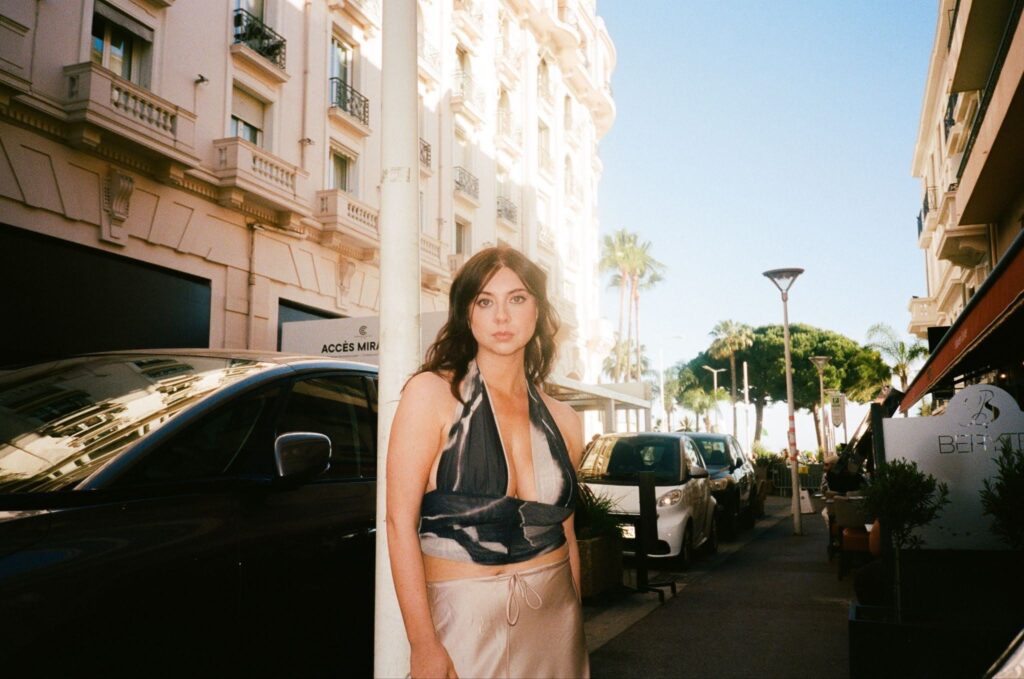
Terra King: Let’s talk a little bit about being in Cannes — describe the energy here.
Tristen Tarp: Last year, I kind of just hit the ground running and was completely blown away by the environment of being able to meet so many people my age who were also at the top of their game. Coming back in year two, I only feel more pride in doing that, because I still don’t take it for granted whatsoever.
TK: You are really making the most of it. Tell me about your first film project as writer and director.
TT: In 2023, I co-created and wrote my first short film, “Bark” — a hybrid of live action and animation. While I had written television scripts and feature scripts, this was my first time stepping into filmmaking.
I was so lucky to have two other women co-creators holding my hand through that experience, because number one, I don’t think I would have ever gotten that opportunity with men. And secondly, they never spoke down to me — they always treated me as an equal, even though I was making that transition from theater to film. Making that transition with two women who are a little older than me and who believed in me and were patient with me was so special. I tell them all the time, ‘You’ve opened this door for me.’
TK: You said you’re a girl’s girl — that you mostly work with and write for women. Why is that?
TT: When I came into film and TV, I decided I wanted to provide opportunities for women in traditionally male roles, like producing. But I didn’t want to tell stories that are just “stories for women.” Yes, my protagonists more often than not will be female, but I also do want to tell stories where men are the lead. I think it’s a more powerful move to create a team and a story in which women are heavily involved. If someone watches a trailer and sees, “directed by Tristan Tarp,” I don’t want them to be able to tell that a woman directed it. I want it to be seen as a standalone project, because I don’t think categorizing our art does anything for us.
TK: Knowing that the film industry is male-dominated, how did you find the courage to break into it?
TT: It has never been an easy journey for me, nor was it ever advocated for by the people around me. But it always just felt like something I had to do. It didn’t really matter if I was writing and directing plays in a black box for 10 people, or if someday I get the chance to have a film premiere at Cannes. It’s just something that I felt and still feel very called to do since a very young age, and I think it’s extremely disappointing that there’s so few women who are championed as directors in film. I also know the numbers have actually gone down in the past year or so in terms of opportunities.
Maggie Gyllenhaal made a really interesting comment when she was doing the rollout of her film this year. It was a very big-budget film — around 90 million — and she said something along the lines of how the men don’t want to see us with this much money.
It goes beyond people not wanting to see female directors. I think there’s a discomfort on an even higher level where people equate money to power, and giving a woman that much money to execute something in her vision is incredibly hard for a lot of men at the top studio level to wrap their minds around. Even if it’s been proven to have ROI [return on investment] — even if it’s been proven to be successful — there’s just something about it that they see as more of a risk.
The majority of films that were nominated or won Oscars last year didn’t make their budgets back, like Best Picture winner “One Battle After Another.” I suspect none of the executive producers who invested in those films saw it as a loss, which is why we need more women as executives at streamers and at studios that will champion other women, especially women of color.
TK: Tell me a little bit about your current film project.
TT: Right now, it’s a 15-minute proof of concept. We’re currently in development for the feature because we’re hoping to be shooting when the short goes to the festival circuit.
The concept surrounds a girl who comes home for Christmas to introduce her fiancé to her family, only to have the entire evening derailed by her mom’s surprise announcement that she’s leaving her father. She also isn’t aware that there’s a secret her fiancé’s been holding back, and the chaos of the night triggers him to get worked up and say some stuff that he wasn’t exactly ready to share.
TK: What has your experience been like so far?
TT: I wrote it, directed it, executive produced it and cast it. It’s honestly been the most rewarding experience of my life. From a truly creative standpoint, it’s been the most fulfilling and smooth creative experience I’ve had. At the end of the day, I get to make the final call on the edit, the costuming, on every single element. There were so many things that went slightly not as planned, but I couldn’t be happier with the process.
TK: Comedy seems really important to you. What role does it play in your creative process?
TT: The most interesting people I know can balance the very dark with the very light seamlessly, going from humorous to very serious, vulnerable conversations almost at the turn of a hat. I feel like the most successful films and TV shows today do the same. For me, that’s how I’ve always walked through life — it’s something I learned from my dad. And so in my work, comedy is essential.
I also think audiences expect humor in everything now, whether it be a superhero film, a romantic comedy or a high concept like Boots Riley’s “I Love Boosters.”
TK: Why is that in demand right now?
TT: I think part of it is attention spans. I also think that because of TikTok and Instagram culture, people, especially the newer generation, have learned to exit quickly from situations that make them feel negative thoughts. Even if it’s a really serious film that makes them emotional, they don’t want to stay in that emotion for too long, and the comedy makes them more comfortable sitting with it a little longer.
TK: Pivoting, I want to talk about creativity. Describe to me the environment that allows you to feel the most fulfilled in your creative process. What puts you in the zone where you think, “This is what I was made to do”?
TT: There’s two parts to this. For writing, it takes me a really long time to be happy with a concept or a full-fledged outline. It’s weeks and weeks on end at a coffee shop. I don’t like to write in my room at all. And I have to put aside something like eight hours to get two hours of successful work done, because I need to allow myself that time to wander. I think there’s a really overdone phrase about how 80% of writing is not actually writing, and I stand behind that, because I think the faster you try to write, the more likely it won’t be very thoughtful or original because you’re just trying to get something on the page.
On the other hand, directing is also a place I feel really at home. One of my producers recently told me, “Getting to watch you direct on set was like watching someone actually be able to do what they should be doing.” It was a huge compliment, and even saying it now makes me emotional. I was so scared when I stepped on set that I’d hesitate or second-guess choices or not know how to approach an actor with notes — because I feel like every actor needs to be approached differently when it comes to notes — but instead I basically felt the most comfortable I have in years, which is so strange to think about.
As you know, writing is so solitary. I think it’s about giving myself the time to prep and get to the absolute core of what I’m trying to say. When I allow myself that time, I become very confident and clear in my perspective of how I’m trying to tell the story and voices.
TK: What are some of the ways that you give yourself time?
TT: It’s very hard. I have a demanding but fulfilling career that demands more than 40 hours a week. So I think a lot of it is about sacrifice. I think if you are truly pursuing filmmaking as more than a hobby while also having another job, it has to be something you feel completely called to do. It can’t be from a desire to have success or money, even though most of the time you need to have money to pay a crew and pay them fairly, which is something I’m very passionate about. It’s a sacrifice to create that space. Sometimes I tell myself, “You’re not allowed to do x, y and z thing until you finish these 20 pages.” And if I’m just sitting, staring at a wall, and two or three days pass, I’m like, “Okay, looks like you’re not going to do anything next weekend until you get these pages done,” which is kind of me almost parenting myself.
TK: We’ve talked a little bit about the past, but is there something specific that informs your creative process and your work today?
TT: My mantra is that I want to live a really wide life. I want to have a wide palette of experiences to be able to draw from, because to me it’s really important not to write characters with the same voice, from the same background, with the same experiences.
TK: In terms of living a wide life, what’s one of those lanes you’ve explored?
TT: During college, a lot of the creatives I was surrounded by were not only paying for their school, but also working full time and sending money home to support their parents. Some of my college friends had mattresses on the ground, went hungry and were evicted. And that stands in such stark contrast to being here at Cannes where luxury — like wearing Rolexes and Chanel bags — is the focus and expected by attendees most of the time.
I think having the perspective of both sides feeds my characters. If I was to write commentary about the rich the way “White Lotus” does, I’d draw on my observations of those who come here first class. But I’d also draw from my peers I’m close with who have still never been on a plane before. Being able to meet such incredible, compassionate creatives who are living on both sides creates a lot more thoughtfulness when I’m creating character relationships and dynamics than it would be if I had only ever seen one side.
TK: Earlier, you talked about seeing yourself change over time when you read old scripts. Right now, what are some themes or concepts you find important to convey in your work?
TT: Some of the themes I’m really diving into now are ideas around regret, shame, winning and self-reflection. I’m really interested in exploring those through female characters in their late 20s and early 30s, because I think with either shame or ambition — or the shame that comes from almost feeling like you have too much ambition — comes the question of how you walk through that when you are fully an adult.
In your early 20s, you can lash out or pivot, or go through these sort of side quests to find new forms of identity to get away from that shame. But how do you navigate the person you’ve become when you’re a bit older?
TK: Tell me about your dream project.
TT: Something I’ve never had interest in writing about is love and romance, but lately I’ve really been toying with the idea of doing a really big-budget romance film. I’m not talking rom-com. I’m talking “Wuthering Heights” with no existing IP [intellectual property], like “Gone With the Wind” level — just an epic romance.
It feels like our culture is gearing away from that nonchalant dating app attitude. People want real romance and connection. I mean, Emerald Fennell always does this, like this kind of rolling, lustful, romantic, yearning type of film, but in a way that’s just so unique and original. It seems like a pipe dream, because who’s gonna give a large studio budget to that, but I feel like no one has had the green light to do it unless it’s something like “Wuthering Heights”, which of course is from existing IP. And I will admit, I loved that film. I would really like to explore an original story like that on a grand scale.
It’s a new concept for me, because I used to think that a woman writing and doing a romantic — whether it be a romance or a romantic comedy — was very much a trope. But my outlook has changed because I see a society shift in people being hungry for authentic connection and hope. That’s my dream project right now, but watch it be something else in six months. I think there really is an audience for an original big-budget romance — I think it’s just finding the right cast, the right story and the right director, and someone taking a risk on it. I think people would come out for it.
Regions: Cannes