
‘No Other Land’ and the Violent Suppression of Truth
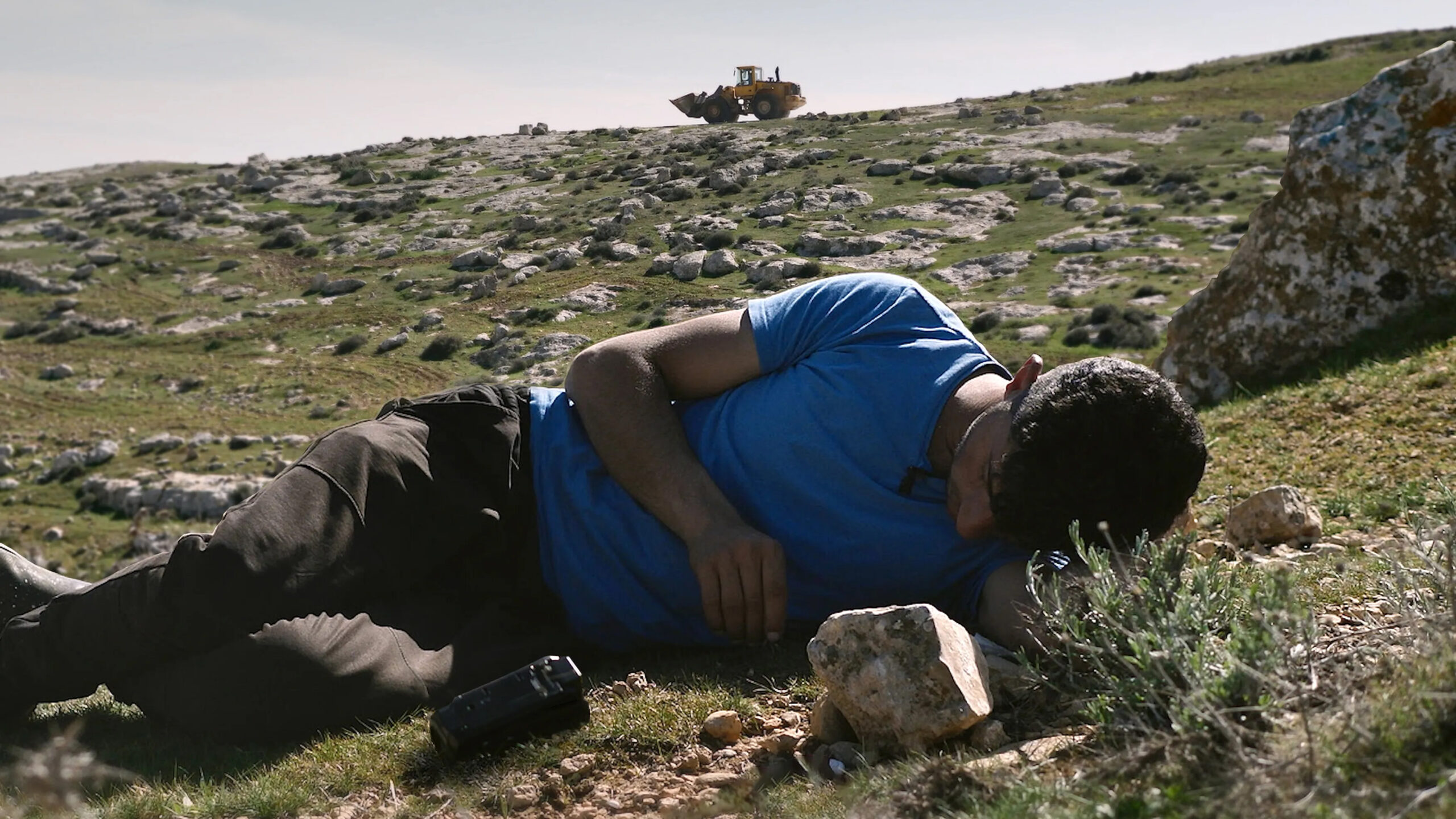
Before he was murdered in his hometown of Umm al-Khair, Palestinian activist Awdah Hathaleen sent a final message to the West Bank Protection Consortium’s WhatsApp group:
Hathaleen was shot and killed by Israeli settler Yinon Levi not long after. Levi was detained for a day and then released on house arrest.
Through his extensive efforts to combat Israeli occupation, Hathaleen worked as a consultant on “No Other Land,” a documentary spearheaded by Palestinian activist Basel Adra and Israeli journalist Yuval Abraham, which won Best Documentary Feature Film at the 2025 Oscars. The film’s suppressed release preceded Hathaleen’s murder by just a few months. He wasn’t the only crewmember assaulted by Israelis in the aftermath.
Weeks after “No Other Land” won its Oscar, co-director Hamdan Ballal — a Palestinian member of the Palestinian–Israeli collective — was brutally beaten in the West Bank. Co-director Basel Adra took to X to raise alarm:
“A group of settlers just lynched Hamdan Ballal, co-director of our film ‘No Other Land.’ They beat him and he has injuries in his head and stomach, bleeding [. . .] Soldiers invaded the ambulance he called and took him. No sign of him since.”

Ballal was then detained overnight in Kiryat Arba’a, an urban Israeli settlement, for unknown reasons. Upon release to a hospital in Hebron, he was treated for injuries he sustained while in Israeli custody.
This September, Adra’s home in the West Bank was raided by the IDF after an attack on his village by a group of settlers left two of his brothers and his cousin injured. During the raid on his home, his wife’s phone was searched and his uncle was briefly detained.
The point of “No Other Land” was to document the erasure of Palestinian people and their culture through Israel’s violence in the West Bank — particularly Adra’s hometown of Masafer Yatta. It’s ironic, then, that the response to the film was to further brutalize the filmmakers and all Palestinians in the West Bank, especially while the Israeli government and their supporters internationally claimed such issues were blown out of proportion, or did not exist at all.
The documentary’s limited release was not the intention of the directors. But the film struggled to find companies willing to distribute the film, despite its critical acclaim. “No Other Land” captures the cleansing of the Palestinian people in a way mainstream news refuses to. Brittany Luse on NPR’s “It’s Been a Minute” podcast posits that this uncomfortable and undeniable point of view is what many distributors may have taken issue with.
“When homes are being bulldozed, when people are being rounded up, children are watching this. And that is not always the perspective that people are seeing [. . .] when they turn on a news broadcast,” Luse said. “Seeing someone’s lived experience through their eyes, from their perspective, is something that not really all news can do.”
Abraham has called the lack of access to the film “criminal” while speaking to IndieWire. “Maybe some distributors are afraid to engage with the topic of Israel and Palestine, but isn’t this why we’re making documentaries?” he posited.
“I still believe that if there will be change it must come from [the U.S.], from this power,” adds Adra. “We really want people to see what their money is doing to us.”
“No Other Land” was released in the United States without formal distribution; instead, the film only became available through independent distribution on streaming platforms in October of this year. A potential deal with Mubi fell through because of ties to venture capital firm Sequoia and the Israeli military startup Kela.
“It made no sense that they would take our film showing Israel’s oppression of Palestinians, and then also partner with a company contributing to that oppression,” Abraham said in an interview with Deadline.
“No Other Land” is available on Prime Video and Apple TV.
Regions: Boston