
Guam’s Sainas talk cultural dance in “Something to Call Our Own”
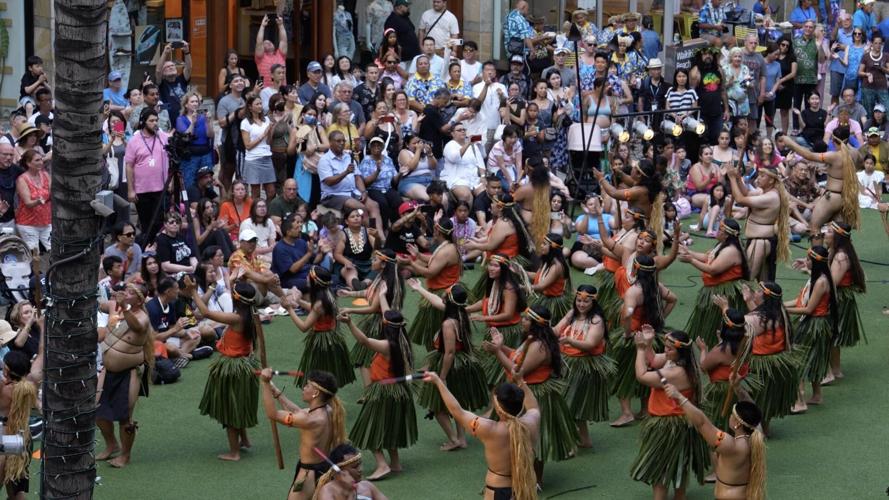
Project Inspire and PBS Guam’s enculturating dance documentary, “Something to Call Our Own,” distinguishes itself as a canonizing force for the CHamoru people. With the powerful message it sends of how cultural dance impacts the island and its role as a significant form of CHamoru cultural expression, it is a film that must be seen everywhere.
CHamoru cultural dance, or Bailan CHamoru, signifies a characteristic of individuality for the indigenous people of Guam — the CHamoru people. Throughout our colonial history, influences from the different “outsiders” have impacted, and oftentimes erased, some aspects of CHamoru culture. Frank Rabon, Master of CHamoru Dance, took the first step into revitalizing the culture and more specifically, the art of CHamoru cultural dance.
Throughout the film, compilations of aged footage show the CHamoru people, their land and its waters. The eerie, intriguing soundtrack makes it hard to look away, as the content makes you want more.
Another Independent Magazine article, “This is the CHamoru Culture Through the Eyes of Cultural Dance,”focused primarily on the gumas (dance groups) at present. But it didn’t get a chance to delve deep into the history of Guåhan’s cultural dance. Project Inspire’s “Something to Call Our Own”did.
Gumas exist in various places — Guam, the CNMI (or Confederation of the Micronesian Islands), the United States and even Japan.
Though the film’s primary focus is on cultural dance, it similarly highlights other local artists. “Colorful Hues,” a song by Jonah Hånom, is one of many local songs that play over the documentary — a layer of enrichment that I deeply enjoyed. The choice to feature songs like Hånom’s illuminates the talent and heart on the island, which indicates the filmmaker’s superb research and care for CHamoru people.
The island’s dances are another version of storytelling. Whether it be the story of when a house was first built, a story about traveling the waters or about courting the women of the island, it comes to life through the narrative medium of dance as well as documentary.
The Festival of Pacific Arts (FESTPAC), an annual event where all 28 indigenous nations showcase culturally expressionistic art, is a significant part of “Something to Call Our Own.” This event presents the opportunity for the 28 indigenous nations to come together and share their culture —their stories — with one another.
“From theatrical presentations to chanters, to tattoo artists to massage therapists, to storytellers, you’ll find all of them there,” said Dr. Benjie Santiago, Saina of Natibu Dance Academy. “Man, everything and everyone at FESTPAC is the epitome of culture running through their veins.”
The CHamoru people see cultural dance as more than one form of expression. This art form is also a “vehicle for the language,” said Brian “BJ” Terlaje, Saina, (dance teacher) of Guma’ Råsan Acho’ Latte.
Some CHamoru people aren’t fluent in the language due to the island’s vast history of colonization. There was even a period in time where speaking CHamoru was against the laws of the colonizers, so it wasn’t able to be passed on as it should have been. It is said by some that the language will die with our manamko’ (elders). But programs and classes have surfaced to ensure that the language, a vital part of our CHamoru legacy, lives on — and the art of cultural dance is a resource in making this happen.
This special art form is still in its neni (baby) stage. For a long time, Guam’s cultural dance consisted of the Spanish chacha, the jitterbug, and more outside influences that were not ours.
An especially touching part of the documentary featured a cultural dancer from Hawai’i and early teacher of Rabon’s, Janelle Kaawa — a moment where Kaawa speaks to Rabon, encouragingly telling him that the CHamoru people must have something.
“I know you guys chanted, I know you guys had celebrated. I know you guys had ceremonies. You cannot be Pacific Islanders and not have that as part of your history,” Rabon said as he reminisced on what Kaawa told him. From that point on, Rabon started searching for and about our CHamoru dance.
Since CHamoru cultural dance is still in its early stages, there are various ways to learn it through the different gumas. In each guma’ the techniques, the attire, they’re different. But they are united under one meaning and purpose: to leave a legacy, to rebuild a culture, to tell our story. The masters of their respective gumas do this by making the art “popularized and reachable,” as Vince Reyes, Master of CHamoru Dance of Inetnon Gefpa’go Cultural Arts Program, put it.
“I don’t want to be termed as extinct, because our people have been fighting for too long,” said Eileen Meno, Master of CHamoru Dance of Guma’ Irensian Tåotao Tåno.
As a CHamoru woman, this documentary really meant something — it put a very significant part of our culture into the sights of people who may not have known we existed. But, we do, and people like Frank Rabon, Maxine Bigler, BJ Terlaje, and every single one of the fafa’nagues (teachers) on the island ensure that we are seen as nothing else than a CHamoru people with something we can call our own.
HÅCHA NA HINENNGE, HÅCHA NA KUTTURA, I TÅOTAO TÅNO’.
One belief, One Culture, The People of The Land.