
‘Stardew Valley’: The Quintessential Indie Game
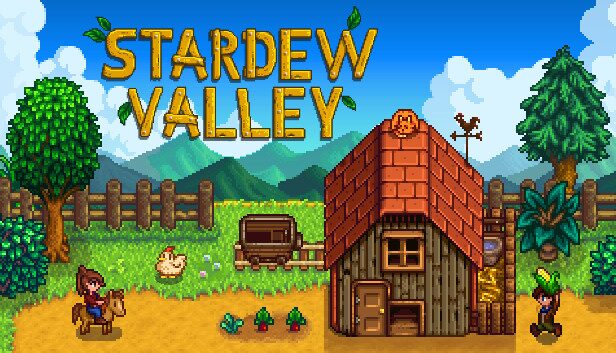
Recently, I watched my brother play the video game “Stardew Valley.” Sitting in his Portland apartment, I wondered how such a simple game, with deliberately limited graphics and minimalistic design, could garner so much fanfare. It wasn’t until I started playing the game myself that I finally understood its appeal — “Stardew Valley” fully embraces modern indie mechanics in its narrative and gameplay. This makes it the quintessential ideal of the indie video game genre.
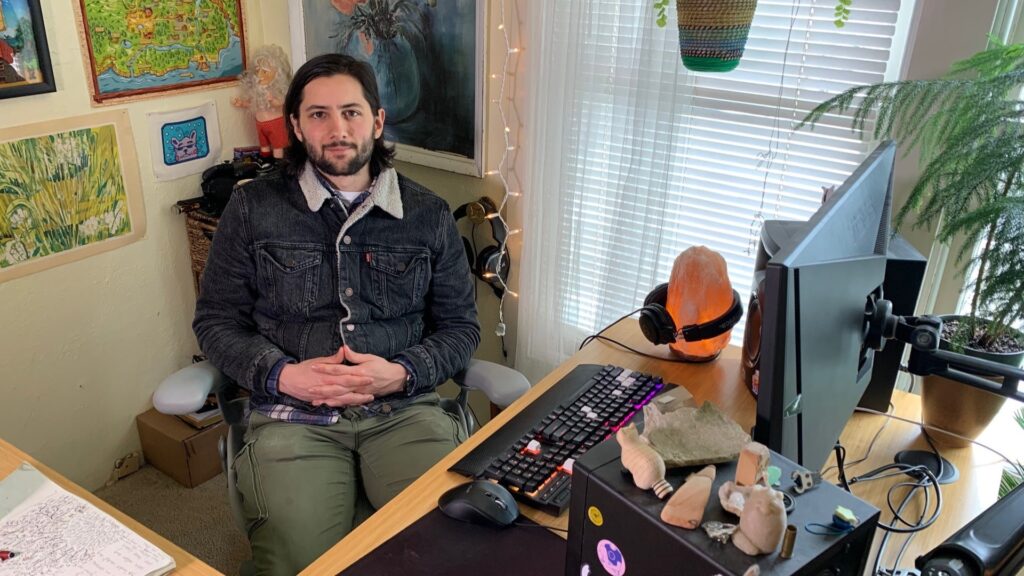
Indie games are often helmed by a charismatic character who embodies the game’s relevance to the public. While most games have a team of creators, Eric Barone (also known as ConcernedApe) began solo developing the pixel farm-simulator game in 2012. Barone’s lack of collaborators is evident — the game is hyper-focused on a small world that, while simple, still manages to fully immerse the player.
When it premiered, “Stardew Valley” pushed the limits of the simulator genre by incorporating relationships that the players can form with non-playable characters. Despite being made by a single person, much of the game is built around fostering a sense of community.
Modern indie games are frequently similar to older games from the 1980s and 90s, which relied on minimalism to tell a story. Then, it was out of necessity, not having access to the technology that exists today. Interestingly, this minimalism continues today in indie gaming. While some see it as restrictive, I think minimalism has helped indie game makers find a place in the overall game discussion — its distinct style affording it recognition.
Take the 1985 game “Super Mario Bros.,” for example. Though their release is separated by decades, from a mechanical standpoint, it shares a lot with “Stardew Valley.” In “Stardew Valley,” the objectives are usually simple: go to Point A and complete an objective using tools within the game. Similarly, “Super Mario Bros.” is defined by a simple objective: get to the castle by completing various levels. It’s a simple loop, but it’s enhanced by the complex journey the player takes to get there.
Both games share the same basic philosophy: they derive their value from the act of play rather than from connecting directly to the on-screen narrative. The full embrace of “video-gamey” elements as a substitute for a narrative-driven story makes “Stardew Valley” feel like a spiritual successor to the classics of the past. Its embrace of old-school video game mechanics allows it to hold its place as one of the most innate indie games.
“Stardew Valley” presents its story through gameplay mechanics. In the game, you play as the inheritor of a homestead. The player is never given a set objective; instead, they are guided through a series of introductions to the game’s mechanics, presented as quests. Once you meet people in the game, you can have romances, friendships or rivalries with them. “Stardew Valley” completely embraces the role-playing design ethos of consistently saying yes to the player. If you want to be a miner who harvests ore, you can do that. If you wish to farm, you can do that as well. This makes the game feel much bigger than it is, ensuring replayability as the many small decisions available have a visible effect on how the world progresses. This is the exact vision many indie games try to replicate to varying degrees of success.
Certain mainstream games (the wildly successful “God of War: Ragnarok,” for example) forgo these elements in favor of more filmic elements like cutscenes (unplayable parts of a game where control is taken away from the player) in order to make the experience feel more cinematic. Ultimately it doesn’t work because the player doesn’t expect to be the one who just watches the events unfold in bated breath — they are meant to be the driver of the events. The power of games as a medium is the illusion of control. When one escapes to these realms of fiction, they have power, whereas a game like “God of War: Ragnarok” simply has interactive elements attached to the cutscene movie that is the game.
While indie films have gotten more traction in recent years, they’re still in a different world from big-budget games. A full embrace of the medium’s classic elements, as seen in a game like “Stardew Valley,” is what the industry needs to regain and maintain cultural power, as it was in yesteryears. But for now, we can rest easy knowing that my brother’s digital farm can continue to grow.
Regions: Boston