
In ‘We Had a World,’ monotony is a theatrical device
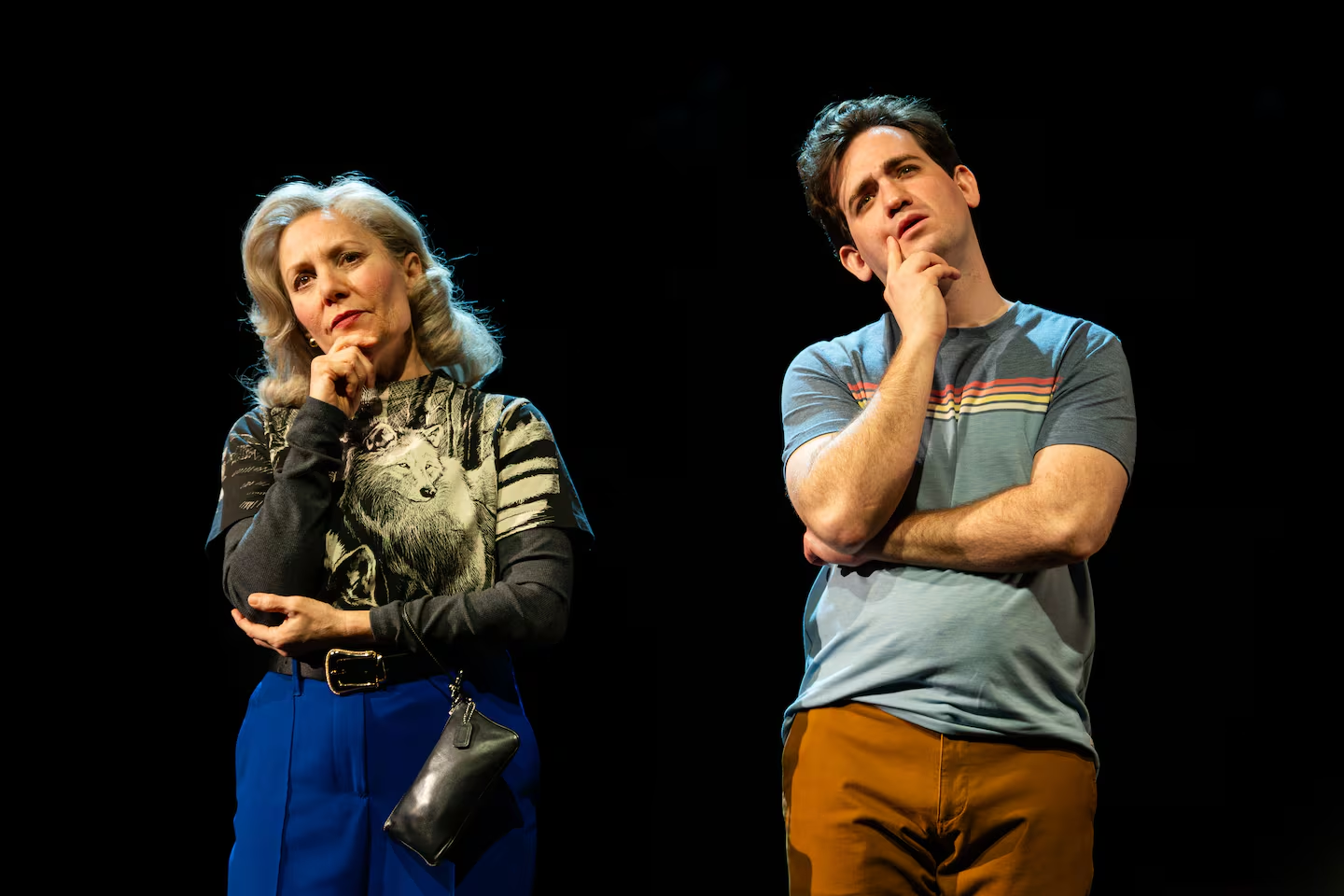
Before the audience is swept into a stream of family memories spanning over three decades, Joshua’s grandmother, Renee, makes him promise her one thing on her deathbed. If he is set out to write a play about their family, he better make it “as bitter and vitriolic as possible.”
In “We Had a World,” now having its New England premiere at The Huntington, playwright Joshua Harmon does the opposite. True, the one-act play is filled with explosive family arguments and petty vendettas, but is equalized so much by its genuine writing that the tender and sweet moments, though buried underneath the drama, are just as potent.
Several of Harmon’s plays have had their run on Boston stages, but this is Harmon’s most personal work to date. He casts the spotlight on his own life and complicated relationships with the two women who raised him — his stern lawyer mother, Ellen, and her eccentric alcoholic mother, Renee. In the play Harmon translates the contradictory intimacy of being known by presenting the horrors and beauty of family as inseparable.
The ugly doesn’t make sense without the good, Joshua tells the audience at the start. As the narrator, he expects the audience’s active assessment of his family throughout the play. In his earliest memories as a young boy in the late ‘80s, Joshua loved the company of his grandmother, thrilled each time he got to leave his suburban life to visit her in New York City. Renee is the first person to nurture a cultural instinct in him and encourage his artistic curiosity. She takes him to see Broadway shows, controversial films, and age-inappropriate exhibits at The Met. She treats him like an adult friend, much to his mother’s distress.
It’s clear that Joshua’s idolization of his grandmother bothers Ellen, who had to bear witness to the ugliness of her mother’s alcoholism as a child — a disease Renee is never able to overcome. Renee is a better grandmother than she was ever able to be a mother, and Ellen eventually refuses to continue to hold the protective veil over her son’s eyes when Renee shows up drunk to one of Joshua’s recitals.
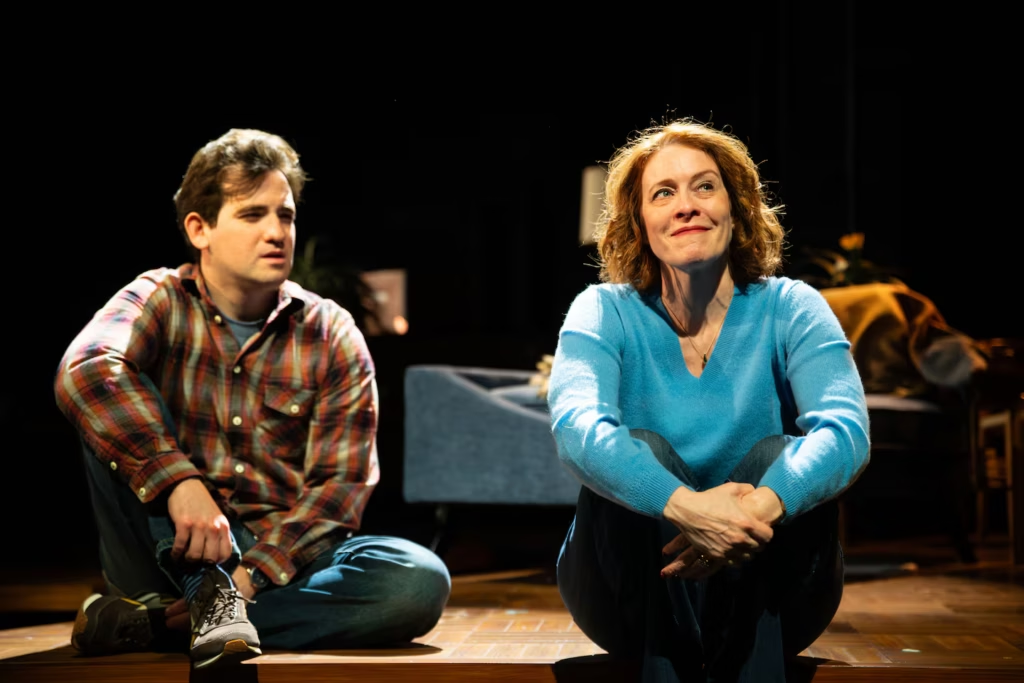
The familial chemistry between the three actors is palpable. As Renee, Amy Resnick masterfully switches between moments as a passionate woman in her 60s and an ailing woman in her 90s. Eva Kaminsky’s characterisation of Ellen is static in comparison as she moves between her 30s and 60s. This is more forgivable in Will Conard’s Joshua, who narrates the story as a thirty-something while also having to insert himself into memories of his 5-year-old self.
Courtney O’Neill’s scenic design is simple but poignant, never too distracting as to hinder the memories and the decades from flowing freely. The lack of change in scenery works as a storytelling device of itself — while the time changes, the family patterns remain frustratingly stagnant.
In his review “‘We Had a World’ — of monotony,” Boston Globe theater critic Don Aucoin writes that “the playwright finds his family more interesting than you are likely to.” I would argue the contrary. The play works precisely because Harmon recognizes the banality of these familial tensions. Though his love for his maternal figures shines through the scenes, the play doesn’t ask its audience to rate how interesting Harmon’s family is. Instead, it allows us space to think about our own family and how we are each a product, both good and bad, of the people who raised us.
In criticizing the play for its “stubbornly unevolving state,” Aucoin misses its point entirely. Some family dynamics don’t precede us in death — most persist as a frustrating rotation of monotony. As a playwright, Harmon skillfully finds the humor and drama in reality, showing that it is often more comfortable to be ridiculously explosive than to be intimately known.
The play’s climax comes bitingly close to the end, when Renee, now in her 90s, has been diagnosed with cancer. The family knows her end is near. As such, Ellen prepares a meal to bring over to her ailing mother with Joshua — and everything that could go wrong does. Renee invites Ellen’s sister, Susan, whom she does not speak to, after promising she wouldn’t. This causes Ellen to storm out, Josh in tow. The mother and daughter do not have a final moment of connection.
It is only through exploring the monotony of this torturous cycle, the one that makes Renee and Ellen need each other as much as they feel misunderstood, that Joshua is able to understand this scene. His grandmother had carefully planned for the event to unfold as disastrously as it did: to keep her daughter at a distance, to prevent them from having to face her death and their love for each other.
Our family lives can be a world of monotony, it’s true; there’s both pain and comfort in that.
“We Had a World” is onstage at the Huntington Theatre Company from February 12 through March 15.
Regions: Boston