
Caught Between Tragedy and Utopia: A Review of Liz Sargent’s ‘Take Me Home’
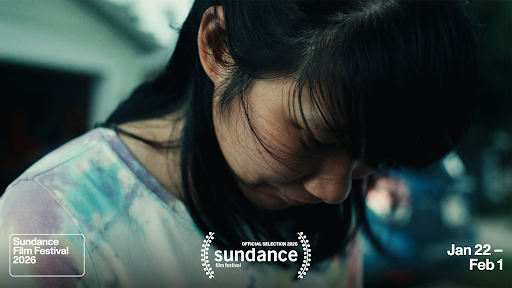
SUNDANCE — Liz Sargent’s “Take Me Home“ (2026) premiered at the 2026 Sundance Film Festival as a contender in the U.S. Dramatic Competition along with 89 other films. The feature adaptation of the 2023 short film of the same name won the Waldo Salt Screenwriting Award: U.S. Dramatic and a critically acclaimed status continuing on with the festival circuit.
The film follows Anna (Anna Sargent), a 38-year-old adoptee who lives with an unnamed cognitive disability. It takes place after the sudden death of her mother, who is her primary caretaker, as well as that of Anna’s cognitively declining father. With themes of familial responsibility, disability, personal independence and loss, “Take Me Home” particularly stands out for its balance of social commentary, offering thought-provoking critiques of societal structures like healthcare and insurance, and authentic representation of adoptees and people living with cognitive disabilities.
Within minutes of the feature, L. Sargent’s intention to shift away from her proof-of-concept 2023 short becomes obvious. Though captured by different cinematographers, both films share similar documentary-style camera work and capture a tone of devastating and tender social realism. A striking difference, however, is the father’s, Bob’s (Victor Slezak), absence in the short and significant presence in the feature, in which he almost completely replaces Anna’s fellow adoptee sister, Emily (Ali Ahn). This drastically shifts the film from a depiction of sisterhood to one of parenthood complimented by sisterhood.
I was originally drawn to this film for its portrayal of sisterhood and the depiction of siblings subjected to parentification, especially given the choice to cast L. Sargent’s real-life sister, A. Sargent, to take on a self-reflective role in both films. The more intriguing aspect of this film — namely, the sisters’ introspective depiction of a sisterhood after the added nuance of being a caregiver — is dwindled down into a side plot for a small section of the film, but maintains a point of interest for audiences.
While Bob’s newfound presence adds additional layers to the film, it ultimately overshadows the original sisterly storyline. In collaborating with L. Sargent while writing and directing Emily’s emotional confrontation — where she asks Bob the reason behind adopting a child with a diagnosed cognitive disability — Slezak and Ahn provide rationale for L. Sargent’s creative shift. Left out of mainstream representation, the emotional toll of having a family member with disability is often shown in this guilt-ridden or taboo narrative. This film normalizes speaking about said toll and the heightened family responsibility that comes with it.
With their chemistry, Slezak and A. Sargent flawlessly assume this ultra-specific father-daughter dynamic. Intimate, emotionally devastating moments between Anna and Bob — such as when Bob realizes he is unable to properly take care of Anna and must give her up to get around insurance restrictions — provide necessary commentary on the modern treatment of the societal population with disabilities. By the end of the father-daughter arc, I felt as though the film had redeemed itself for the creative shift that originally evoked disinterest.
An additional moment of recognition in this film was the exploration of Anna’s sexual desires and outlets. The sexual drive of people with cognitive disabilities tends to be a forbidden topic of discussion in society, rarely ever mentioned on the big screen. However, L. Sargent takes a leap into the taboo, deciding to show Anna watching porn and being caught by Bob and Emily. This ends with a conversation between Emily and Bob about letting Anna have that sexual outlet. Anna’s sexuality is not limited to that scene, but rather an overarching motif most apparent in her crush on her neighbor, James (Shane Harper). Although James and Anna do not reach a sexual or romantic relationship, their connection demonstrates the independence Anna wishes to seek that society has shunned her from.
L. Sargent’s social commentary and criticisms are at full force by the end of the film as Bob walks off into nature, abandoning Anna in the house by herself, before she proceeds to accidentally cause a house fire. Viewers are consumed by a sensory overload as auditory and visual illusions take over the screen as the smoke alarm and flames take over the suburban house with Anna inside.
The film, however, doesn’t end here.
After that sensory overload, we awaken alongside Anna in a peaceful, colorful world. The documentary-style cinematography and the devastating tone of the previous entirety of the film is no longer; it is as though the world has changed entirely, to a happier one.
Anna now lives in a utopian society, working at an assisted living facility for people with cognitive and other disabilities. She has a “purpose” in life — a reference to her mother’s premortem assertion that if society was different, she would be remarkably successful. This portion of the film encapsulates many earlier allusions — such as Anna having a dog after saying she missed the one from her childhood, and the location of the facility, appearing to be located across a body of water frequented by the family and beloved by Anna.
This utopia is not death — or at least, does not appear to be. Bob and the mother, along with the deceased childhood dog, are not in this world, but Emily is. With this ending, L. Sargent imagines what could be if society chose to embrace people with disabilities instead of infantilizing, restricting or abandoning them.
Although I agree with her sentiments, this romanticized ending significantly detracts from the tragedy of the film. The utopian ending felt reminiscent of overused “it was all a dream” endings, as it played off the tragedy and conflict to be something that can be so easily fixed, without offering any real solutions or showcasing the drastic societal changes that would need to occur to get there. The sensorially overbearing house fire encompasses the entire film’s essence significantly more than the utopian sequence, which even appears to have different color-grading than earlier scenes.
Despite the tonal dissonance of its ending, “Take Me Home” remains a powerful and necessary film. L. Sargent succeeds in starting conversations around cognitive disability, caregiving, sexuality and family responsibility in a way that is rarely seen. Through deeply committed performances — particularly from A. Sargent, Slezak and Ahn — the film captures the complicated emotional realities of loving someone whilst confronting the limits imposed by societal systems that fail to support them.
The film’s feeble ending does not erase the urgency of criticisms and questions posed by “Take Me Home.” Instead, it leaves the audience suspended between two possibilities: the painful present reality faced by people with cognitive disabilities and the imagined world that could exist if society chose to value autonomy and humanity. In that tension lies the film’s lasting impact on audiences. “Take Me Home“ may not resolve whether Anna succumbs to society’s failings, but it ensures that viewers can not easily look away from them.
For future updates on the film’s distribution or to donate to related educational and advocacy community work, check the official website for “Take Me Home.”
Regions: Boston