
Inside ‘Closet Space,’ the Sapphic Dating Show Fighting Against Shallow and Heteronormative Dating Culture with Community and Authenticity
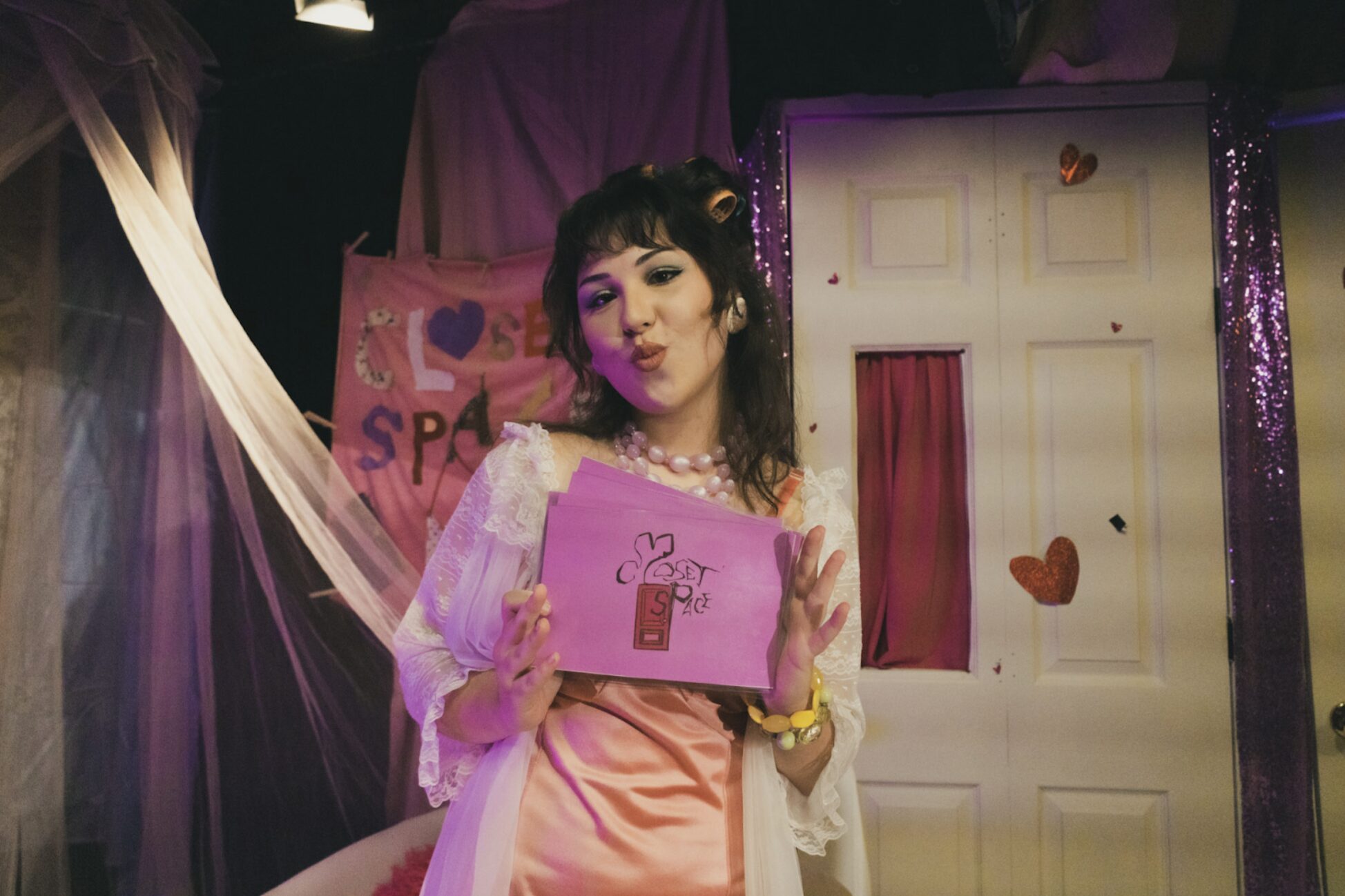
As queer dating culture bleeds into mainstream culture at a heightened rate — with the current crazes surrounding “Heated Rivalry” and the upcoming season of “Bridgerton” — queer romance is still being subjected to the heteronormative lens. Even in the dating show realm, queer representation is either absent, shallow or restricted.
“Closet Space” — a Missouri-based independent blind dating show for sapphic-identifying individuals, mainly those from underrepresented identities in terms of gender expression, race, ethnicity, among other traits — is rejecting these outdated standards of queer romantic representation in the industry and promoting community within the queer dating scene in the Bible Belt region. Lindsey Goodhart — the creator of “Closet Space” — sat down with The Independent this past month to speak about the show’s creation and mission.
Goodhart conceived the show’s original concept out of her personal strife with the queer dating culture during her time at Missouri State University. “Being a queer person in the Bible Belt, it’s really lonely… and [I was] getting really sick of relying on dating apps and trying to just sell myself. I found it really shallow,” Goodhart said.
Her peers, mostly consisting of heterosexual men, dominated over her with heteronormative opinions on media production, something which contributed to Goodhart’s urge to take action. This amassed indignation found an outlet through a gameshow production course that was taught by a lesbian professor at MSU. This was where Goodhart’s frustrations took the form of a dating show.
“I really wanted to develop a space that was creative and kind of playful… but I wanted to make it more of a safe space for not just women, but queer presenting people in general,” Goodhart explained. She graduated from MSU in May 2025, and shortly thereafter, began actualizing her idea with her saved tips from her day job as a budtender at a dispensary.
Since the show’s first live recording that took place in December and sold out within the first 48 hours, every show has sold out as the venues keep increasing in size. Online, the show has seen additional success, gaining 25,800 followers on TikTok and receiving nearly 6,000 views for their first episode on Youtube.
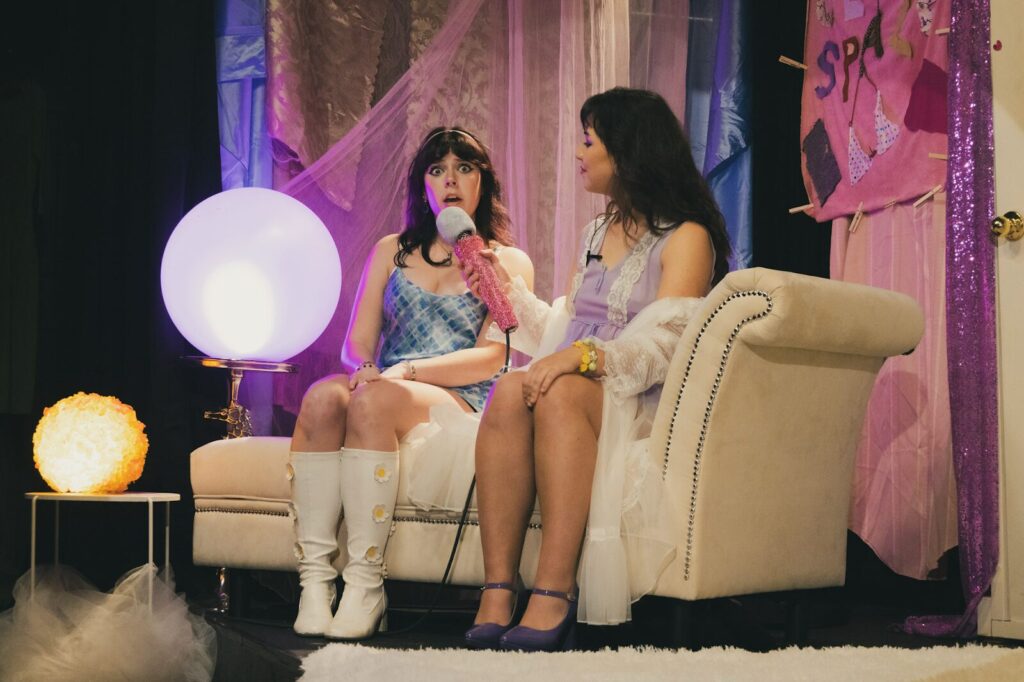
The show is hosted by Kait Hernandez, who guides an individual through a series of social games to blindly decide which of the three individuals behind the closet doors to choose romantically. At the end of every episode, the contestant playing the matchmaking games on the stage with Hernandez chooses who to match with behind the two remaining closet doors, similar to hetero-centric dating shows such as “The Dating Game.”.
However, after the choice is made, the two hidden contestants come out of the closet and the chosen contestant is given the choice to either accept the on-stage contestant’s match or select the other formerly-hidden contestant — completely disregarding the norm and evening out the playing field.
“That’s what queerness is, having them make that final decision. I feel it also gives them the power… none of these [contestants] behind the door are less than the girl who’s on the couch,” Goodhart responded when asked about the plot twist. “Just giving them the time to speak up, create their own little drama… it’s really resonant. Like the queerest experience.”
The queerness extends beyond the show’s plot twist. The general aesthetic of the show combats the normative financial restrictions placed upon artists, making the visuals just as queer as the contestants.
Starting with less than $1,000 in startup funds, the production relied heavily on thrifted or handcrafted production sets. Beyond curating a unique and authentic visual style for the show, Goodhart seeks to inspire independent mediamakers to innovate and overcome financial barriers.
“You can make something from nothing,” Goodhart remarked. “I hope people see that from all the set pieces being recycled, everything from a part of this is just secondhand, all built from what we had, and just the resourcefulness.”
With local queer community members being a prominent factor in the show’s growing success, one can see how resourcefulness has extended beyond set design. “They’ve molded it. Our community here in Springfield, the contestants, they’ve come back on as PAs [production assistants],” Goodhart explained. “It really is cool to see everybody band together. And that’s what this project’s for — I created it with the intention of: if somebody tells me that something isn’t working, [then] I’m going to listen to that.”
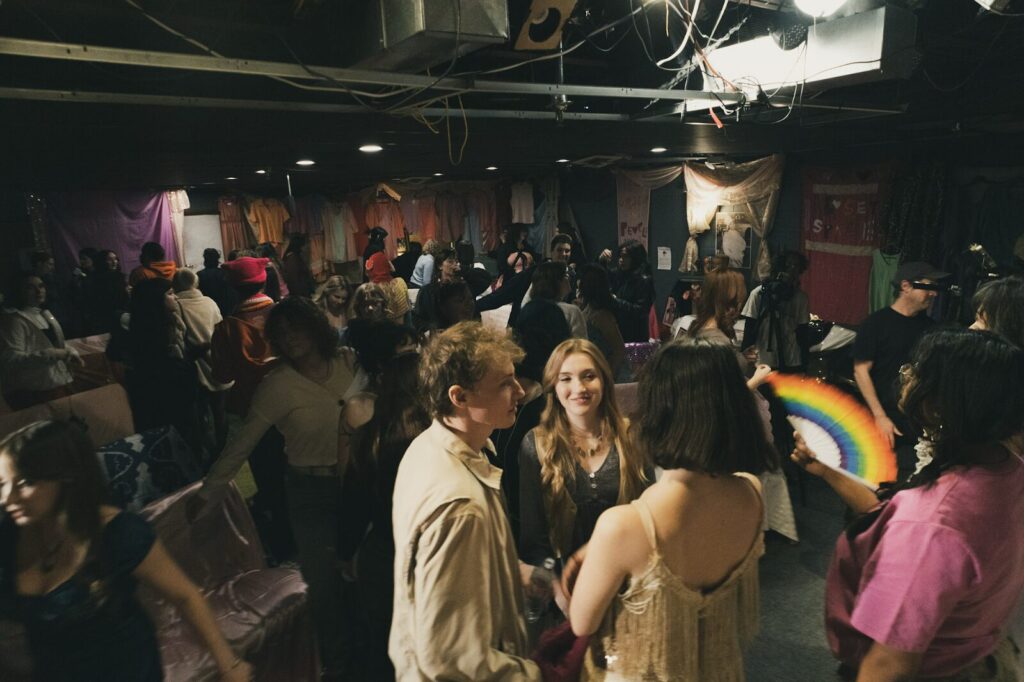
“Closet Space” is made for and by the queer community in Missouri, making it a stark contrast to the majority of mainstream queer media and reminiscent of New Queer Cinema — an independent film movement in the late 80s to early 90s where queer filmmakers challenged heteronormative storytelling and placed queer perspectives at the forefront. Similar to filmmakers of that time (e.g., Cheryl Dunye and Rose Troche), Goodhart’s intention is to serve her local community rather than achieve commercial success.
“[‘Closet Space’] isn’t just some random piece of media that’s there to generate income and that’s it,” Goodhart said.“[by] keeping it independent, it very much gives us the opportunity to keep pioneering for what this project could serve for the community on both a local, a more national and even international scale.”
Even as the project begins to grow beyond Missouri’s state lines with its immense international online following, Goodhart affirms how the community will continue to be at the forefront. “Keeping the community in mind as we’re making [the show]… that’s what’s proven to be the strongest for us as we grow ‘Closet Space.’” Goodhart explained, becoming emotional. “If you take care of your community and you really do keep that on the forefront, [then] you will get fed and you will get housed… and just living on a day-to-day basis with viewing [ourselves] as a part of this giant blob of what we are as one, I think that we will really make a difference in this world, and I have so much hope.”
“Closet Space” strives to showcase the spectrum of identity in the sapphic community, ensuring that the entire community is at the forefront — not solely white cisgender lesbians who are often the focus. Goodhart, as a white cisgender lesbian, actively addresses how her own biases have influenced her and how she works to counteract them. “I’ve really just been confronted with my own whiteness and cisness… I want to make sure that I’m paying homage to all trans people [and] people of color,” Goodhart detailed, “just trying to keep them at the forefront, just keeping their voices has been a learning curve… learning how to integrate them.”
Any queer individual over the age of 21 and living in the Missouri area can sign up online to audition for the show. The “Closet Space” creative team employs episode themes to heighten the diversity and increase the amount of the sapphic community represented onscreen. Goodhart hints at future episodes centering around furries, transgender individuals, various types of masculine lesbians, and non-binary individuals.
Queerness is the very essence of the show — from the community’s involvement and the contestants’ identities down to the structure.
In a media landscape that often treats queer romance as a trend or a marketable aesthetic, “Closet Space” is opening doors to illustrate what dating — and storytelling — can look like when the community members themselves are shaping the narrative. The show’s structure, crafted aesthetic, and cast of local contestants reflect the same underlying idea that Goodhart emphasized throughout the conversation: representation is not just about visibility, but about having a voice and power in constructing the narrative.
What began as a response to isolation in the Bible Belt has slowly become a modern-day model of what independent queer media can accomplish when it prioritizes authenticity and community over marketability and commercial value.
The first three episodes of “Closet Space” are now available to stream on their Youtube channel. For future tours and Youtube upload dates, follow the show on Instagram or check out their website for updates.
Regions: Boston