
Interview with Director Katharina Rivilis Following Cannes Premiere of ‘I’ll Be Gone in June’
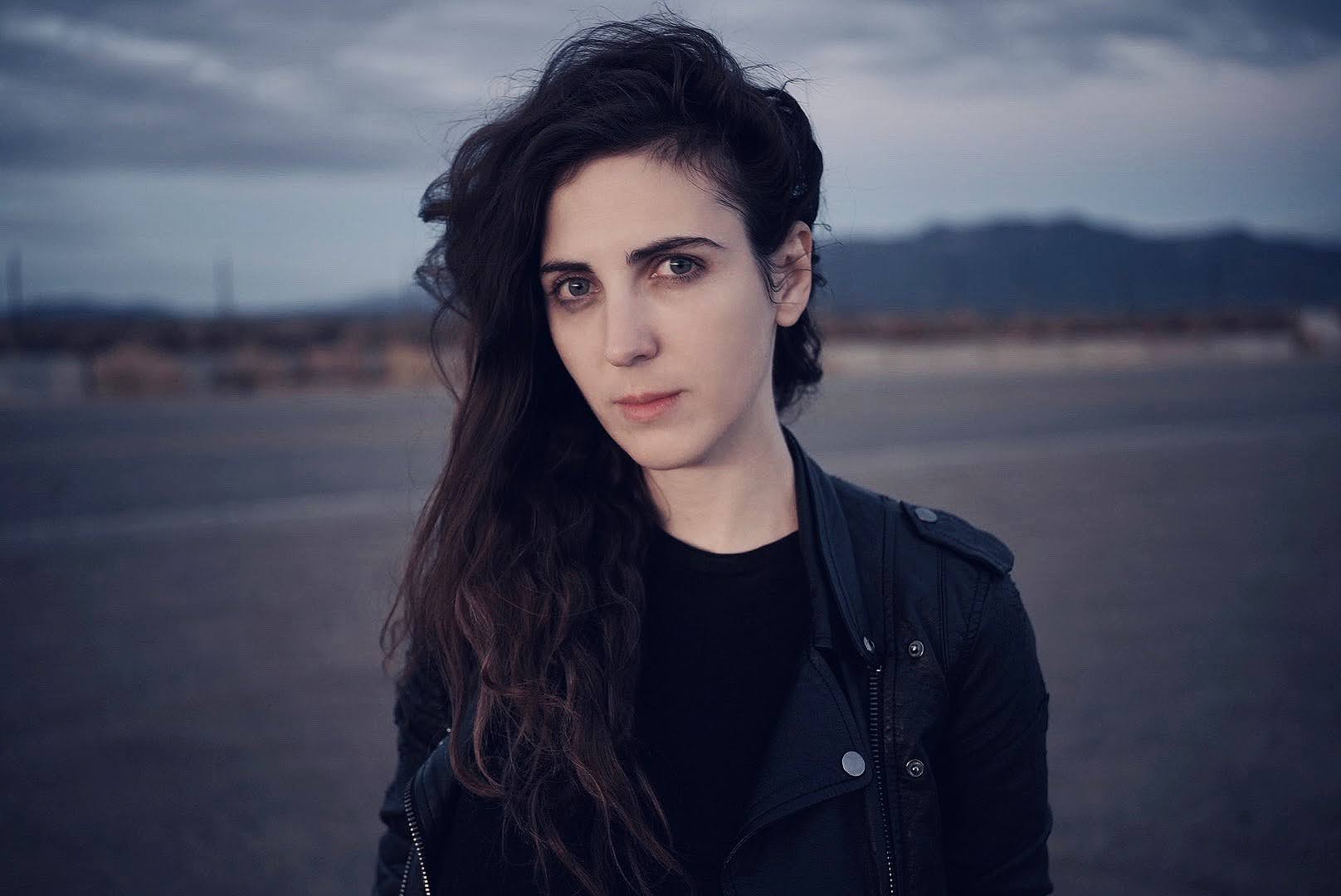
Away from the clamour of the Cannes Competition, the festival’s Un Certain Regard section offers a space for films that distinguish themselves through quieter, more singular artistic visions. Katharina Rivilis’ I’ll Be Gone in June is one such work — an absorbing and affecting film that draws the viewer into its world with remarkable subtlety and emotional precision.
The story follows Franny, a wide-eyed German exchange student who travels to New Mexico in 2001. As she drifts through a period of emotional uncertainty, she is reshaped through fleeting encounters and fragile relationships coupled with moments of solitude.
Following the premiere of the film at the Cannes Film Festival on May 17, 2026, I had the privilege of interviewing Katharina Rivilis. She opened up about the film’s origins and expanded on its emotional and political undercurrents.
Rivilis carefully constructs a mundane atmosphere that allows silent and minimal moments to carry enormous emotional weight. The film captures emotional dislocation and vulnerability with such rare precision that I felt seen in a way I hadn’t experienced before in a movie theater. I found myself deeply identifying with the protagonist.
Dana Knight (DK): I connected deeply to the film because I was also an exchange student around that time, in London rather than the US. Could you talk about your own experience in New Mexico and how it inspired the film?
Katharina Rivilis (KR): Yes, the film is inspired by my experience as an exchange student when I was 16 years old, but it’s fictionalized. Before arriving, I had my own expectations of the United States, of what I would experience in the great adventure beyond my own land […] all these crazy things that I just knew from pop culture. Most exchange students don’t end up in a big city, but rather in a very rural area, and before smartphones you didn’t know where you were going to, you couldn’t look it up. I was very upset that I wasn’t going to New York or California — someplace iconic. Then I went [to New Mexico], and I was really blown away. I met the people and encountered the place — it’s a very interesting place, full of culture, and talented people who escape big cities. There’s a big Native American community and a big Hispanic community. New Mexico has a very rich culture. It really became like a second home to me.
DK: In the press notes, you mention a structure of power [in the United States] that wasn’t immediately visible to you at the time. Is that what the film is exploring beneath the surface?
KR: I think when I first came to the US as a teenager, many of these structures were something I felt intuitively before I could fully understand or articulate them. Only later, looking back, I became more aware of the systems and power dynamics underlying everyday life: the strong military presence, recruitment in schools, the relationship to authority and policing, but also social structures inside families or communities. There was this tension between the idea of freedom and different forms of control or dependence on the other.
In the film, I wasn’t interested in explaining these structures directly or making a political statement in an obvious way. I was more interested in how they are experienced emotionally, especially by someone like Franny, who arrives as an outsider and slowly senses these invisible forces around her without fully understanding them yet. I think cinema can sometimes capture these multilayered atmospheres better than explicit explanations can. You feel them in small interactions, in the way people behave, in what is said and what remains unspoken. That was very important to me in the film.
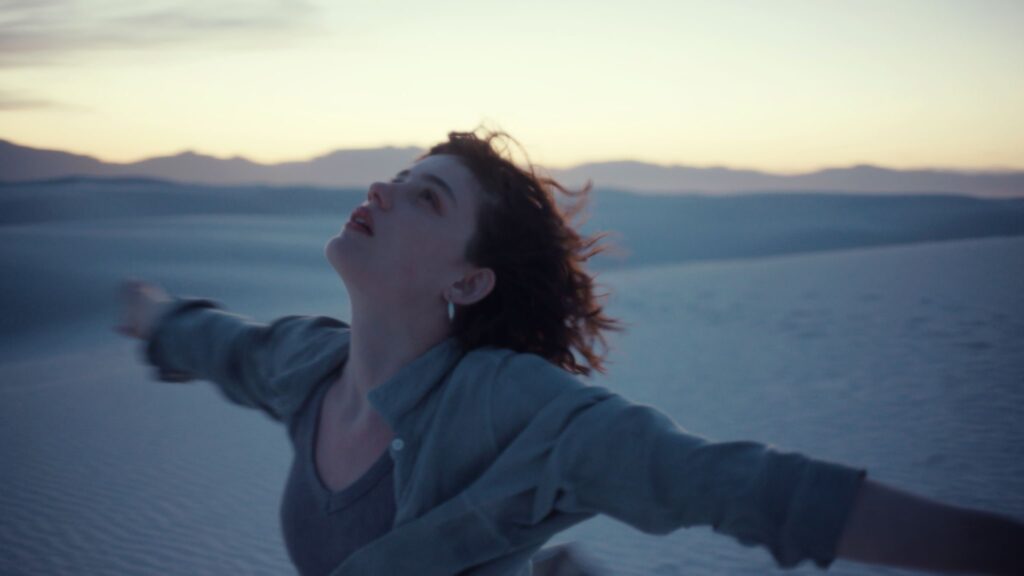
DK: There’s the scene where Naomi is told she can’t return to her exchange family’s home. It’s understated, but devastating. Is that part of the hidden reality you wanted to capture?
KR: Yes, absolutely. I wanted to show the everyday emotional reality of being an exchange student, especially as a young person who suddenly ends up in a completely unfamiliar environment and is dependent on the rules and decisions of another family. You arrive there on the basis of trust, but you also have very little control over your own situation. You have to adapt very quickly — not only to a new family, but also to different social codes, different expectations, and a different culture. And often, as a teenager, you don’t really have the language or the power to negotiate those situations. Adults make decisions about your life without necessarily involving you. What interested me was precisely these quieter forms of emotional disorientation and powerlessness. In Franny’s case, nobody even clearly explains to her why she is being sent away. That ambiguity and lack of direct confrontation also felt very true to me, this way of avoiding uncomfortable conflicts instead of openly addressing them. For Franny, it creates this very destabilizing feeling that the ground beneath her can suddenly disappear without warning. It is a very common phenomenon for exchange students to change their host families during the course of the year for different reasons — and sometimes even more than once.
I think many people who have lived abroad at a young age recognize these kinds of experiences, even if they are rarely talked about openly, because from the outside an exchange year is usually imagined as something exciting and positive. But emotionally, it can also be a very vulnerable and lonely experience.
DK: I was very moved by the inclusion of the 9/11 footage, especially the free-fall imagery. It felt like a metaphor for Naomi’s emotional state — lost, ungrounded. What drew you to revisit that footage in the film?
KR: The film is set during a moment when 9/11 altered everyday life, and this took place in large part through television images. It is an extreme experience to suddenly be torn out of your routine, to watch live coverage of an event of such force and brutality. There was an immediate feeling that the world had somehow changed. We of course remember these images from back then, but it was important to me that the film could also be watched and understood by younger people, who had not experienced it first-hand. So the idea of including TV footage from the day, and also from events following over the next year, was there from the start. It is impossible to re-create, but I still wanted the film to give viewers a sense of what it felt like at the time.
For me, the footage of people falling carries something profoundly disturbing and surreal, and it resonates emotionally with Franny’s inner state at that point in the film: Franny is far from home, emotionally ungrounded and moving through a world that suddenly also feels unstable and uncertain. At the same time, it also reflects a larger rupture in the American self-image. This idea of a country that had seen itself as powerful, stable and untouchable suddenly confronting its own vulnerability. So the images became more than historical material, almost an emotional mirror. The film takes place in a small desert town thousands of miles away from New York, but what fascinated me was how these events still completely shaped the emotional atmosphere, the thinking and the social dynamics of everyday life there.
DK: You worked exclusively with non-professional actors. Was that a practical necessity or an artistic preference, and why?
KR: Both. First of all, there just aren’t that many professional young actors of that age in that region. I wanted to work with young people who are actually from Las Cruces, who have their own stories and genuine connection to the place. So quite early on it became clear that I would work with non-professional actors — or “natural actors,” as I like to call them. For me, it was also an aesthetic choice, very much in the tradition of Robert Bresson, to work with real people and bring a certain authenticity to the story. Shooting with non-actors creates a completely different process. There’s a lot more improvisation, a lot more exploration of situations and the film develops in a very organic, almost documentary-like way. Sometimes people would say or do things that I never could have written at my desk, and those moments became really valuable for the film. It was also a way of bringing real life and lived experiences directly into the narrative and enriching it that way.
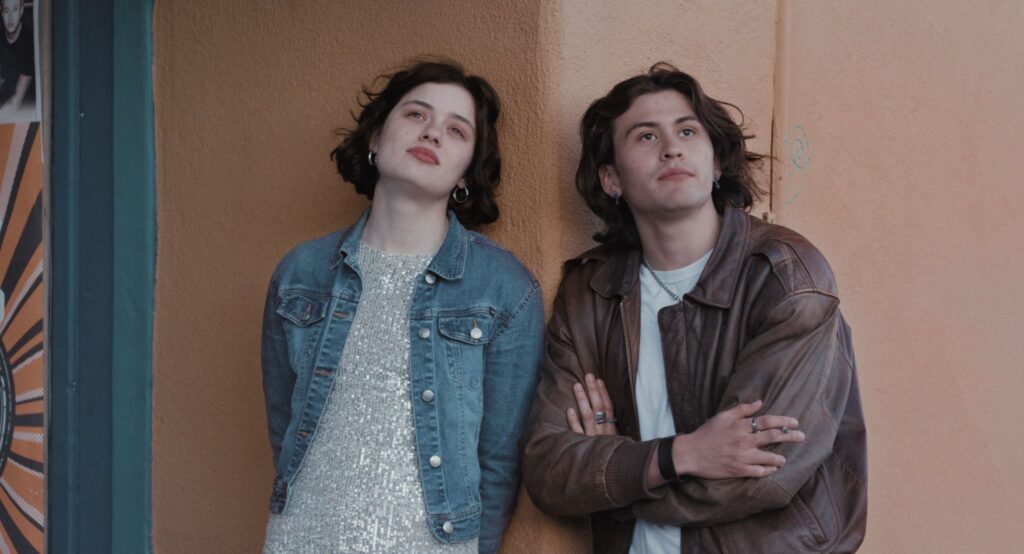
DK: Naomi is extraordinary in the role of Franny. How did you find her, and how did you work together?
KR: We looked for three years for the lead actors and actresses, it was a long journey to find them. We saw over 3,000 young people for the main role, and looked all over — everywhere! We found Naomi through social media. I saw a Facebook ad that had this photo of a young person holding a cigarette and just looking to the side — a sad, lonely look. It looked like an old photograph, and I thought, this is what Franny’s supposed to look like.
I reached out to this poetry website from South America but they were like, “we don’t know who that is, we just found it on Pinterest.” Then, I tracked down the photographer who told me who the girl is: Naomi Cosma, a young woman from Germany, who’s 19. I was so surprised it was a real person! Then, I reached out to Naomi over social media and convinced them to come to Berlin to do a casting at some point — this was after many, many years of trying to convince Naomi.
DK: Wim Wenders is one of the film’s producers. How did he become involved? Do you feel any affinity with or influence from his cinema?
KR: I started developing the project with one of my producers Clemens Köstlin, and very early on we felt that Road Movies would be the right home for the film because of the tradition of Wim Wenders’ own films in the region. We didn’t know Wim Wenders personally, but we knew Léa Germain at the company, so we reached out to her. She immediately responded very openly to the project and pitched it internally. Road Movies came on board and supported the film from a very early stage. I’m extremely grateful for that, especially because it was such an ambitious debut film and they were willing to take that risk on me. I do feel a certain affinity with Wim’s cinema. I love films like Wings of Desire or Until the End of the World, and I think there is a shared interest in characters who move through the world as outsiders, searching for connection and meaning. His films often have this poetic openness and sensitivity to landscapes, music and encounters between people, and that is something I also feel close to. At the same time, I never wanted to imitate that tradition. What interested me was finding my own perspective within it. Maybe there is a kind of dialogue with that road movie tradition or with European filmmakers looking at America from the outside, but the emotional perspective of the film is very much my own and also shaped by a younger female point of view.
DK: Visually, I was struck by the contrast between the composed Alexa 35 cinematography and the MiniDV footage, which disrupts the texture and perspective of the film. How did you develop the film’s visual language?
KR: For the visual language I worked with director of photography Giulia Schelhas. We studied together at film school so we knew each other very well. She came along on several trips to the United States for location scouting, and also helped with casting. Then we came back to Germany and we sat together for four months, just in an office to go through each scene, to imagine what they would feel like. We looked at a lot of paintings, a lot of photography, discussed other films we love. It took a lot of time but I’m so grateful Giulia gave me that time — the chance to develop the look of the film. It’s a beautiful work. We tried to not just portray something, or just film something, but to have the images create a tension between what is seen and the layers that lie under the surface. There’s something vibrating between what we see and the image itself, creating a tension with each other. There’s always a dance between each other. We tried to create some cinematic moments. It was very important to see a deeper level, not just what we see, but how we see it.
DK: Is there anything else you would like to add?
KR: I would like to thank each and every person who helped at some point along the way to make this film possible– your contribution made this possible. It was beautiful that so many of our crew and cast came to the premiere in Cannes; Some of our young US talents even applied for a passport for the first time so that they could participate! It really meant the world to me and made all this work worth it. Thank you!
Regions: Cannes