
Too Daring for a Domestic Audience? Examining the 1964 Japanese Horror Film ‘Onibaba’
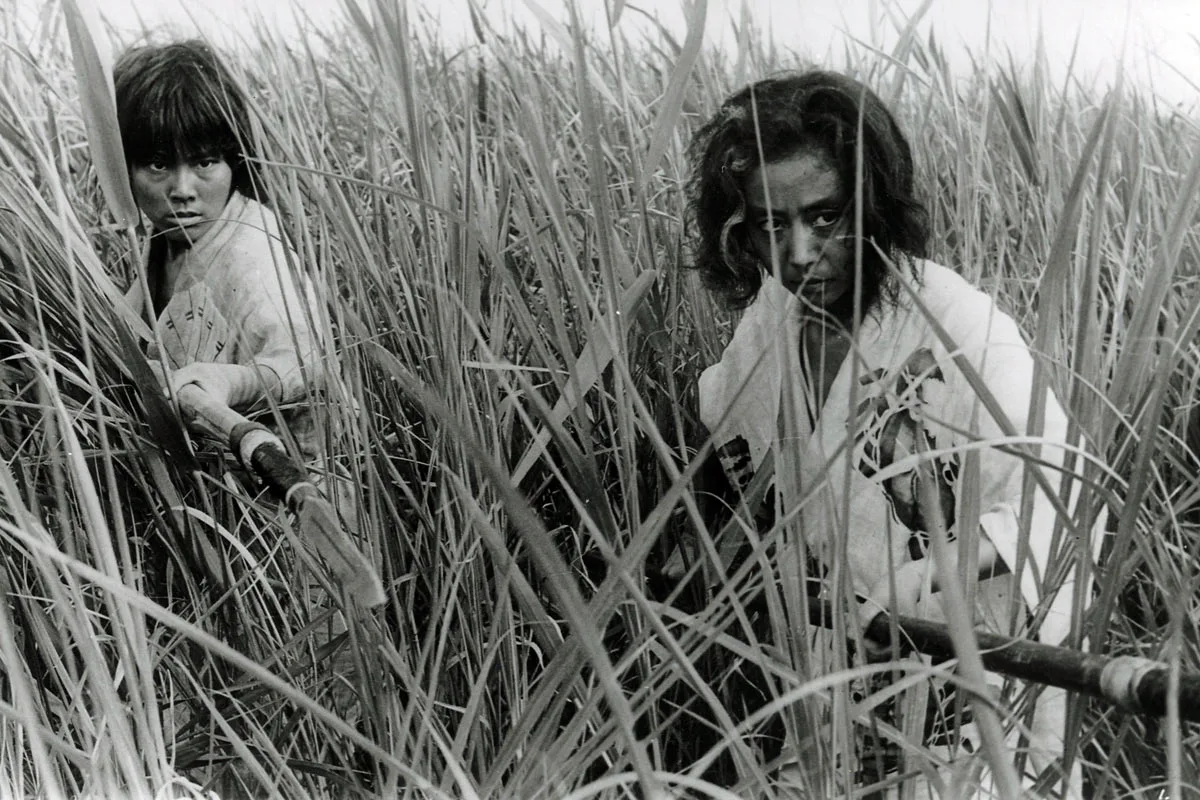
“THE MOST DARING FILM IMPORT EVER . . . FROM JAPAN!” is how Toho Studios first advertised “Onibaba” to foreign audiences. With a sex-centered plot that features disturbing, psychosexual encounters between characters, writer/director Kaneto Shindo’s intentionally controversial 1964 horror film pushed the limits of both Japanese and international censorship laws. Mildly censored in Japan and banned outright in countries such as the U.K., “Onibaba” serves as a deeply unusual combination of folkloric story and bold, modern sexuality.
“Onibaba” follows two unnamed characters, an older woman and her daughter-in-law (Nobuko Otowa, Jitsuko Yoshimura) barely scraping by in 14th-century Japan. While the country is in a civil war, Kishi — the older woman’s son/younger woman’s husband — is off to fight, leaving the women to fend for themselves. After hearing of Kishi’s death, his widow develops a sexual relationship with their neighbor, Hachi (Kei Satō), much to the older woman’s chagrin. When a mysterious samurai visits the older woman’s home, she murders him and steals his strange mask. To discourage the younger woman from seeing Hachi, the older woman hides in the tall grass near their home and uses the mask to scare her. However, the mask is revealed to be more powerful than the woman expected.
“Onibaba” was banned in certain foreign countries for its striking sexuality, but Eirin, a Japanese film classification and rating organization, also lightly censored it domestically due to a brief glimpse of pubic hair in the film. Censoring in Japanese films meant blurring certain areas of the screen, or cutting important scenes entirely.
The Independent spoke with David Desser, who has a doctorate in cinema studies from the University of Southern California and is a professor emeritus from the University of Illinois. Desser taught Japanese film for nearly three decades, and is the author of “Eros Plus Massacre: An Introduction to the Japanese New Wave Cinema.”
“Japan’s history of banning movies is longstanding. It goes back to the 1920s and ’30s,” Desser said. “They were very concerned with the sexualized imagery [. . .] Any kind of genitalia would be sort of fogged out on the frame.”
While Onibaba’s sexual intensity is what got it censored in Japan, this aspect became a selling point in foreign markets. “The tagline [which labeled it the “most daring film import ever”], was an attempt to distribute it on the basis of, A: You’ve got some nudity. B: You’ve got some sexuality in the illicit relationship between the daughter-in-law and family friend,” Desser said.
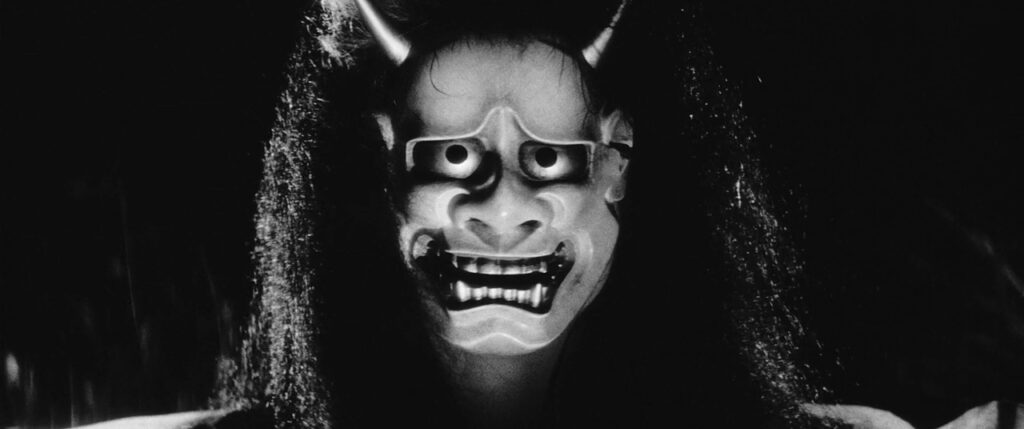
Despite the fact that the Japanese government did not favor the sexual nature of “Onibaba,” the film is deeply rooted in Japanese folklore and tradition. The Hannya mask, which the older woman uses to scare her daughter-in-law away from sex, originated from 14th-century Noh theater. “Oni” translates to “demon,” while “baba” translates to “hag” or “old woman,” representing a jealous feminine demon.
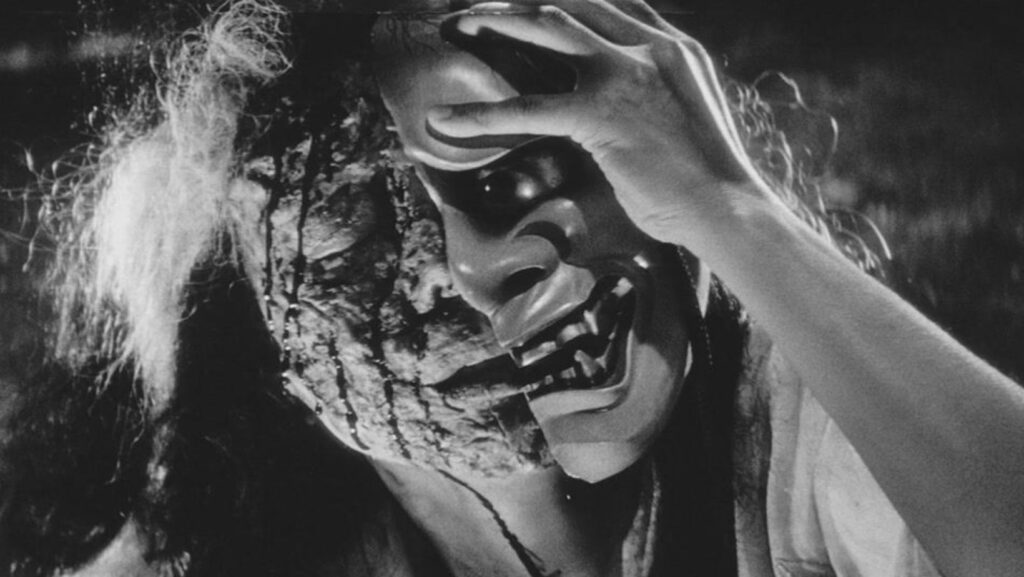
“Onibaba” is based on two Shin Buddhist parables. “Yome-odoshi-no men,” or “bride scaring mask,” inspired the older woman’s choice to wear robes and the mask when the younger woman walks back from Hachi’s home. “Niku-zuki-no-men,” or “mask with flesh attached,” reflects the film’s ending, in which the older woman is brutally disfigured after the mask attaches itself to her face and rips at her skin. She is now one with the mask, one with the demon.
“That’s why the women in the film can be effective in scaring people,” Desser said. “It’s not like a Halloween trick, demons come to the fore because that would be a very common image in Japanese culture. ‘Onibaba,’ in a certain way, can be taken for a folkloric adaptation.”
Like many Japanese films from Shindo’s era, “Onibaba” references the Hiroshima and Nagasaki bombings. Shindo himself was a Hiroshima native, and covers the bombings most directly in his 1952 historical drama “Children of Hiroshima.” When the older woman finally has the demonic Hannya mask pried off, her skin is disfigured and bloody, not dissimilar to the faces of victims of the atom bomb. While Shindo was older than most Japanese New Wave directors and most of his films are considered more mainstream, his reference to the bombings thematically aligned “Onibaba” with the new wave.
“Onibaba” is now available in the U.K., Japan and United States, along with most other countries that do not have extreme nudity censorship laws. The deeply important connections to Japanese history in “Onibaba” have cemented it as one of the most defining Japanese films of its era.
Regions: Boston