
Repetition and Hopelessness in “Taste of Cherry”
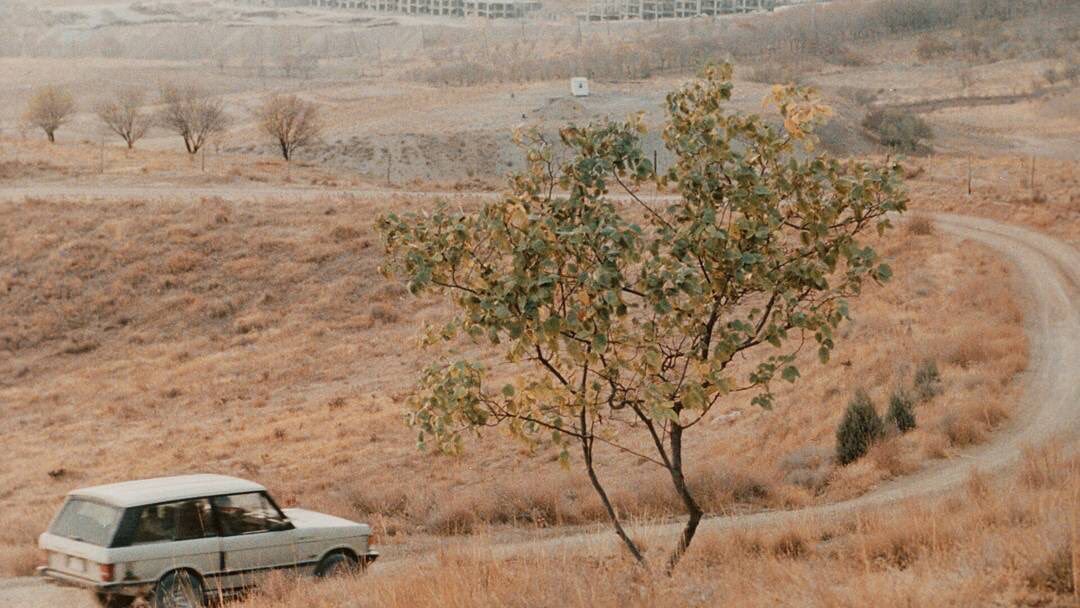
The Independent was invited to cover “Taste of Cherry” during the Boston Festival of Films from Iran at the Museum of Fine Arts.
Abbas Kiarostami’s Palme d’Or winning “Taste of Cherry” follows Mr. Badii (Homayoun Ershadi), a depressed middle-aged Iranian man, as he attempts to find someone to bury him after he commits suicide.
The film utilizes repetition — both through visuals and in dialogue — to communicate Badii’s hopelessness in an effective way. While no explanation is offered as to why he wants to commit suicide (theories surrounding his motivation remain popular on film forums, even 28 years after the film’s release), the desolate nature of the film’s environments and the impersonal, universally monotonous dialogue help the audience empathize with Badii’s struggle.
The film opens with Badii quietly driving through the city of Tehran. As he makes his way toward the outskirts of the city, his car is surrounded by men of all ages. “Laborers?” they ask. “You want laborers?” When Badii does not acknowledge them, they shamble to the next car in line, repeating the same short, desperate phrases. This, Kiarostami conveys to the viewer, is life in the city. No interaction has deep intent behind it — every brief exchange of words is simply a means to an end.
Badii is not a confident speaker. He stumbles through sentences, sometimes drifting off for extended periods between words. He speaks softly and mumbles. He asks intrusive, uncomfortable questions, regardless of his relationship to who he’s speaking to. He is overly vague to the point of seeming malevolent. The first person he picks up in hopes of hiring to bury him following his suicide is a young soldier walking to work. Badii begins the conversation: “‘Where are you from?’ ‘Kurdistan.’ ‘Will you stay or go back after?’ ‘No, I’ll stay.’ ‘Sorry?’ ‘I’ll go back home.’ ‘Back to Kurdistan?’”
Their interaction is overcomplicated, rife with unnecessary misunderstandings. Eventually, the young soldier shuts down, only meeting Badii with the simplest of answers. “‘How many people in your family?’ ‘Nine.’ ‘Nine?’ ‘Yes.’ ‘They all work?’ ‘Yes, all of them.’ ‘Do you know anyone in Tehran?’ ‘Yes.’ ‘Relatives?’ ‘Yes.’” Badii’s attempts at closeness come across as pushy, and he is reduced to a nuisance in the mind of the soldier. In his eyes, Badii is no different than the men in the street begging for labor. Thus, Badii is only seen as deserving of flat, impersonal, repetitive conversation.
Those who approach the car repeat short phrases to save time, those who enter the car repeat short phrases to avoid connecting with a man they view as odd. The end result is the same in both cases: every one of Badii’s interactions, be they forced upon him or initiated by him, sound exactly the same.
This idea is emphasized in the film’s quieter moments, too. Once he is out of the city, Badii spends most of the film’s duration quite literally going in circles, driving endlessly though the barren hills of Tehran. Even as he encounters new people, the world outside of the car windows remains fixed. The hills are uniformly brown, their only population being construction workers and their droning machinery. If the world outside is completely flat and the people who inhabit it are completely flat, what point is there in engaging with any of it?
The audience is never granted full insight into Badii’s mind. The camera exists as a near-permanent fixture in the passenger’s seat of his car, yet the confinement does not bring the viewer closer to him. He does not monologue, he does not lament, he does not cry. The clearest glimpse into his underlying psyche is a melancholy look he gives to a group of soldiers passing by.
“Taste of Cherry” has been labeled by some harsh critics as “boring.” There are only two named characters, only three distinct locations, and no “real” action. But, this is the point. The film is intentionally mundane. Just spending the film’s brief 99 minute runtime watching this understimulating adventure made me antsy and aching for more. This is the life Badii is subject to every single day. If a moviegoer can’t endure just over an hour of his life, how can they expect him to?
Regions: Boston