
‘What’s up with you?’ – Understanding intimacy in Harry Lighton’s ‘Pillion’
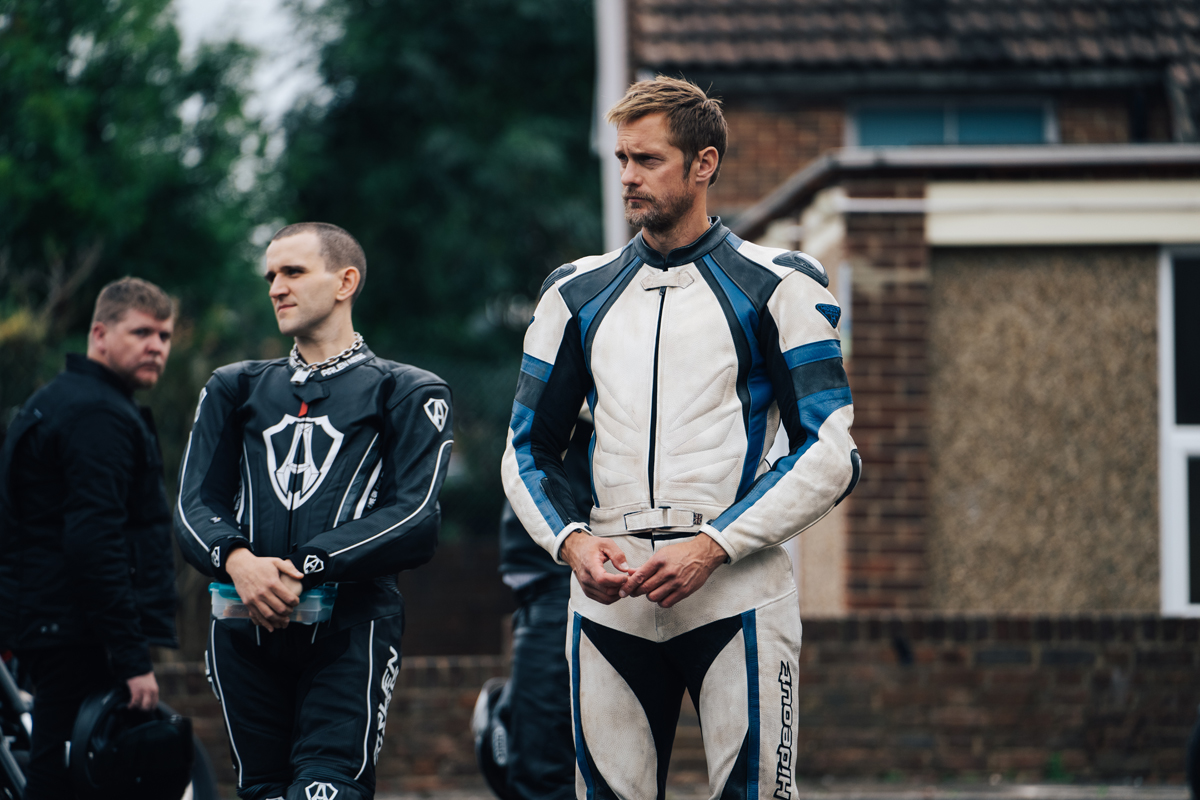
Peggy (Lesley Sharp) studies the face of her son’s partner, Ray (Alexander Skarsgård) closely. The two men have been seeing each other for months, and, despite her unwavering acceptance of Colin’s (Harry Melling) sexuality, today is the first time Peggy has met the cryptic Ray. Ray is not Colin’s boyfriend, but something else entirely — something less conventional.
“What’s up with you?” she eventually challenges Ray.
Harry Lighton’s writing/directing feature debut, “Pillion,” which premiered at the Cannes Film Festival last year, shines as an utterly unique story in a time when the romance genre often struggles to break new ground. Based on the 2020 novel “Box Hill” by Adam Mars-Jones, the simple yet passionate screenplay masterfully captures a series of deeply complex human connections in a short 107 minute runtime. Despite its graphic nudity, viewing “Pillion” as a story simply about sex is a disservice to Lighton’s profound understanding of self esteem, personal agency and kink.
The film follows Colin, a timid and directionless man, who finds purpose in a dominant-submissive relationship with handsome and leather-clad biker Ray. Both literally and figuratively riding pillion (the backseat of a motorcycle), Colin willingly enters a sexual and social form of indentured servitude under which he cooks Ray’s every meal, sleeps on the floor by the foot of his bed, and wears a lock collar to which Ray has the only key.
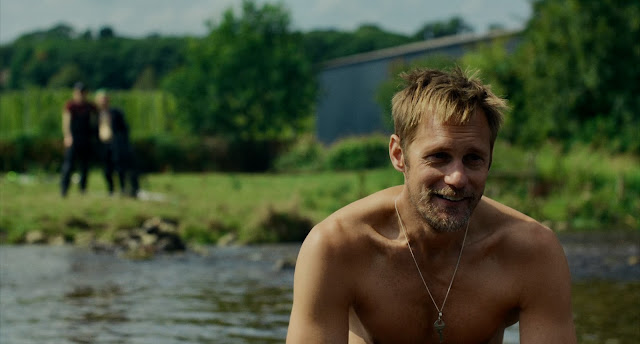
With the most mainstream cinematic depiction of the leather community being William Friedkin’s “Cruising,” “Pillion” brings a raw, desensationalized depiction of this type of kink to the big screen. Kink is depicted accurately and fairly, bringing a new perspective of intimacy to a general audience that is likely to be unfamiliar with the inner workings of the culture.
When Peggy, who is dying of cancer, meets Ray, he has yet to tell Colin anything personal about himself, and Colin advised his parents not to ask Ray any personal questions either. Peggy’s simple question pushes a boundary Colin has never dared to test. It is clear she does not approve. Peggy does not want to die knowing her son is in a relationship with a man who she thinks does not treat him with adequate respect.
Despite being in his 30s, Colin still lives with his parents. They coddle him throughout his adulthood, setting him up on dates that always seem to fall victim to his social inabilities. Colin’s lack of exposure to the outside world — his lack of agency — is reflected in his desire to be dominated. Peggy is the antithesis of her son, lacking whatever trait it is that makes Colin so averse to challenging others. Her illness does not weaken her, but rather gives her nothing to lose, no motivation to cater to others purely out of courtesy.
Peggy wonders where she and her husband went wrong in how they raised Colin. Has she been unable to pass along a vital piece of herself to her son? While the film does not depict dom-sub relationships as inherently wrong, it does depict the unique challenges of a relationship without emotional intimacy. Ray’s aggressive indifference towards Colin eventually becomes torturous.
Ray repeatedly tells Colin that what they have is not and will never be love. In their relationship, Ray’s role is not one that involves any displays of emotion. Ray’s private nature makes him all-powerful as he is able to avoid any emotional intimacy — even during sex. Ray’s fellow doms (the dom-sub pairings co-exist within a biker community) act similarly to him, but Colin notices some of them give their subs more leeway. “I couldn’t put up with the no kissing,” a fellow sub says to Colin, “it would drive me nuts.” It is when Ray finally opens himself up to Colin — agreeing to go on a traditional date, treating him like an equal, and finally kissing him — that his entire persona unceremoniously collapses.
After his mother’s death, Colin has a shift in consciousness, and advances towards the self advocacy his mother sought for him while she was still alive. Following her funeral, Ray finally shows up for Colin emotionally, when he invites Colin to sleep in the bed with him for one night, revealing a thread of sympathy scarcely seen. Enjoying a warmth he was previously denied, Colin demands more “privileges” from Ray — a demand that is quickly rejected, which drives him to protest against Ray’s iron fist, and take his precious motorcycle on a joy ride.
In this pivotal moment of his life, Colin sits determined in the front seat of the bike, leaving the pillion empty as he steers himself.
The film neither glamorizes or denigrates the relationship depicted onscreen. Even after Ray leaves, Colin continues to seek out a dom-sub dynamic, but sets his own boundaries. With his new dom, he says that he will “require one day off a week” from the arrangement. The film’s ending is not a rejection of Colin’s kinks, but an embracement of the fact that a relationship cannot exist without personal agency.
Regions: Boston