
How ‘Tangerine’ challenged society’s sexualization of trans women, and why it can’t end here
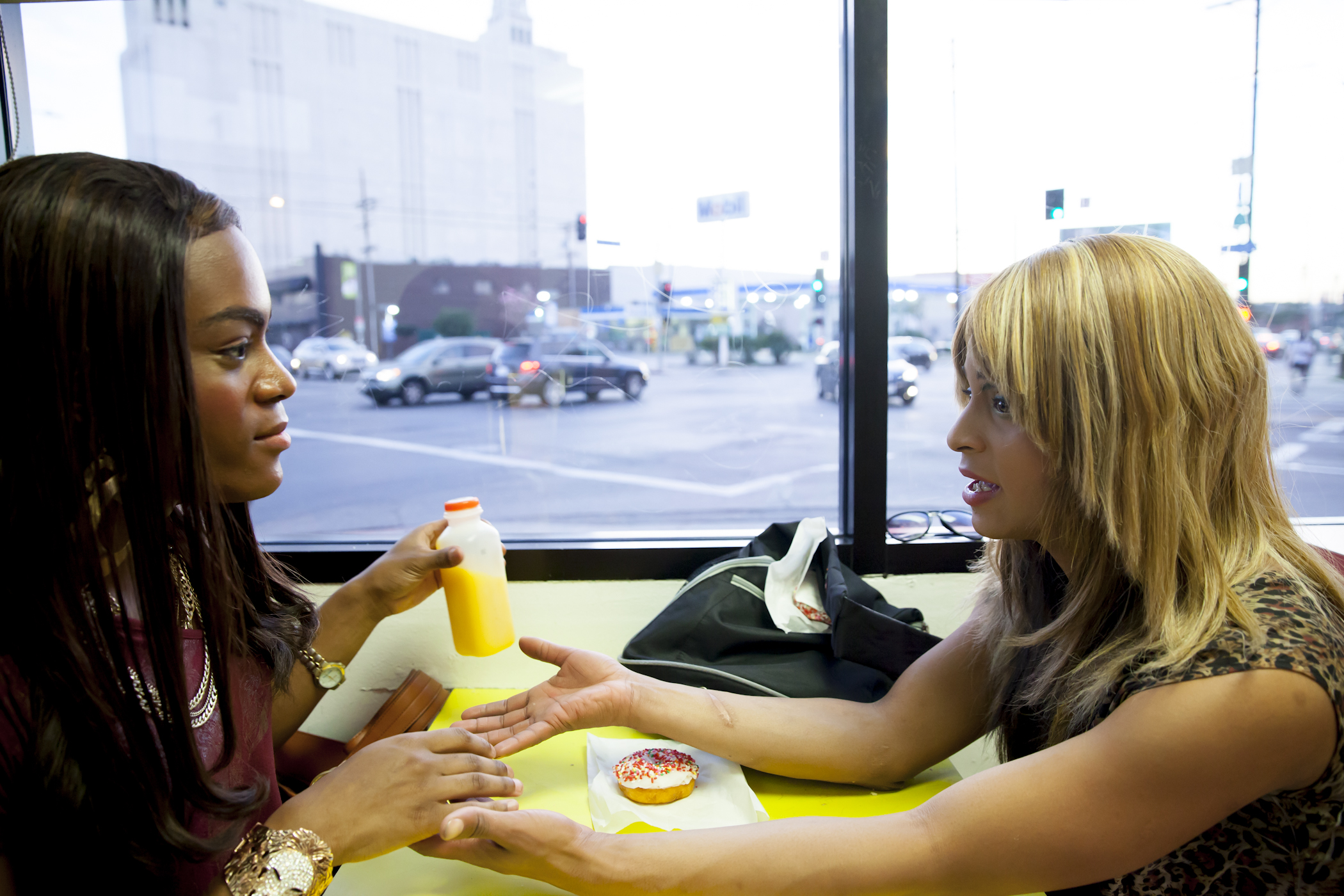
When Sean Baker’s crime comedy “Tangerine” was released in 2015, it surprisingly garnered mainstream success, given its budget, production and subject matter.
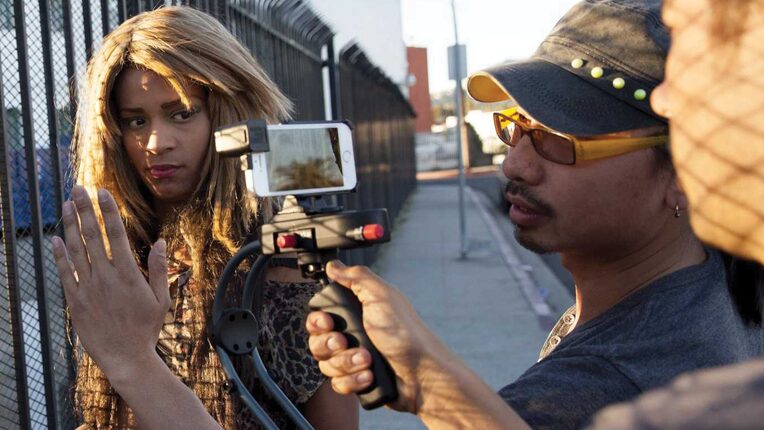
Shot entirely on iPhone 5s, the film follows transgender sex worker Sin-Dee Rella (Kitana Kiki Rodriguez) after she’s released from jail on Christmas Eve. Sin-Dee then goes on an anger-induced rampage through the streets of Hollywood when her bestie Alexandra (Mya Taylor) lets it slip that Sin-Dee’s boyfriend has been cheating on her. The film grossed nearly 10 times its shoestring $100,000 budget and received a 96% score on Rotten Tomatoes.
Perhaps the wide and positive reception of “Tangerine” can be attributed to the fact that it meets society where it is comfortable understanding trans women: by sexualizing them instead of trying to grasp the implications of their gender identity.
“It’s easier, somehow, for society to accept you as more feminine if they can attach some sort of sexual idea to it,” Brooke Pierce, a transgender woman living on a ranch in Northern California, shared in an interview with The Independent. “People don’t understand trans individuality as a personal identity — they see it more as a sexual expression… it’s tangible.”
In an interview with The Independent, Juana María Rodríguez, a University of California, Berkeley professor whose work spans sexual cultures, Latinx identity and racial activism, explained that trans women have always been leaders in the sex worker movement. She said the overlap between trans women and sex work is largely due to systemic oppression, whereby minorities and outliers, like the LGBTQ+ and BIPOC communities, face disadvantages in securing well-paying, long-term careers. Therefore, the film succeeds in using society’s sexual association with transgender identity as an inroad to explore their experiences on a deeper level.
Even though Pierce wanted to transition since childhood, it took her decades to do so. In her 20s, sex work became appealing. “The only way that I could get someone to see me in a feminine light was to be willing to objectify myself in a sexual way. I could seek some sort of validation [in the fact] that someone could see me as feminine.”
While sex work can provide income and validation, it also has its shadows. These motifs are juxtaposed throughout the film: one depicts increased injustice, vulnerability and risk due to the criminalization of sex work, the other highlights seeing beauty, strength and femininity in trans sex work. Chasing the gritty protagonists through the streets of Tinseltown — into coin laundry strip malls, vomit-soaked taxi cabs and a two-bedroom motel with four sex workers in the act — forces viewers to reckon with the dangers, poverty and desperation that can accompany sex work.

According to a 2024 study published by the federal government, violence against trans people has doubled since 2019. A 2021 study published in the American Journal of Public Health found that trans people are four times more likely to experience violence than cisgender people.
“The fact that sex work is illegal means that you can’t go to the state and ask for their help,” Rodríguez said. “The government can go into your bank account and just take your money; you can be denied housing. Criminalization makes everything bad about sex work worse.”
Viewers later learn that Sin-Dee’s 28-day stint in jail was a cover for her cheating boyfriend, Chester, who is her fiancé and pimp. His sentencing, based on the intent to distribute, would be a greater crime than hers. Sin-Dee takes the fall to preserve his job security — a job that exists exclusively from her labor and its illegal status. This replaces the citizen’s law with an ad hoc system of law, order and protection that she pays for on every level.
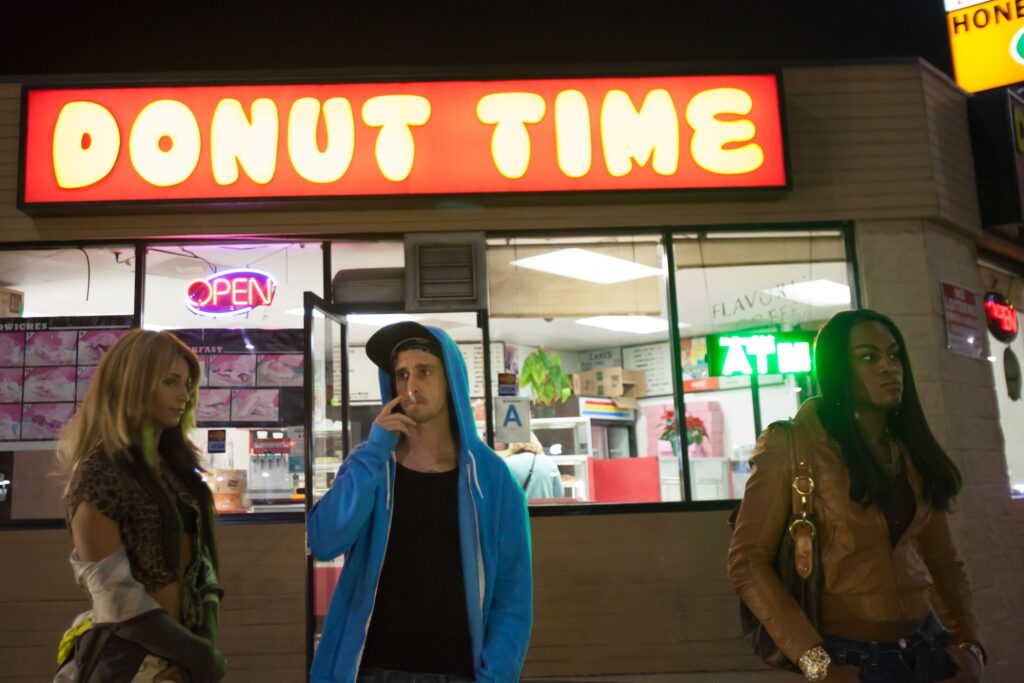
The imbalance of power and justice returns mid-movie, when Alexandra gives a handjob for a discounted rate. When her client fails to cum quickly, as promised, they fight: Alexandra demands payment for service regardless of success; the client refuses to pay, blaming her for his failure. Two nearby cops, familiar with illicit scenarios like this one, settle the dispute: the man keeps his money; Alexandra stays out of jail. The client is unkempt — he appears the desperate, distressed one. Meanwhile, Alexandra, ever poised, retains her cool with her True Religion jeans, Louis Vuitton bag, and long, dark, straight brown hair.

While sex work remains a criminal activity throughout the U.S., the need to reckon with trans identity through ownership and domination — via sex, violence and fetishization — has only increased in the 11 years since the release of “Tangerine.” In 2025, “trans” was the second-most viewed porn category.
“They’re willing to sexually fetishize trans women, but they don’t want to see them as women,” Pierce said.
Rodriguez said fetishization is a form of disrespect. “When you’re not able to fully see someone as a human being, then it’s easier to think of them as just an image in your mind — not as a fully fleshed person with their own hopes and dreams and desires and quirks.”
“Tangerine” closes with unseemly betrayals: Sin-Dee learns her bestie has also been sleeping with Chester. Turning away from a pleading Alexandra to face her next client, a black Lexus pulled to the curb, Sin-Dee does not receive a request for her services, but a styrofoam cup full of piss to the face. “Merry Christmas, you tranny faggot,” yells the passenger out of the window.
Instead of reporting the hate crime and pressing charges, a defeated Sin-Dee submits to Alexandra’s charge. In its final scene, ripe with symbolism exuding femininity, vulnerability and community, Sin-Dee strips down to her bra and removes her now-trashed wig as Alexandra peels off her own, lovingly placing it on Sin-Dee’s now bare head.
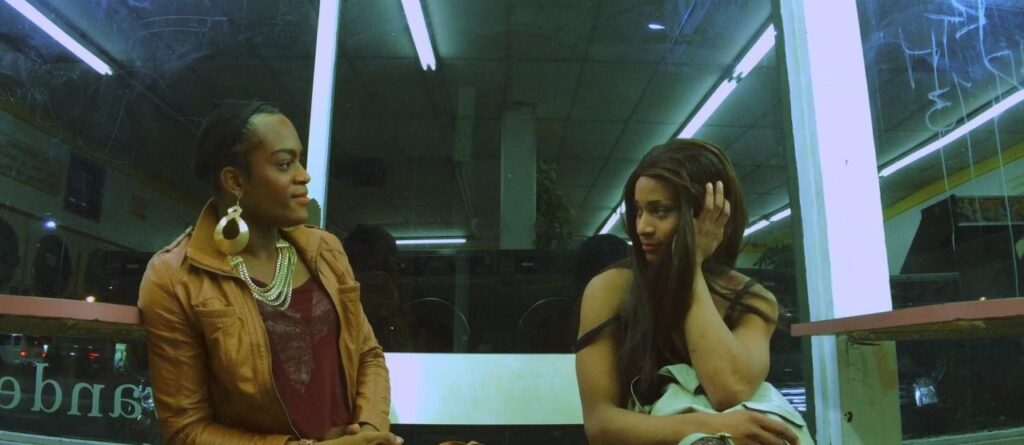
“Tangerine,” groundbreaking for its time, was a stepping stone for further representations of trans actors, shattering Hollywood’s status quo of casting cisgender actors in transgender roles. And while the film has expanded mainstream conceptions of the trans identity, Rodríguez emphasized the need to continue moving the needle on trans representation. “We’d do well to multiply the kinds of images that we have so that we can understand the humanity and the complexity of transgender sex workers.”
An example Rodríguez shared: “the sexiness and the verve and the vitality of transgender women that work at the post office.”
Regions: California