
‘L’Abandon’ (Forsaken) Review: Can a Movie Shed its Money?
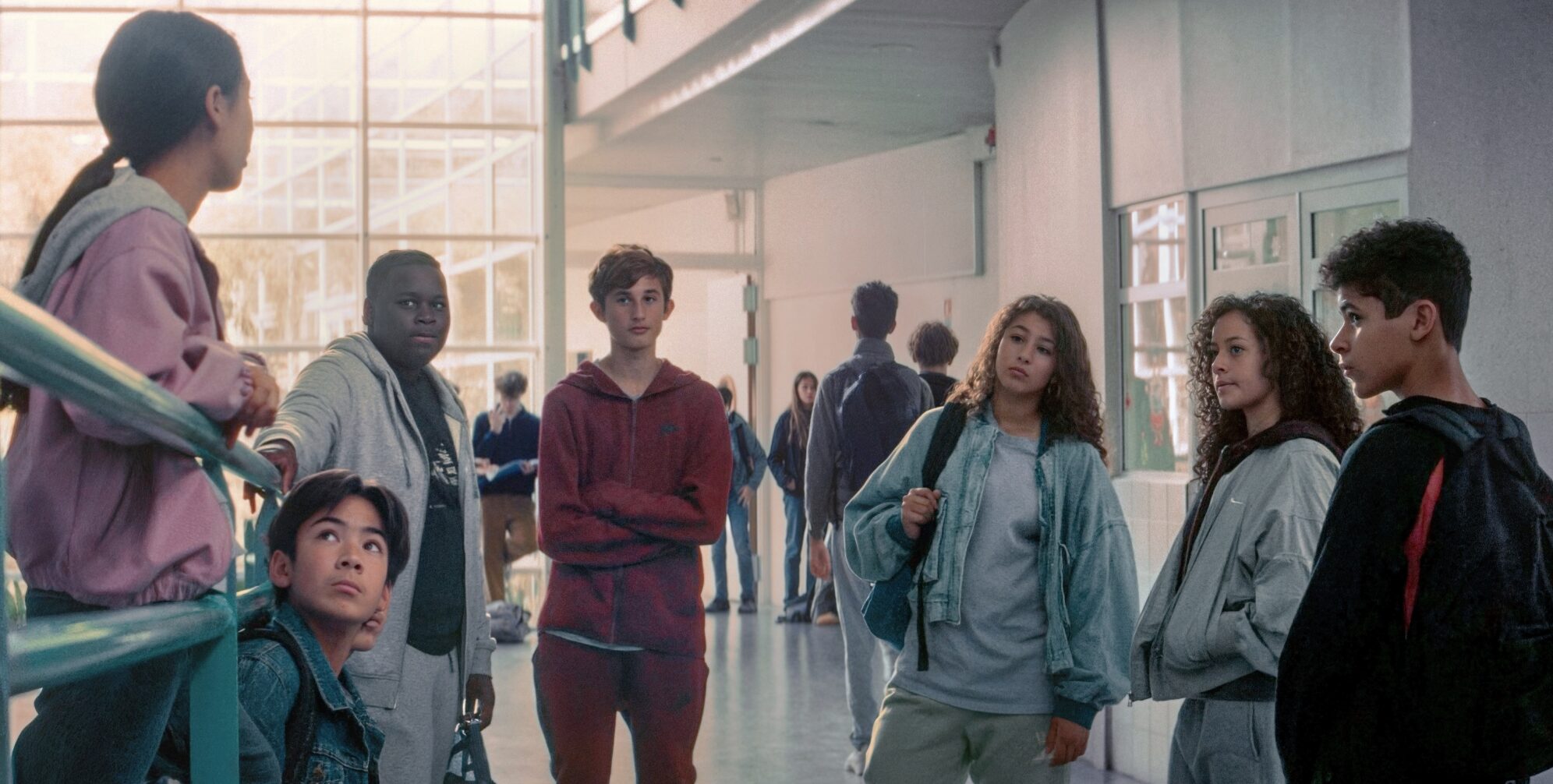
On my fifth day at the Cannes International Film Festival, a woman approached me to ask if I had seen any films I would describe as “disruptive.” In the process of curating her own film festival in Belgium, she was seeking works that fit this theme. Without hesitation I responded with “L’Abandon,” or “Forsaken,” by French director Vincent Garenq.
Initially, I had liked the film, unaware of the almost exclusively negative reviews it received online. Many viewers criticized it for promoting harmful racial stereotypes in an already charged French political climate.
Whether this response is justified depends on if you believe that a film’s story can stand on its own, detached from its real-life context. Though at first I believed it could, I have since changed my opinion.
Upon first viewing, the film did not try to make itself about placing blame or making political commentary about a race or religious group. Instead, I saw it working to dissect the events in order to understand where it devolved — from a complicated situation heavily weighed by miscommunication and institutional negligence — to a sensitive, stagnant socio-political debate needled by hate, fear and violence.
“L’Abandon” tells the true story of school teacher Samuel Paty, who was decapitated several blocks away from the middle school he worked at in 2020. His murder was the devastating result of retaliation against a lesson he taught on the events that led to the 2015 Charlie Hebdo terrorist attacks.
For decades, starting in the 1970s, Charlie Hebdo was one of the most renowned French satirical magazines. However, following the publication’s illustrations depicting the Prophet Mohammad naked in satirical political contexts in 2015, two brothers attacked the Charlie Hebdo offices with assault rifles, killing 12 people and injuring 11; an act they claimed was a retaliation against blasphemy.
When approaching his lesson on the freedom of press and expression vs. the limits of secularism, Paty decided to include the illustrations in his course material, despite the class being merely 8th graders. Paty gave students the option to step out of the classroom for the duration of the picture slideshow. A small group of students took this option, most of whom were Muslim.
While explaining her consistent school absences to her parents, a student mischaracterized Paty’s actions, saying that he asked students to identify themselves based on their religion and then proceeded to target the muslim students by excluding them from his lesson — in which he displayed the satirical images of The Prophet Muhammad. Alarmed by this, her father shared his upset about the professor’s behavior and the school’s passivity on social media, unaware that his daughter’s testimony was unfounded.
The videos posted online triggered threats against the school. Deep in the folds of the internet, a young man named Abdoullakh Anzorov decided he would find and kill Paty. The killing was later classified as a terrorist attack by French President Emmanuel Macron.
When the film finished, I sat in the theater teary-eyed. To me the message was clear and powerful: a cautionary tale of the danger of reacting to and forming an opinion on an issue without seeking the full context. Social media provides a space to thrust our immediate reactions into the world and clutch to something that feels like it reasserts a part of our identity or values. All too often, we are blinded by the thrill of receiving engagement from others that we don’t see how we’ve fallen prey to a system.
The film rarely stagnates on a singular understanding of the school incident, which gives the audience all the tools necessary to trace the story from its devastating end to the root of the issue: a severe lack of communication between all the parties at hand.
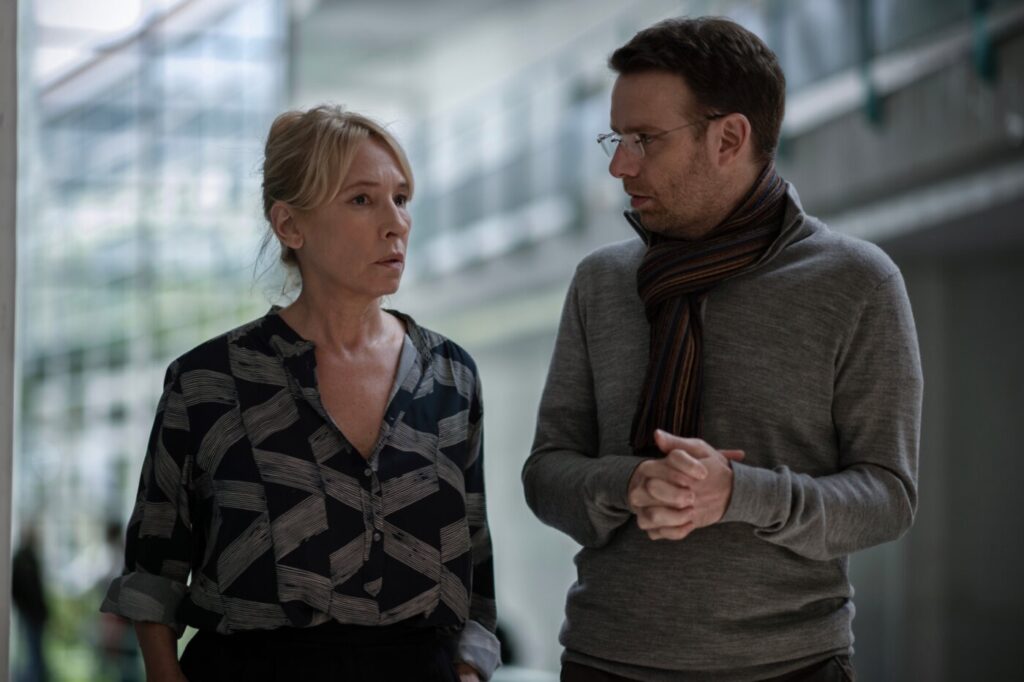
Days after seeing the film, I spoke to a family member who had seen it too. We’d had very different viewing experiences of the film; my cousin emerged from the film with many critiques. I was curious to hear her thoughts, as I had appreciated what I took from the film’s message –– especially as an American whose heart is fragile when it comes to violence in schools. Our conversation quickly turned into an extensive debate about politics, morals and our perceived impact of the film.
Our talk made me question the purpose of the film’s timing — six years after Samuel Paty’s death, and the same year as France’s 2027 presidential election.
It’s true, with major film companies like Canal + and CNews having recently been bought by right-wing billionaires like Vincent Bolloré, French cinema falls prey to becoming filtered and agenda-based in a time when the country’s politics are increasingly convoluted, and culture has become a new platform for politics.
What is perhaps more alarming is that “L’Abandon” was produced by Stéphane Simon, a man who helped finance the presidential campaign of extreme right-wing candidates Marine Le Pen and Valérie Pécresse in 2022. So it is understandable that many are worried the film is a ploy to promote right-wing agendas, and perpetuate racist and Islamophobic stereotypes through its story –– just in time for a big election.
Despite the messages I was able to extract from the film, “L’Abandon” is a film that seeks to stir the pot. The dramatization of Samuel Paty’s death is disconcerting considering that the film falls short of protecting the already vulnerable Muslim community in France in its depiction of the Muslim family at the center of this uniquely devastating incident.
In a news report published by the French Interior Ministry on religious hatred in France, statistics show that 2025 saw a sharp increase in anti-Muslim acts, with 326 incidents recorded, up 88% on 2024 and 35% on 2023, driven mainly by the rise in attacks on individuals. With this film, the Muslim community in France risks being drawn into an all too common generalization of violence and extremism by association with the case.
I find that once one is made aware of all this context, it is impossible to ignore it when understanding or discussing the film. These influences are present in the project, by nature, whether or not there is more to the film than this.
Regions: Cannes, France, United States