
That “Something in Between”: A Manifesto for How to Think About Cinema
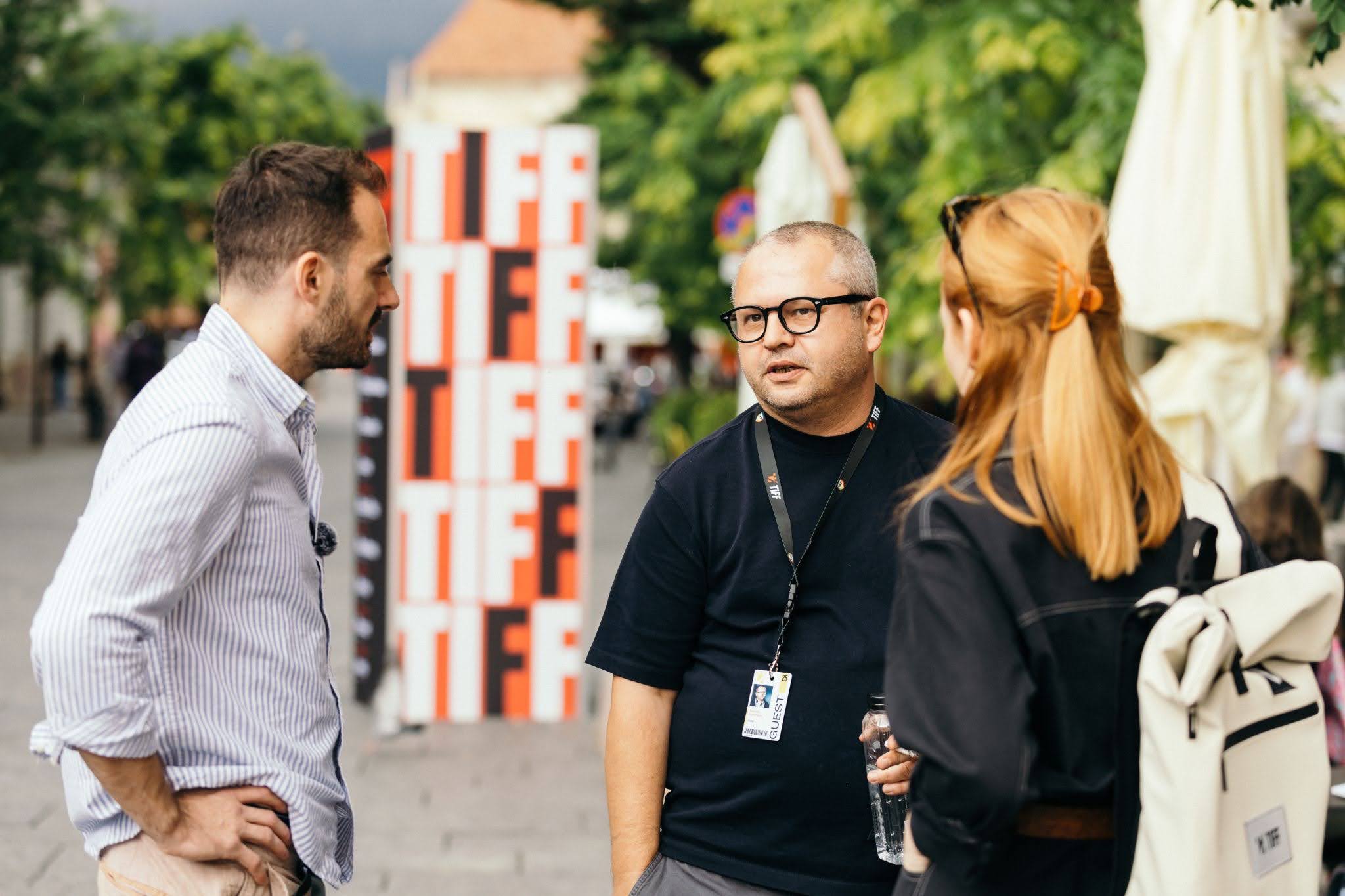
One of the things that distinguishes the Transilvania International Film Festival from other film festivals is its care for retrospectives and masterclasses, a rare opportunity for audiences to revisit a filmmaker’s complete body of work on the big screen before hearing them discuss it in depth. Last year, the festival welcomed Béla Tarr as its guest of honour, accompanying a complete retrospective of his fiction films with a masterclass and a Lifetime Achievement Award. This year, that spotlight turned to another major auteur from Central and Eastern Europe, a local one: Corneliu Porumboiu.
A leading figure of the Romanian New Wave, Corneliu Porumboiu has built one of the most distinctive bodies of work in contemporary European cinema. At the festival, I had the rare opportunity to revisit most of the features that established his international reputation: “12:08 East of Bucharest” (Caméra d’Or, Cannes 2006), “Police, Adjective” (Jury Prize, Un Certain Regard, Cannes 2009), “When Evening Falls on Bucharest or Metabolism”, “The Second Game”, “The Treasure”, “Infinite Football” and “The Whistlers”. Seen together, these films reveal a remarkable coherence beneath their shifting genres, which become vehicles for exploring the same underlying questions. They are immediately recognisable for their deadpan humour, minimalist formalism, philosophical curiosity and quiet resistance to conventional storytelling. Rather than relying on dramatic climaxes, Porumboiu’s cinema unfolds through repetition and observation, inviting viewers to pay attention not simply to what happens, but to how meaning itself is constructed.
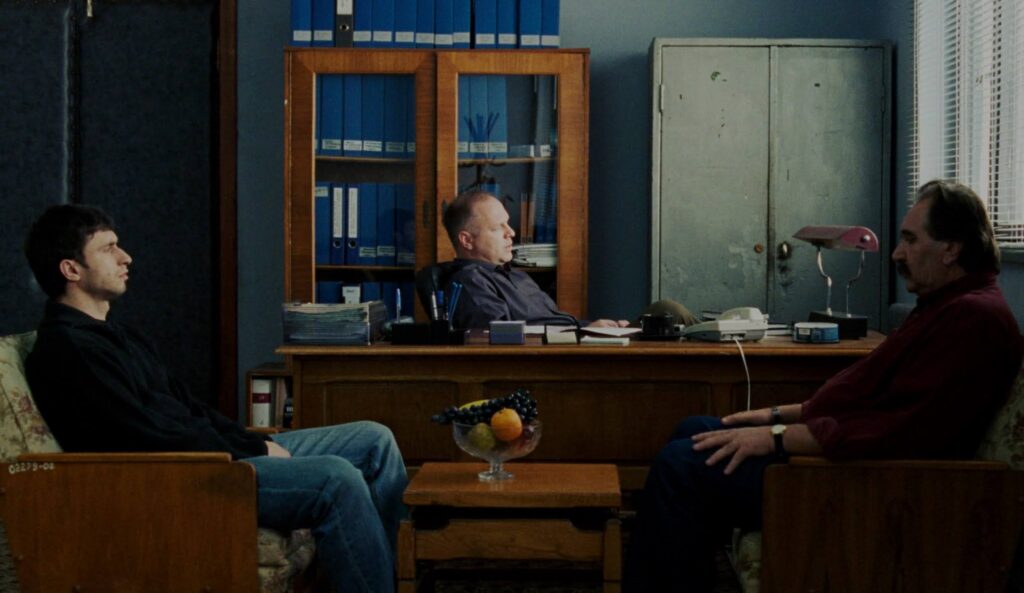
The paradox of language is perhaps one of the strongest threads in Poromboiu’s works. In the celebrated dictionary scene in “Police, Adjective”, one of my favorite scenes in contemporary cinema, language ceases to clarify thought and becomes the very instrument through which moral judgment is obscured.
The dictionary doesn’t illuminate reality; it replaces lived moral judgment with institutional definitions. What starts as a procedural disagreement becomes a philosophical struggle over whether language clarifies ethical thought or subordinates it to institutional authority.
Following the retrospective, another pattern emerged even more strongly. Porumboiu’s foregrounding of the elements of space and time. Most filmmakers use locations simply as settings for psychological drama. Porumboiu, by contrast, often seems interested in space itself as an object of inquiry.
In “Police, Adjective”, we gradually learn the geography of the neighbourhood as Cristi learns it. The maps, stakeouts and repeated walks hardly advance the plot; instead they construct a spatial logic that gradually reveals itself to the audience alongside the protagonist.
The themes of space, time and language make Porumboiu’s films feel undeniably interconnected. Recurring actors, names, institutions and questions all belong to a larger project: an investigation into how we orient ourselves within systems of meaning. His characters are often less concerned with expressing emotion than with answering more fundamental questions: Where am I? What are the rules? What does this word actually mean?
I met Porumboiu on the final day of the festival, after attending his masterclass. There, as in his films, I noticed his preference for precision over abstraction. I had to recalibrate my questions slightly and let the conversation flow, as he seemed far more interested in discussing rhythm, framing, duration, blocking and performance than in theoretical abstractions. He also dislikes broad claims about “reality” or sweeping sociological interpretations. Over the course of our conversation, he gradually revealed a working method built on meticulous preparation, curiosity and a willingness to let accidents reshape carefully constructed plans. It became clear that, for Porumboiu, precision is not an end in itself. It is the discipline that allows discovery to happen.
The following conversation is practically a manifesto for how Porumboiu thinks about cinema: a space between script and performance, planning and accident, language and meaning, reality and representation.
Dana Knight: Do you like retrospectives?
Corneliu Porumboiu: I like them. It feels as though I’m helping the films have a new life, a new perspective and reach new audiences. On the other hand, it’s hard to speak about things you made a long time ago.
I don’t rewatch my films. So when someone asks about this or that shot, or why a particular character did something, sometimes I simply don’t remember. You need a pause. A pause button. Time out. Let me refresh my memory. Why did I do that precisely?
DK: I have the impression that precision is very important to you. The way you organise space and time in your films is so precise. I noticed it during your masterclass too… you didn’t seem to enjoy questions that were too vague.
CP: I like precise questions because cinema is something very practical, very concrete. Everything in the mise-en-scène has to be useful for the story. So when someone asks a very general question like, “Do you want to change the world?”, that’s not what’s on my mind.
When I’m editing, I often invite friends to watch different cuts of the film. But I’m not interested in their opinions about the subject. You’re not here to tell me blah, blah, blah, blah. You’re here to tell me whether a scene is too long, whether something doesn’t fit what I’m proposing. We’re professionals. Let’s talk about rhythm. Pace. Whether something works.
I also don’t like it when someone says, “Yes, but in reality…” I think that’s an excuse because you don’t have arguments, so you use this abstract concept of “reality” or “the truth.” I hear that even from my own collaborators. But there is no “in reality.” There is only your point of view on reality. You have to assume it. We live in a quantum era. If you still think reality is something objective, you have a problem.
When I make a film, I almost always begin by thinking about genre. I try to find my own point of view, but I’m inspired by other films, and I try to create a certain type of mood. And yes, I’m very precise and sometimes this can be bad.
DK: Why?
CP: Because when you mostly work in long shots, in long takes, like I did in “When Evening Falls on Bucharest or Metabolism”, you rehearse a lot. I wanted the mise-en-scène to be very precise, the trajectories of the characters. But by repeating everything so many times on location with the camera, in a way, I castrated the actors. That’s something you have to negotiate on every project. You have an aesthetic, a coherent proposition of mise-en-scène, but every director has his own way of working and his own demons.
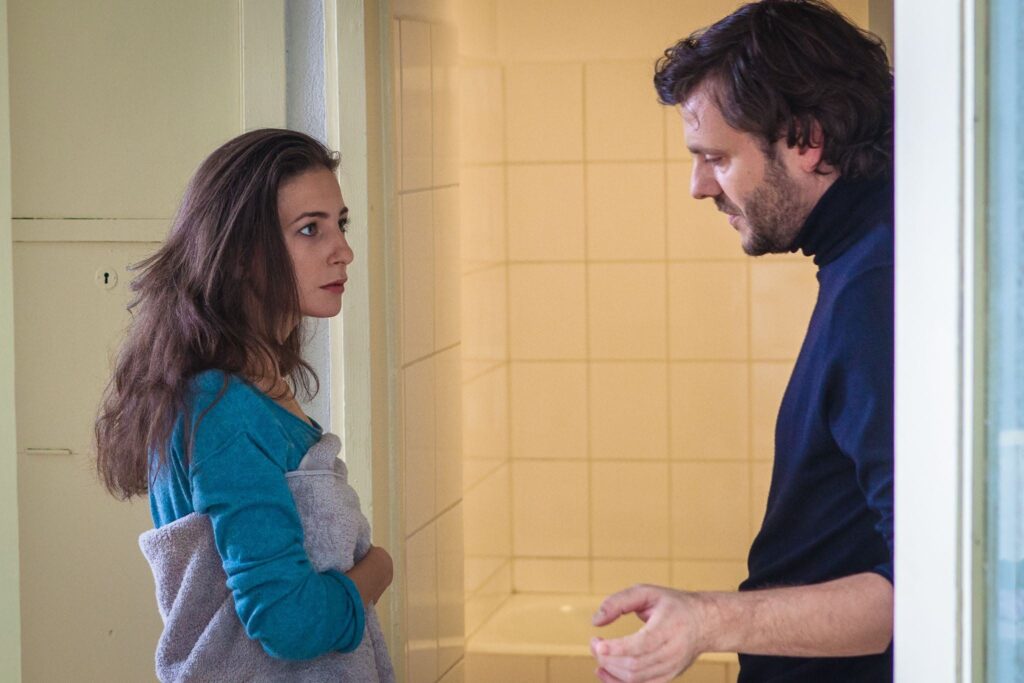
DK: Watching the retrospective, I was reminded of one of the first things we learn in film school: that cinema, unlike photography, is fundamentally the art of organizing space and time. Your films foreground those two elements with unusual precision, would you agree?
CP: Of course, when I’m defining a character, I think about whether the space expresses the character’s inner life. I am also interested in movement. The panoramic shots, for example, are very important. They create movement and time, even when the image itself is still.
When I made “Police, Adjective”, I wasn’t trying to shoot my hometown. I was creating a particular space where the character is trapped.
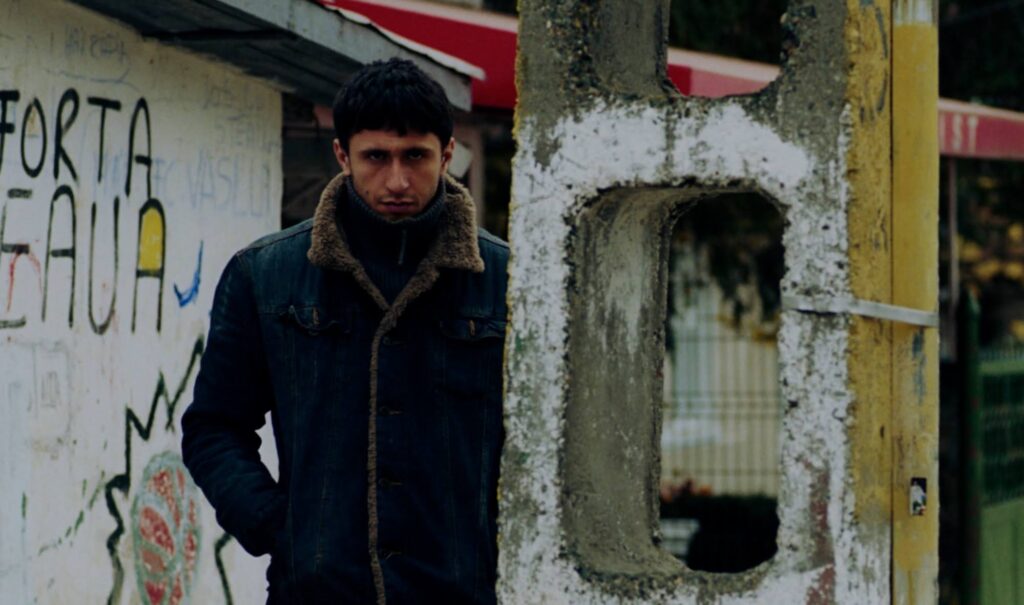
In a film, you have to create the architecture of a city: he lives in one building, next to another building. Then the dealer goes to a house. The space between those places matters because it reflects another social class. In fact, when you make a film, you create a city. It isn’t the real city anymore. You create another city that fits the story.
“Aurora” is Bucharest for me. I love the way Cristi Puiu creates the city’s dynamics: the apartments, the movement through the neighbourhoods. Hitchcock did something similar with San Francisco. But how about LA, who made the movie that captures LA? There is an entire debate about it.
DK: The dictionary scene in “Police, Adjective” is one of my favourite scenes in all of cinema. Critics often discuss language as power in your films, but I also thought of language as something that can either clarify thought or obscure it. That scene embodies both possibilities. I wondered whether that’s one of the reasons you chose cinema rather than literature. Maybe you don’t completely trust words?
CP: Maybe. I don’t know. Maybe yes. I love cinema because it creates another thing. And style is very important. Even in literature, style is everything. Sometimes more than the subject itself. You can recognise a great writer from the first paragraph. I read a great deal, but it wasn’t for me.
When I write scripts, they’re very schematic. I’m interested in ideas, but what really interests me is what happens later — with the actors and with the mise-en-scène. That’s where cinema begins for me. I guess I like some parts of the process more than others. I like casting; my philosophy of work is to build all these and to create on the set.
I’m very precise with the découpage. I prepare the framing. But I see all that as training. I can still change everything on set. To be creative on set, you first have to prepare enormously — with the actors, with the camera movements — because you never know when something will happen. One of my favourite things is accidents. When something happens that you never expected.
Sometimes a scene simply doesn’t work. When you’re editing, you may discover shortcuts or another way of expressing something. But when you shoot long takes, something can emerge between the actors that you never imagined. That’s something you discover only on set.
DK: Please give me some examples, because most of the scenes I love in your cinema are very well written, and I feel that the actors follow the dialogue to the last detail on the page.
CP: Not really, because there is always something in between. We have the text and we try to follow it, but sometimes parts of the dialogue don’t fit the actor’s energy, so you cut those lines. Sometimes an actor brings a more nervous energy, and you push the scene in that direction. And if you push the scene, maybe it becomes more frightening.
The dialogue has to be polished like a diamond. After that, it’s really about the delivery. When we rehearsed the dictionary scene with Vlad Ivanov, I imagined that he would stand up and begin to perorate, almost like giving a speech. It felt more theatrical. Vlad said, “No. I don’t want to get up. I’ll lose my energy.” I remember thinking, “What the fuck is going on?” because I had imagined it completely differently.
But that’s the real work. That’s why you need great actors. They don’t simply perform the script, they incarnate the character.
DK: Speaking of characters, there is a recurring one in your films: the idealistic police officer Cristi. He originates from “Police, Adjective” and then reappears as an older corrupt policeman “The Whistlers”.
CP: I didn’t want the connection with Cristi to be too obvious. I was interested in imagining how this young man from “Police, Adjective” could eventually become the man we meet in “The Whistlers”. In the first film, he has a very clear moral position. Later, he becomes corrupt. It’s ironic.
DK: To me, this seemed to echo Romania’s own trajectory after the Revolution.
CP: I wasn’t really thinking about Romania. I was thinking more about ideology. Communism began as a utopia. Then it became corrupted. I think that happens with many ideologies. That’s what interests me. It’s also there in “Infinite Football”, this idea of utopia. We experienced it ourselves. We grew up inside one ideology. Then came the Revolution and everybody believed everything would change overnight. But revolutions themselves become another abstract concept. You think one day you’ll suddenly be on the other side. It never happens.
DK: How do you choose your subjects? At the Q &A of “The Treasure”, you mentioned the film was inspired by a real incident, something you heard…
CP: Whenever I choose a subject, I always think about two things: one is the story itself. The other is what genre would allow me to explore it properly? “The Treasure” was already a kind of western. “Police, Adjective” was a police procedural. I like genre very much, but I also like to explode it.
Normally, a police procedural is built around action. I wanted to build it around waiting. Around pauses. The action only comes at the end. Formally, that’s what interested me.
DK: So the form comes first, or at least alongside the subject.
CP: Yes. Nowadays it’s very easy to put a filmmaker into a box: “He makes this kind of film.” But that’s very limiting. If you look at someone like Kubrick, every film is different. That’s much more interesting to me.
DK: Yet your body of work feels remarkably coherent. There are recurring themes and concerns that immediately make a film recognisably yours.
CP: I’m not really aware of that. I make films because they give me pleasure and because they allow me to discover something. Every film is another step. I don’t want to repeat myself or become trapped in mannerisms. Every project should challenge me.
DK: “The Whistlers” certainly felt like that. You really immersed yourself in noir.
CP: My reference for “The Whistlers” was “The Big Sleep”. I wanted to make a film where you could get lost. I also wanted to play a little with the femme fatale. In my mind, there was another story happening around the two women and Cristi, but I deliberately left parts of it outside the frame. I wanted people to feel that something was happening beyond what they could completely grasp.
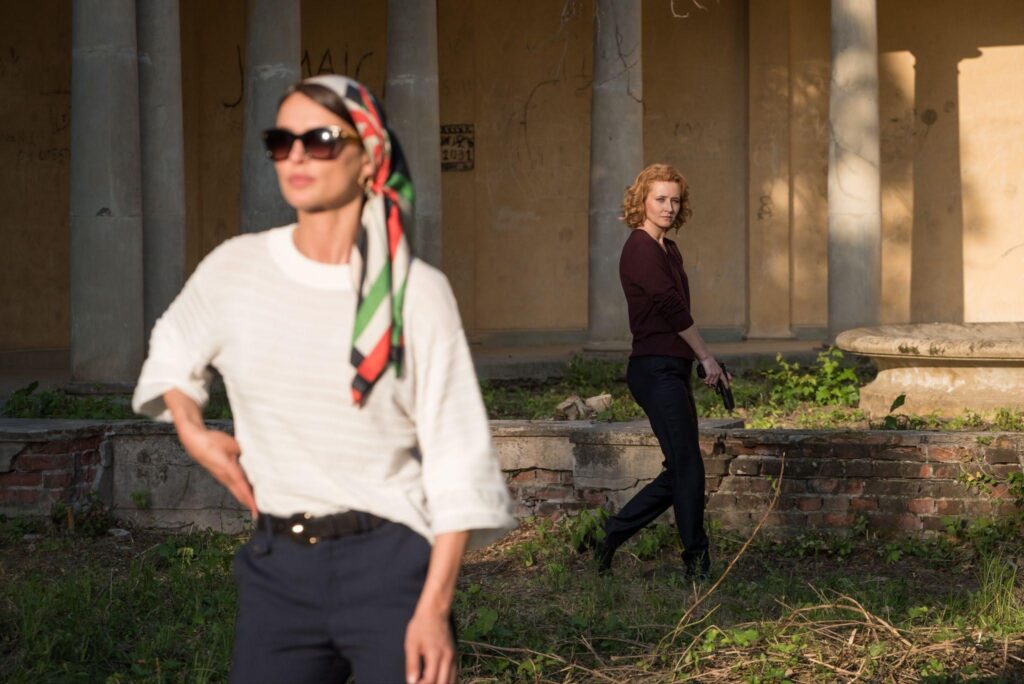
DK: That’s interesting because I remember watching it and thinking, I’m missing something.
CP: Completely deliberate.
DK: When you look back over twenty years of filmmaking, what has remained constant?
CP: For me, cinema is a language. I’m not simply interested in subject matter or describing society. It’s something beyond that. Every film enters into a dialogue with other films, with other directors. Sometimes I see a film that inspires me, and I want to answer it in my own way, to try another structure or another form.
DK: Do you mostly watch contemporary cinema or do you return to the classics?
CP: Both. Young directors send me their films or rough cuts, and I watch those. I try to keep up with what’s playing in cinemas, but I also go back to the classics.
DK: We’ve been waiting quite a few years for your next feature…
CP: (laughs) Yes. It’s been complicated. I’ve already spent four years on this project. In the meantime, I developed other ideas. Some worked, some didn’t. Maybe another project will come first. I usually work on several things at once. I hope this one will happen.
DK: Can you say anything about your next project? Perhaps which films it will enter into dialogue with?
CP: The Coen brothers.
DK: Really?
CP: I’m a big fan.
DK: You’re probably less aware of how much your own work has influenced other filmmakers. We were talking earlier about the fact that Martin Scorsese recently mentioned being inspired by one of your films.
CP: That’s the beautiful thing about cinema. We are all inspired by other films. Young filmmakers send me their work and ask for my opinion. I also enjoy talking with other directors. Sometimes another director notices something in your film that you never saw yourself. When I was young, Lucian Pintilie watched one of my films and we spoke about editing. Sometimes I agreed with him, sometimes I didn’t, but it was incredibly important. Directors need that dialogue with other directors. At the end of the day, we all learn from other films and from our own experience. It’s always both.
DK: What is your take on contemporary Romanian cinema?
CP: It’s interesting, because people often talk about Romanian cinema as though it were one thing. We have an industry that produces, let’s say, fifteen to twenty films a year. Given that, the diversity is actually remarkable. We only make around twenty films annually, often with very limited financial resources. That’s a great achievement. So when people complain about Romanian cinema, I think they don’t really know what they’re talking about. And every filmmaker has his own style, all of us are very much our own trip!
Regions: Romania