
Tribeca Festival June 3-14

Tribeca at 25: The one NYC fest offering 118 new movies—for openers!
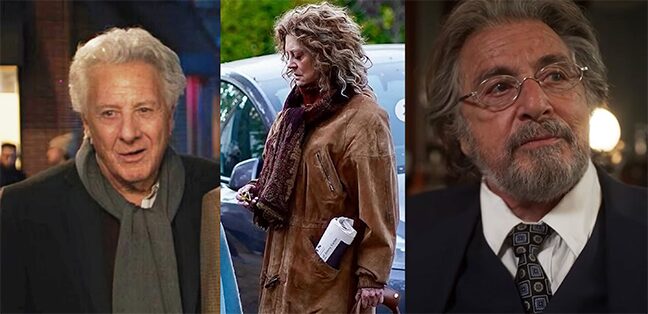
Your critic’s first salute in Tribeca’s 25th is to the new and old pictures starring a few of the living legends of 20th century motion picture history. Consider the stars not just celebrating their past successes, but plying their craft in brand new releases. Look, there’s Dustin Hoffman predicting his own mortality as a grizzled, pain-in-the-ass author, in The Revisionist. And here’s Susan Sarandon as a witchy caregiver in The Accompanist. Why, that’s Al Pacino as a grumpy, hunched-over 1960 FBI agent in Killing Castro. Pacino also has a supporting role in another fest drama, In the Hand of Dante, as does director Martin Scorsese.
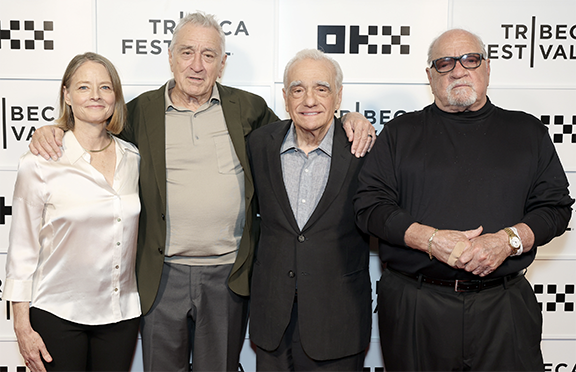
They’re all standing on the shoulders of Tribeca co-founder Robert De Niro, whose game-changing performance as Travis Bickle, 50 years ago, nearly got Taxi Driver an X rating. Over 900 fans of this grim classic packed a downtown theater as producer, Tribeca co-founder and CEO Jane Rosenthal introduced De Niro—sitting alongside director Martin Scorsese, screenwriter Paul Schrader, and Jodie Foster (who played a 12-year-old prostitute). De Niro shyly admitted he’d improvised the movie’s most remembered line, “you talkin’ to me?” Then he pointed a finger at the audience and himself, and rasped it out again, and the crowd went wild. Every artisan in these opening paragraphs has earned applause for lifetimes of continuing excellence on the big screen.
Immediately after the 9/11 attack on the World Trade Center, De Niro and Jane Rosenthal, with Craig Hatkoff, founded the Tribeca Film Festival, to beckon fellow New Yorkers back downtown to an economically devastated neighborhood. The focus was on new and emerging filmmakers of narrative dramas, documentaries and shorts. Curator Sharon Badal knew the first calling card of nearly every budding movie maker is a short—so Tribeca became the first NYC fest to seek out and show outstanding shorts from countries far and near. The filmmakers would fly to Manhattan on their own nickel to walk a red carpet and debut their first work in a real fest. Local residents from the same city would pour out to support shorts as well as narrative features and docs, plus other brick-and-mortar businesses. The theory worked in reality in the spring of 2002, and it has ever since. (Ben Thompson has taken over shorts, with Badal running the music video slate.)
Covid and the rise of stay-at-home streaming initially put a huge dent in NYC festival-going. So in 2021 TFF dropped “Film” from its name and expanded a growing menu of in-person, end destination events throughout Manhattan and adjacent boroughs. The Tribeca Festival has become not just neighborhood-centric, but pop music, games, podcasts, immersive, branded sponsorship and even A.I.-centric. The leading deep-pocket corporate sponsors have also kept pace with the times, evolving from familiar presenters like American Express and AT&T to the current OKX, a low-profile global crypto corp. This year, Tribeca showed, out of competition, the 75-minute Iranian A.I. docudrama Dreams of Violets, reportedly made for only $2,000. It was not press-screened and the festival didn’t promote it. Still, Rosenthal, De Niro and Scorsese signaled their significant support for A.I. in The New York Times (6/2/2026), with Scorsese stating that A.I. has replaced his need for storyboards.
In practical terms, the Tribeca fest is a monster to logisticate. No less than 118 feature films rolled out in less than two weeks—most were world premieres, over 50 were debut features, nearly half were directed by women. Add in 86 shorts (chosen out of 9,300 submissions, according to Rosenthal) and another 50 events. The logistics just getting from venue to venue in 90 degree heat were daunting. But hey, this is Manhattan. A long-extinct bar, The Lone Star Cafe, once sucked up all the oxygen on the corner of Fifth Avenue and 13th Street for many years. On its roof perched a giant prehistoric lizard, nearly a hundred feet long, with the legend “TOO MUCH AIN’T ENOUGH” emblazoned on the building’s street face. That’s the Tribeca fest. Very New York, conspicuously pushy, with sharp elbows often concealing a generous heart. Village, Soho, Noho, Tribeca residents and visitors have taken it all easily in stride, year after year, just as they took in the Lone Star Cafe and its Godzilla-size lizard towering over fashionable Fifth.
This Tribeca fest’s hot June days and nights saw former mayor Mike Bloomberg honored for his role in helping establish the Tribeca Film Festival in the aftermath of 9/11. Hillary Rodham Clinton turned up for a post-premiere conversation, and Madonna launched a short with Anderson Cooper to promote her latest record. Sean Penn shared thoughts in the Storyteller Series with CNN’s Kaitlin Collins, while Ronan Farrow unleashed multiple crime stories. Daft Punk’s Electroma shook a room and Bruce Springsteen received the 2026 Harry Belafonte award for distinguished service. Laurie Anderson and David Remnick’s live podcasts were held indoors, while free screenings were held outdoors at Hudson Yards. Tribeca X commercial awards were handed out to McDonalds, Amazon, Google, Coke and Tik Tok. A Tribeca Z pass could cost up to $25,000, but imagine the perks and swag when Too Much Ain’t Enough.
Here are critic’s choices from the big screen:
Unidentified: Haifaa al-Mansour: 2026: Saudi Arabia: 99 minutes
Saudi cinema began the painfully slow process of pushing against female oppression over a decade ago with Wadjda, a gentle and endearing tale of a young girl who simply wanted to own and ride her own bicycle. Set in the capital city of Riyadh, Wadjda was the debut feature of Haifaa al-Mansour, and the first Saudi motion picture shot entirely in Saudi Arabia. As current June temperatures in Riyadh are now peaking at 115 degrees, you won’t expect to see much bike riding around its impeccably clean and white neighborhood streets, many of which now boast gated freestanding luxury residences.
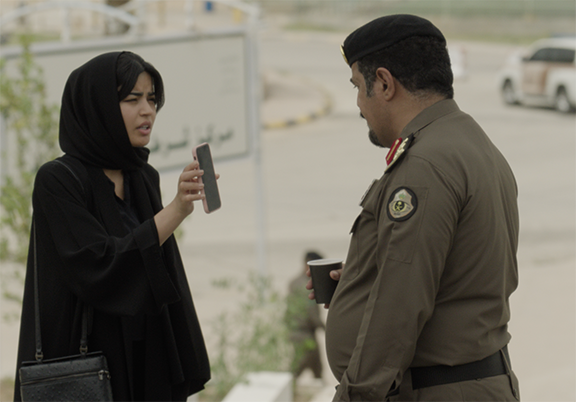
Al-Mansour’s new film, Unidentified, is a giant leap forward in storytelling, and a significant acquisition for Sony Pictures Classics. It reflects the recent reality of the Saudi government hiring policewomen for traffic enforcement. Here, the concept is a young female addition to the Riyadh police force, a recent divorcé, Nowal (Mila Al Zahrani, clear-eyed and alert) who’s assigned to scan and digitize files. What’s captured her interest in law enforcement is a police podcast from Britain that’s full of how-to-solve-a crime tips that Nowal dutifully remembers. When the body of a young woman not much older than her is discovered in desert sands outside the city—killed by blunt trauma—she’s eager to help the police pursue the teen’s identity.
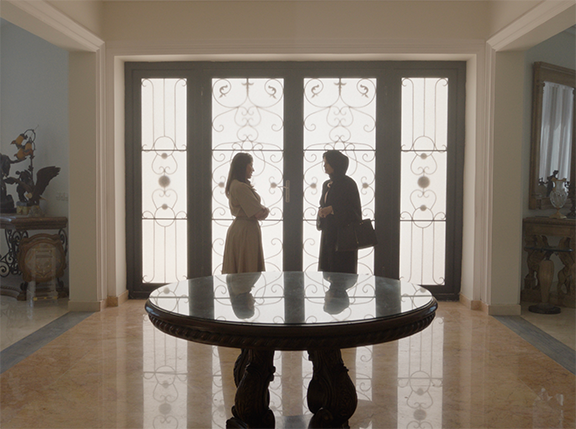
The station’s commanding officer, Colonel Majid (Shafi Al Harthi, blustery and affable), is initially amused by this young woman, letting her visit the crime scene. There are no clues, no DNA matches, and no one in Riyadh has reported a missing teen. The all-male police force would just as soon drop the search for some waif who wandered into the desert and may have been struck by a speeding car. But Nowal notes the expensive abaya the victim wears, and spots a local school’s small symbol on the garment. On her own, she visits the city’s upscale girls’ school, receiving a frosty rejection from the principal as well as upper school girls. When Majid learns of his intern’s bold investigative work, he quickly moves to shut her down. But by then Nowal has prowled the local disco, learning the dead girl’s identity from other teens, and has gone to visit the mother at one of those gated luxury homes, where she receives an even more frosty reception. The intrepid sleuth’s next visit is the morgue.
Unidentified is a vivid example of how a country’s institutions can work overtime to back its rich citizens in covering up anything they don’t want investigated. Noval is warned “discretion is key for keeping the peace,” and she learns that “honor crimes” in Saudi Arabia are family matters to be buried without comment. This doesn’t stop her. Director and co-screenwriter Al-Mansour is stepping up his game from Wadjda, and this time northern Riyadh’s manicured, white-on-white-hot streets take on a silent, menacing intensity. The events and truths Noval unravels are as complex and absorbing as any police procedural podcast. Unidentified is Tribeca’s premiere international drama.
Stealing Magic: Matthew Testa: 2026: USA: 88 minutes
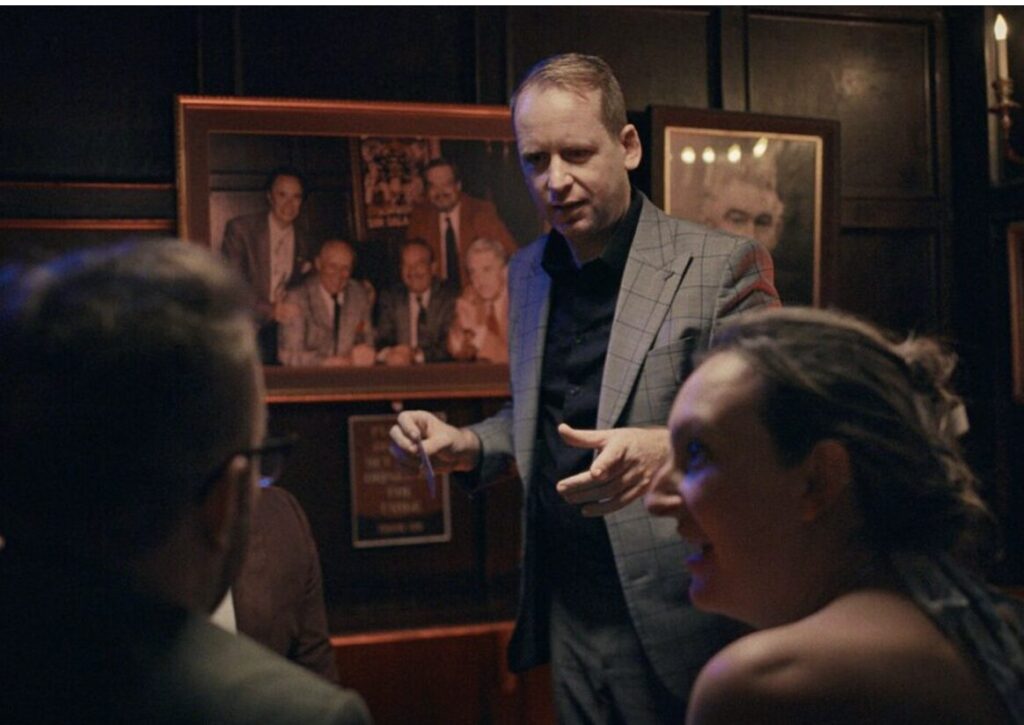
Around 2005–2006 in Manhattan, you could buy a new movie for $5 off a blanket on a sidewalk on Canal Street, West 23rd or East 86th. New releases that were probably camcorded at their city premieres, or before at sneak previews, and rushed into guerilla street distribution. The quality was shaky but the appeal was undeniable. One director, Steven Soderbergh, an industry spokesman against piracy, pushed back. In a gesture probably born out of defiance as much as frustration, Soderbergh released Bubble simultaneously in theaters and on pay TV, and a week later on DVD.
Twenty years later, movie piracy hasn’t gone away, and scrutiny remains intense, even at local film festivals—and even at press/industry screenings, where everyone wears a photo badge. Less than a decade ago, your critic became aware of a pair of suited-up gentlemen in white shirts, standing on either side of the Walter Reade theater screen, watching a half dozen reviewers (some of whom could barely climb subway steps) taking notes on a festival movie acquired at Sundance for nearly ten million dollars—a surveillance pattern that continued at the New York Film Festival for any picture with a studio or other major distributor. Two years ago it happened at Tribeca, in a vast theater showing a narrative drama to three critics. At that point your reviewer turned investigative reporter and learned today’s state-of-the-art theft device is a microcamera embedded in a popular brand of eye glasses.
All this history on the purloining of intellectual property came to mind watching Stealing Magic, a knockout documentary of what happens when a magician’s secrets (his/her illusions, props, routines, books, videos) are purchased by a third party, reproduced with often remarkable fidelity, then offered to the world for a fraction of their original value. This is how magician’s livelihoods are destroyed, and attention must be paid.
Andi Gladwin is the co-founder of Vanishing, Inc, one of the largest online magic stores in the world. With his partners George Luck and Joshua Jay, he creates and sells illusions by dozens of performing magicians to other performers, in addition to the general public. As Teller, a famous performing partner and creator in Penn and Teller notes, there’s not much money in creating a magic trick, a book or a movie. It just brings joy to a child of any age.
This is why Vanishing, Inc found itself at wits’ end watching an online competitor, Erdnase Magic Company, selling hundreds of its illusions, props, routines, books and videos for pennies on the dollar. It wasn’t just Vanishing being ripped off, but all the inventors of magic illusions, several dozen of whom we see in a Zoom call with Andi. The entire magic community worldwide has been losing its lifetime investment. Who are these thieves? Where are they located? How can they be stopped? Andi and George decide to play detective and track them down.
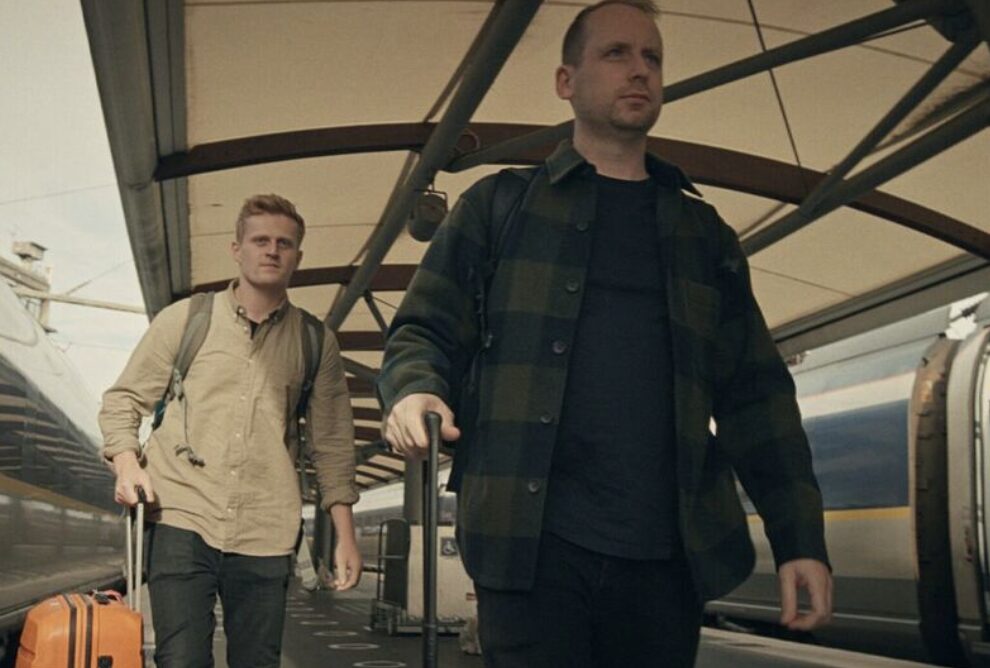
A former FBI director of New York’s cyber division warns them of the risks in pursuing an international pirate ring on their own. One magician who tried it had his car vandalized, and chased a masked intruder from his living room windows. Suspecting the operation may be in London, Andi and George hire a fraud investigator, who turns up a middle man—a purchaser of Vanishing equipment who then forwards packages on to Erdnase headquarters. Andi and George hit upon a neat idea—hiding a GPS tracking device inside a magic prop and seeing where its buyer’s package ends up.
Stealing Magic becomes a tense, nail-biting documentary as George and Andi follow their package to Paris, then Prague, then Cairo. India is suggested. It goes on and on. Local magicians along the way aid the search. The emerging mindset is that the further away one moves from America, the less respect there is for intellectual property of any kind, anywhere. And then the sinister retaliation against Vanishing begins: their website crashes from malware, and shortly after, their Sacramento factory burns to the ground. It takes an independent cyber security expert and a professional ‘ethical hacker,’ working together to pinpoint the Erdnase management, so Vanishing’s execs can turn their investigation over to proper government authorities.
Ah! you say, so who and where is Erdnase? Since magicians never reveal their secrets, you’ll have to buy a ticket to see Stealing Magic (an excellent idea in any event) when it hopefully appears online or on a big screen. Suffice is to say the ending gives hope. And that a one-sentence note tucked in the closing credits states Stealing Magic is not available to A.I. creators.
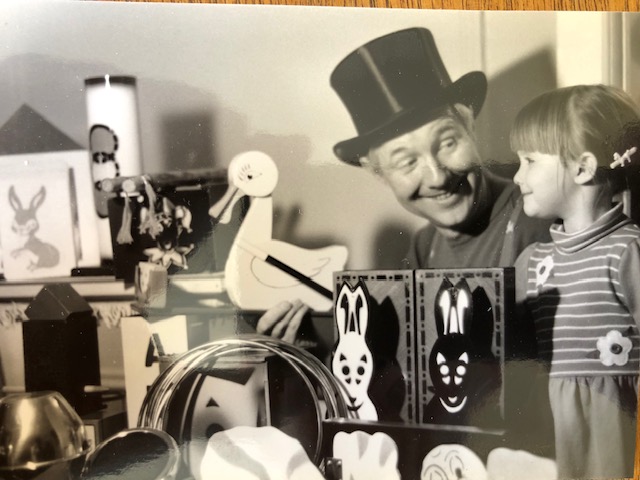
Full disclosure: Your critic is a former semi-professional children’s magician in Manhattan, and a protege of beloved 1950s magician Duke Stern. Brokaw’s nephew, Michael Baker, is proprietor of The Magic Company in central Illinois, which creates and builds original magic illusions, specializing in the Victorian Era.
Apart: Pola Maneli: 2026: USA, South Africa: 19 minutes
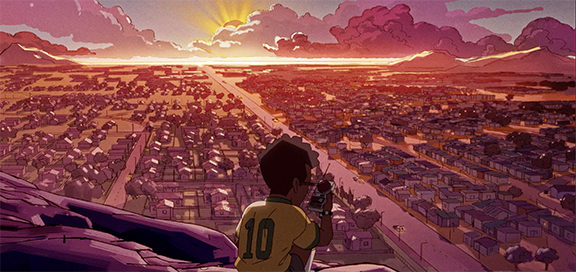
Tribeca’s animated shorts for the last decade have been curated by Whoopi Goldberg, herself a living legend on the New York cinematic scene. Apart was written by Spike Lee, who’s not only a legendary film director but a 33-year tenured professor and Artistic Director of NYU’s Tisch School of the Arts. Among the major filmmakers professor Lee has mentored as students are Dee Rees (Mudbound) and Kevin Wilson, Jr. (My Nephew Emmett, Oscar-nominated), both of whose critic’s choice dramas premiered at the uptown New York Film Festival.
Lee’s writing partners here are Tim Jones, Jeff Leisawitz and Lubabalo Mtati. His production company, 40 Acres and a Mule, made Apart, which is an abbreviation for apartheid in South Africa in 1989. We’ve come to trust Lee’s voice as both a top-of-the mark educator and a fierce, uncompromising storyteller. Director Maneli, who’s lived in South Africa, originally came onboard Apart as an art director/illustrator doing character development. The story is of a painful and wrenching rupture of friendship between two school boys—one a Black child from a modest working family, the other a white Afrikanner from a privileged white family. Apart sounds like a useful teaching tool in any classroom exploring the history of African apartheid at a crucial, tipping point moment. It is that, and much more.
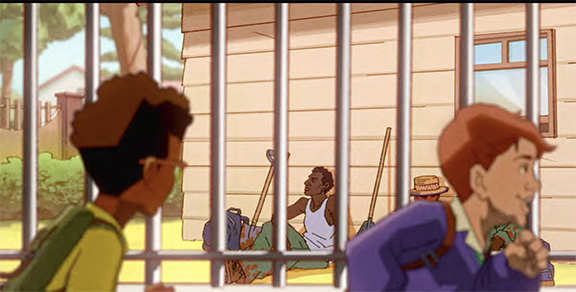
The boys, Themba and Joel, speak in English and communicate via hand held walkie talkies. (Themba’s parents speak in subtitled IsiXhosa, while Joel’s parents speak in subtitled Afrikaans.) Joel’s dad is an armed police officer active in the firestorm of police brutality preceding the change of African government in 1989. (This would finally free Nelson Mandela from 27 years of imprisonment and lead to his election as president.) Dad’s a brutal segregationist, and he fears losing the dominance he’s enjoyed enforcing all his life. This is spelled out early by a radio voice: “The greatest weapon in the world of the oppressor, is the mind of the oppressed.” The policeman father is also afraid of what Themba will do if he ever achieves equality with Joel. And so dad separates the two youngsters, ending their relationship.
Maneli and Lee leaven this animated reality of crushed friendships with two beguiling fantasy sequences. One shows the boys forming themselves into vividly colored radio waves from their phones, dancing and hopping about like Keith Haring figures used to wiggle on subway walls. The second, which is Apart’s teaching moment, shows simple woodcuts painted with the figures of two zebras, one black with white stripes, the other black with white stripes. Rain comes and blurs all zebra stripes into mutual matching grays. This is the movie’s strength and hope.
In closing moments, historian Ellen Kuzwayo and singer Miriam Makeba help transition us back into reality with their thoughts on never-ending colonial apartheid. In her remarks on this festival’s history, Jane Rosenthal reminded audiences that Nelson Mandela gave the opening speech at the inaugural Tribeca Film Festival in May 2002, offering support for the festival. Apart is vintage Spike—a provocative filmmaker who always has the back of the oppressed, and increasingly a chunk of one’s mind.
Let’s put on a show!
The final two critic’s choices are birds of a feather—two feature length documentaries on the developments of two vastly different stage musicals. One’s a recent Broadway biopic built and launched out of its marquee star’s Hell’s Kitchen roots… the other’s a 1975 screen and stage warhorse (currently back on Broadway yet again), transferring its “sweet transvestite from transexual Transylvania” to a southern Wyoming town with 25,000 residents.
Time Warp: Allison Berg: 2026: USA: 113 minutes
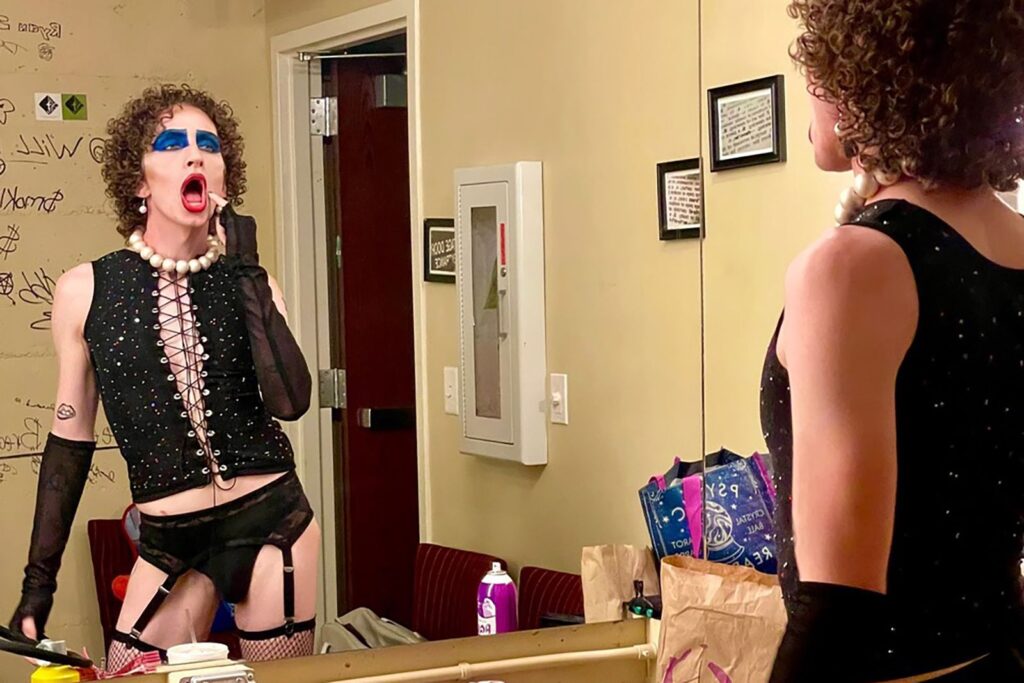
First consider the 26-year-old Rock Springs resident Kenny Starling. He’s the queer director, producer, choreographer, house manager and star of the town’s local production of The Rocky Horror Picture Show. Originally from South Carolina, Starling helmed four previous local intergenerational productions of Rocky Horror, using the shadowcast technique of placing actors in front of the movie running onscreen. He knows the drill of casting local students and parents, as well as the logistics of pacing an eight week countdown-to-Opening-Night. It was easy for film director Allison Berg and her crew to move into the town’s Broadway Theater, a spic-and-span 325-seat auditorium. Time Warp demonstrates anew how amateurs with no professional acting or dance training can fuse into a committed, polished company in weeks, given the right fireball director/choreographer.
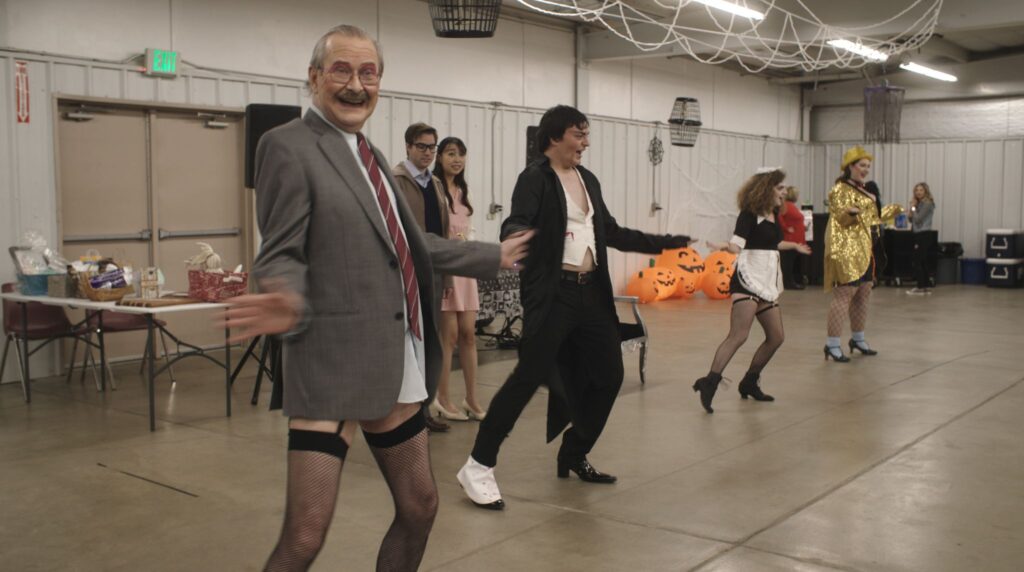
As you’d imagine, it doesn’t take long for the first local to file a complaint to the city council, protesting the gender-bending evils of Rocky Horror. But Starling and cast members testify to the play’s essential innocence and joys—and it helps that a councilman, formerly a local police officer, has been cast as Rocky and is going full drag. The journey’s other centerpiece, filmed with multiple cameras and edited to a razor’s edge by Frank Keraudren, shows Starling and company doing a promotional preview of the “Sweet Transvestite” showstopper to a packed Rock Springs evening bingo game. While the men in town sit in stunned silence as Kenny struts his stuff, nearly all the women start tapping their toes and pledging to buy tickets. Bingo! It’s not surprising the closing credits include exec producers John Cameron Mitchell and Billy Porter, and preview Starling’s troupe hard at work preparing their next win-win for the LGBTQIA+ community and the rest of Wyoming, Hedwig and the Angry Inch.
Alicia Keys: Girl From Hell’s Kitchen : One9: 2026: USA: 86 minutes
The Hell’s Kitchen address that keeps popping up throughout Alicia Keys’ early life in One9’s documentary portrait is 400 West 43rd St. That’s the 46-story Manhattan Plaza, just down the block from its twin at 484. Every person in NYC showbiz knows the buildings between Ninth Avenue and Tenth Avenue as the homes of many a stage and screen star—for openers, James Earl Jones, Earle Hyman, Al Pacino, Jane Alexander, and Angela Lansbury. Back in 1948, Lansbury starred in the movie Tenth Avenue Angel, playing auntie to chirpy little Margaret O’Brien, who wore roller skates delivering newspapers to the corner newsstand. The Hell’s Kitchen nabe was far more docile back then than in the 90s, when Alicia Keys was coming of age. At that time, as the song “Empire State of Mind” makes clear, “Noise is always loud, there are sirens all around, the streets are mean, there ain’t ever a curfew, ladies work so hard, such a meltin’ pot, on the corner sellin’ rock, preachers pray to God, I’ma make it by any means, I got a pocketful of dreams.”
The lyrics above were written by Keys in 2009. An updated version recorded by Keys and Jay-Z includes “Yeah I’m that Brooklyn, now I’m down in Tribeca, right next to De Niro, but I’ll be here forever, I’m the new Sinatra.” After a sold-out audience attended the world premiere (June 13) of the doc on Keys’ early life, she sang “Empire State of Mind.” to an enraptured audience.
Talk about synergy. The premiere was a stunning example of how Tribeca has broken with other NYC film festivals—debuting a pop star movie on the big screen, then following it with a live stage performance by the star. This year’s festival also did it with its Opening Night world premiere of a documentary on Earth, Wind and Fire, followed by a live performance by the group. Call it razzle dazzle show biz with roots in a post World War II era, when movies in many cities were preceded by and followed by lively stage shows. It’s about what Time Warp and its shadow cast production of The Rocky Horror Picture Show once tried out as a Midnight Madness experiment and now do eight times a week on stages worldwide. It’s even close to what’s going on further up Broadway, at the Metropolitan Opera in Lincoln Center. There Sting is pouring out his heart in The Last Ship, the first musical ever staged at Met Opera. It positions the work with a theme line “Community and Resilience.” More of the entertainments surviving and prospering these days in an ever changing New York City are putting on a different kind of storytelling, a different kind of show built on community and resilience. Or maybe it’s resistance and defiance to what’s happening through the other America out there. One tee spotted a lot around this Tribeca Festival read “New York vs. Everybody.”
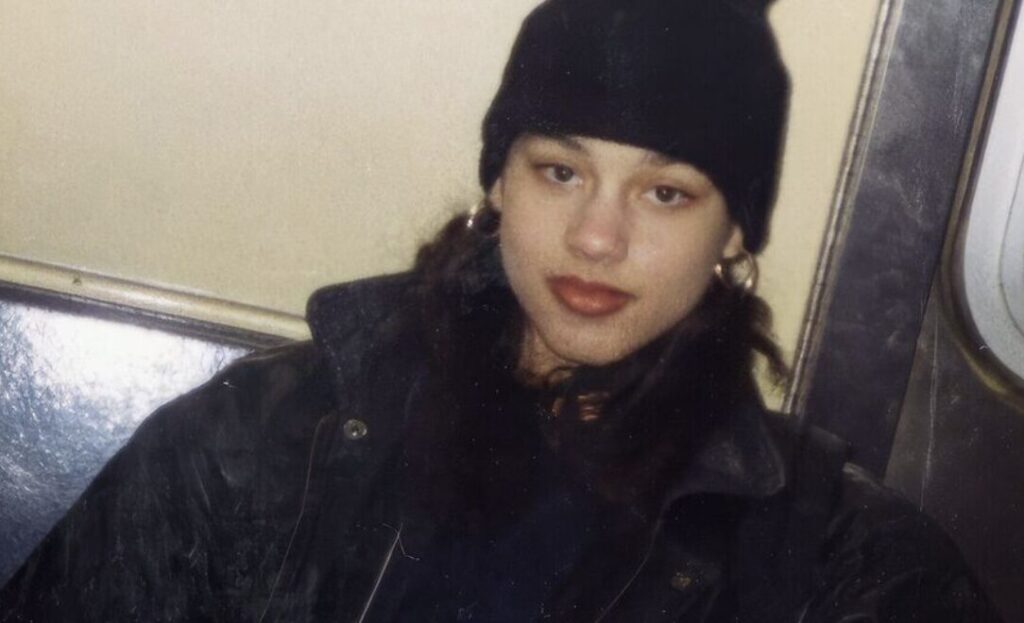
Keys was born in ‘81 and raised by a single mother, the actress Teresa Augello, who worked three jobs and was determined to make Alica the star she’d never become herself. Alicia started acting at 4, began classical piano lessons at 7, and graduated from Manhattan’s Professional Performing Arts School at 15. She describes herself as “a piano prodigy in cornrows,” Much of Girl From Hell’s Kitchen is a mother/daughter doc packed with archival footage of their days and nights in Manhattan Plaza, and what Alicia was navigating through 43 stories below. The news footage is raw, visceral, and sometimes violent—the neighborhoods flanking Times Square are shown in disarray and despair. Yet Keys rose above it all, penning many of her most enduring songs heard here— “The River,” “Invisible Man,” “Woman’s Worth,” “Troubles,” “Fallin’”—out of the ashes of Hell’s Kitchen.
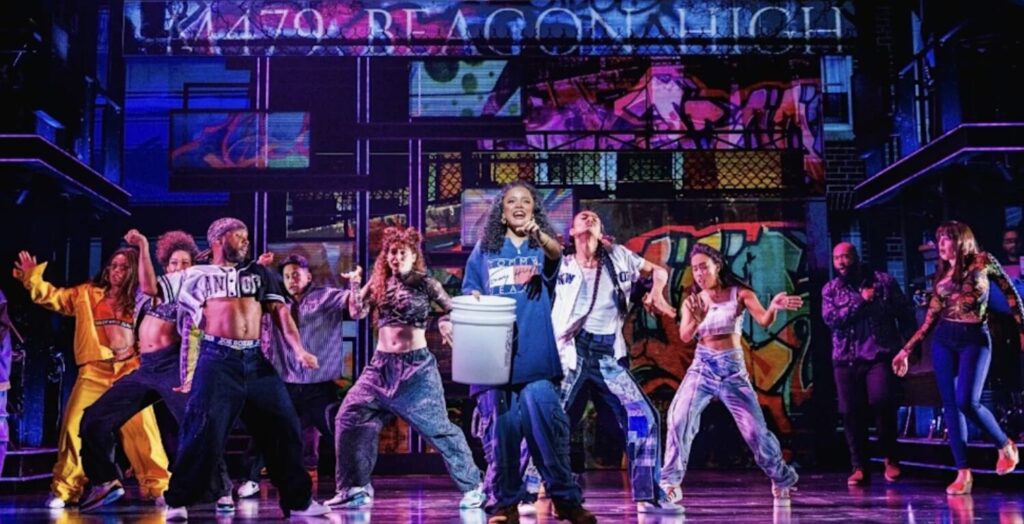
Director One9 adroitly intercuts scenes of Keys’ childhood with footage of her 13 year development of the semi-autobiographical musical Hell’s Kitchen, from workshop to the Public Theater to its 2024 triumphant Broadway opening at the Schubert Theater. What makes the journey and the movie irresistible to watch is that the 17-year-old Ali’s stage life took place just a few blocks from where Alicia actually lived it. Hell’s Kitchen won two Tony awards and played nearly two years at the Schubert, and has begun a long touring life in multiple countries. Its success has been a factor in bridging a reconciliation between Keys and her estranged dad, which director One9 carefully shares. The film is an inspired capstone for the Tribeca Festival’s 25th, and, looking forward, maybe its smartest way to preview things to come.
This concludes critic’s choices. Watch for Brokaw’s picks at the 64th New York Film Festival, Sept. 25-Oct. 12 in Lincoln Center.
Regions: New York City