
‘Blue Heron’ — Some Things Last a Lifetime
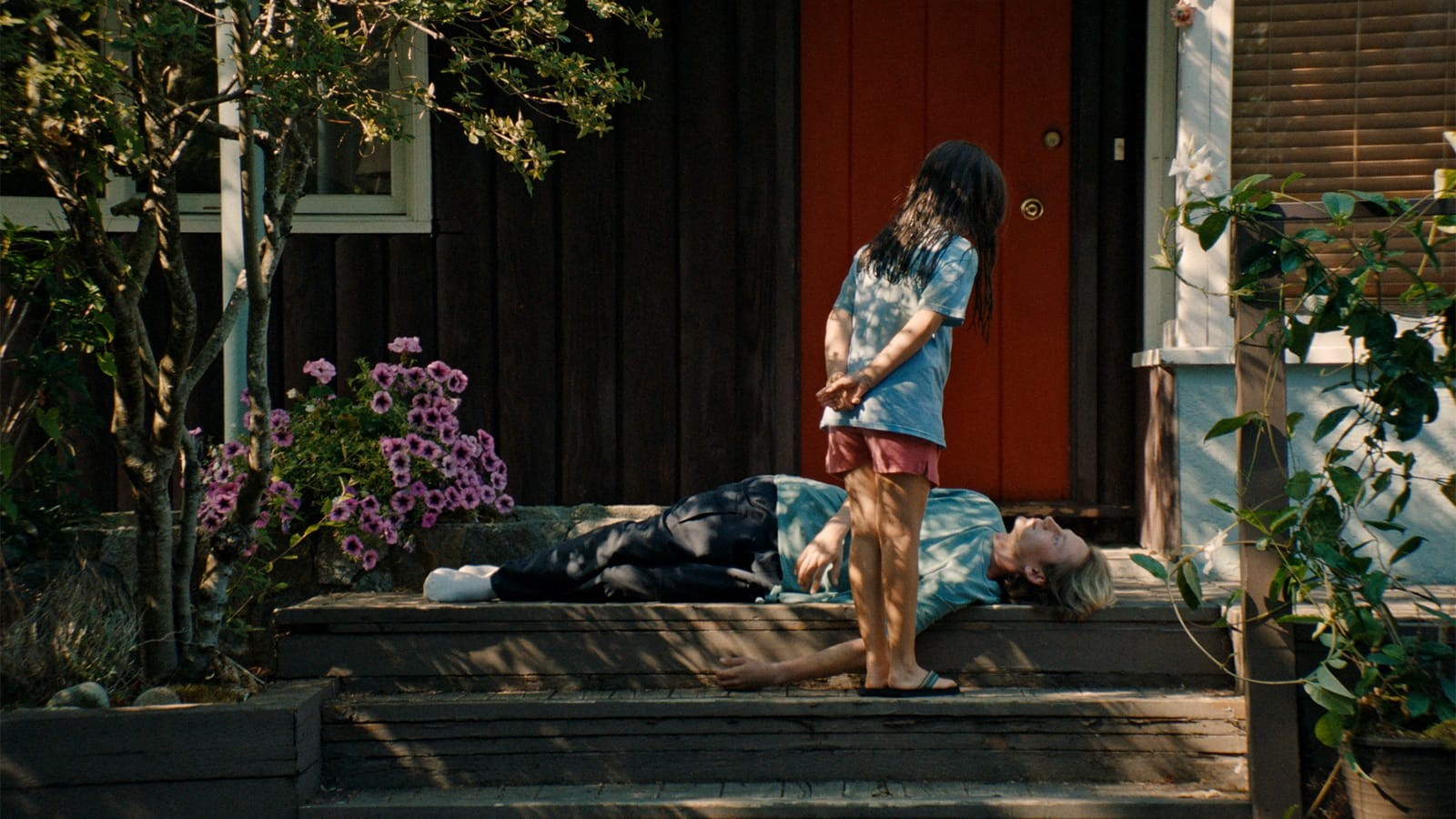
Writer-director Sophy Romvari channels an unexpected influence for her cinematic debut -– culminating in the most moving film of 2025
Sophy Romvari’s feature film debut, “Blue Heron,” which opened in international theaters this fall, is an abstract imitation of her own familial dynamics and childhood domestic environment. Despite exploring a “household drama” subject, Romvari shows no interest in mimicking the traditions of that subgenre. Rather, she cites legendary documentary filmmaker Frederick Wiseman as a major influence on “Blue Heron.” In this, Romvari forges her own path, skillfully blending a poignant metaphysical screenplay with a technical style that may initially seem incompatible.
The story follows protagonist Sasha (Eylul Guven/Amy Zimmer) in two periods of her life. The first, set in the 1990s, shows an eight-year-old Sasha witnessing the toll her troubled eldest brother, Jeremy (Edik Beddoes), takes on her parents (Iringó Réti, Ádàm Tompa). The second takes place decades later, showing her as a documentary filmmaker coming to terms with her unconventional childhood. The story floats through time and space, untethered from specific rules on how it must be told — or which character is placed into which narrative role.
Perhaps Romvari’s greatest feat in “Blue Heron” is her ability to channel both story-based and technical strategies – reminiscent of the experimental Wiseman – to innovatively depict childhood memories.
A master of his craft, Wiseman’s films were profoundly natural, as his subjects’ dialogue was not heavily influenced by his voice or vision. The intimate and personal nature of his projects, such as “High School,” earned him the reputation as being one of few documentary filmmakers who can truly capture the “fly on the wall” feeling.
Film academic Dario Llinares writes that Wiseman “[rejected] the expository crutches and constructed dramatic beats that are so ingrained not only in documentary but in most filmmaking today.” A similar sentiment is present in “Blue Heron” as the characters surrounding Sasha do not have clear arcs or backgrounds. This simultaneously avoids unnatural exposition and immerses the viewer in her young mind, given her restricted knowledge of her family’s dilemma.
Romvari’s inspiration seemingly extends beyond Wiseman to his collaborators. Cinematographer John Davey was a longtime collaborator of Wiseman, working with him on films such as “City Hall” and “Central Park.” Davey is known for patient, observational camerawork, often declining to focus on a subject’s face during significant character moments.
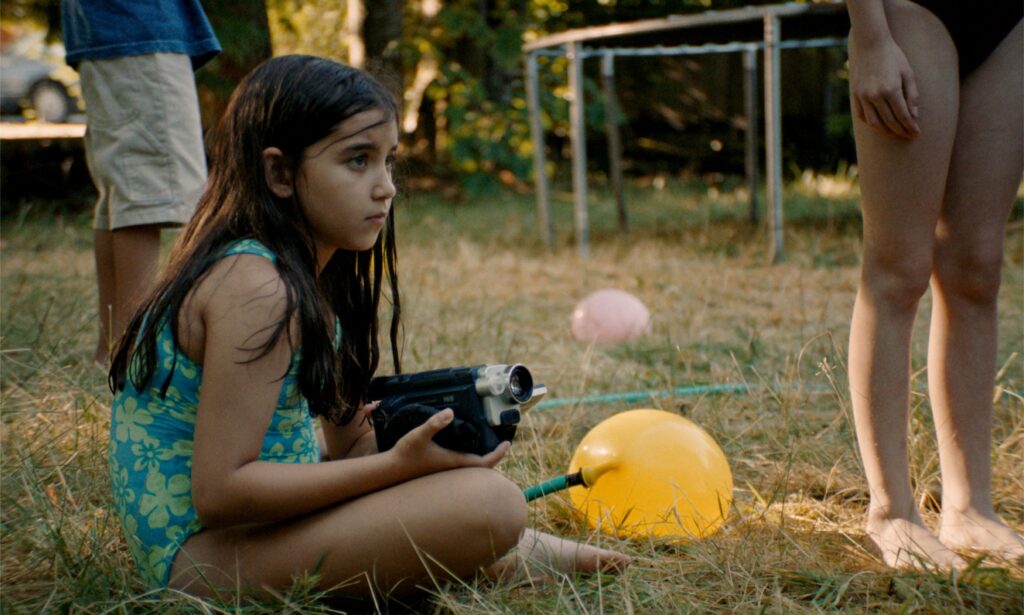
“I struggle now to remember much of my childhood,” Sasha says in the opening lines of “Blue Heron.” “It only comes back to me in small fragments, and even those memories are hard to trust.”
Because of these memory gaps, certain intimate moments are shot with specific limitations. In perhaps the most direct conversation Sasha has with her mother about Jeremy, the two discuss the possibility of Sasha inviting her friends to the home. As the two make potato pancakes, her mother explains the embarrassment Jeremy brings her.
“It feels natural for you,” she says about Jeremy’s behavior, “But it shouldn’t.”
All this time, the camera refuses to leave her mother’s hands, focusing on the sensory input Sasha receives from the shredded potatoes.
Later in the scene, the two are interrupted by noises from above. Jeremy is loudly walking on the roof — what he is threatening to do is unclear. Yet, Sasha focuses on the growing smoke coming from the now crisping pancakes.
With this, the viewer becomes closely associated with Sasha’s point of view. Because childhood memories are fragile — and at times inaccurate — reconstructions of events and details, such as the intricacies of people’s faces, can often be replaced by things like recalled sensory stimuli.
Yet another association Romvari shares with Wiseman is her distinctive use of diegetic music. All the music in Wiseman’s documentaries came from within the footage he shot, only existing if the subjects in the film chose to play it. Similarly, Romvari enhances the realism of “Blue Heron” through her illustration of characters listening to music. Most notably, an adult Sasha listens to “The First Day of Spring” by the Gandharvas — seemingly a favorite of Jeremy’s — on his cassette tape, in a brief yet gripping moment.
This trend is broken, however, in the film’s final moments. As the credits roll, Daniel Johnston’s “Some Things Last a Long Time” plays. Romvari says that she “did cheat a little” in the unsubtle use of this song, perhaps referencing both its lyrics and Johnston’s public mental health struggles.
The story culminates with Sasha sincerely confronting her memories of and feelings towards Jeremy, as Johnston sings:
“Your picture is still / On my wall, on my wall / The colors are bright / Bright, as ever / The things we did, I can’t forget / Some things last a lifetime”
Wiseman passed away earlier this year at the age of 96 in his Cambridge, Massachusetts home. Despite this massive loss for the film community, his influence will undoubtedly remain — something evident in Romvari’s promising debut.
“Blue Heron” is now available to stream on The Criterion Channel, Apple TV, and Amazon Prime Video and was recently released on home video by The Criterion Collection.
Regions: Boston