
‘Deseando Amar’ — Interpreting Wong Kar-Wai’s masterpiece in a new light
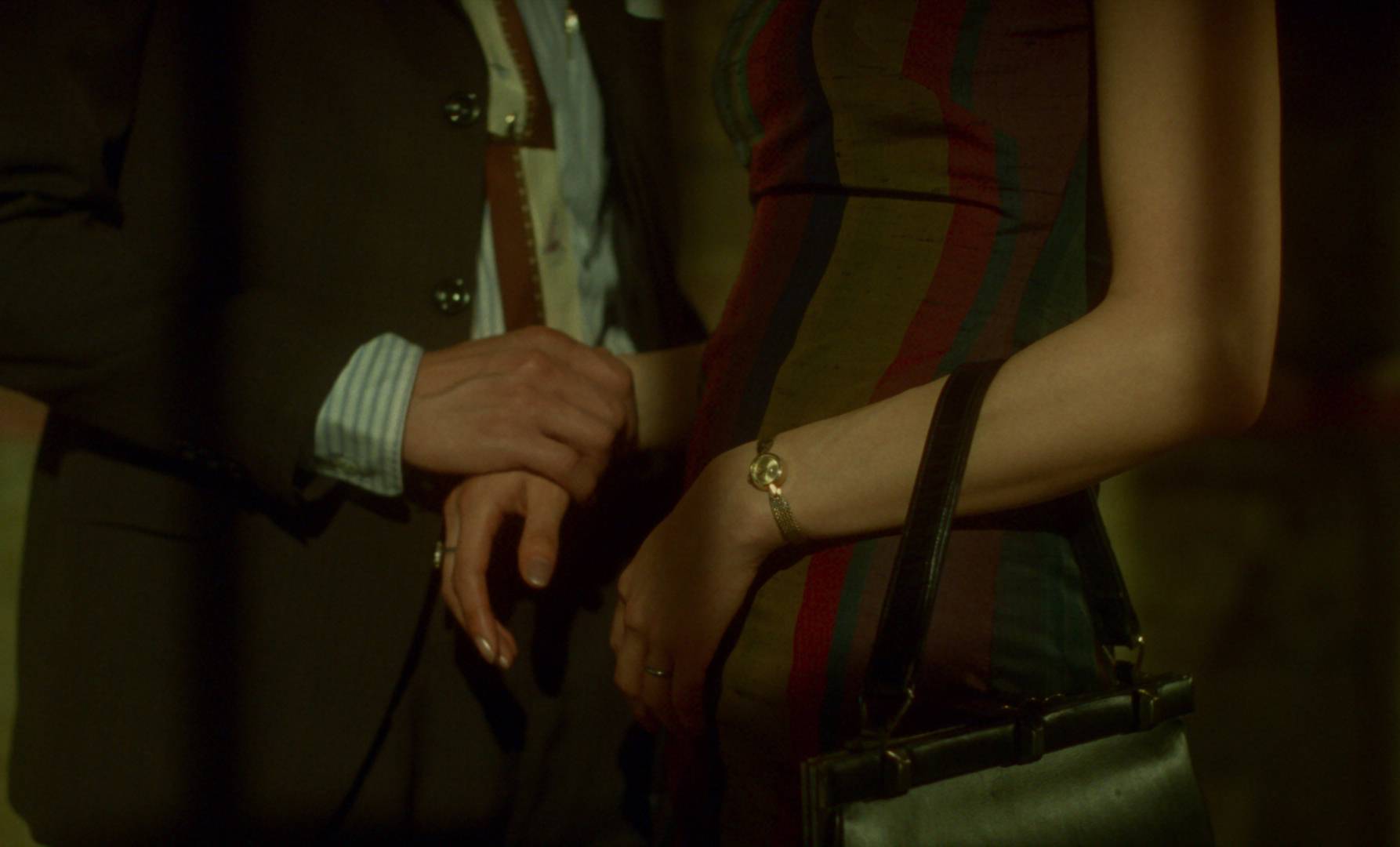
Prior to visiting Cines Babel in Valencia, Spain, I had already seen “In the Mood for Love” five times. I check in on Wong Kar-Wai’s tragic romance film, like an old friend, nearly every year. The differences I notice between each viewing are subtle, based much more on how I have changed over the years than anything else. The movie itself, of course, never changes. Only this sixth time was different.
The subtitles were in Spanish, a language I am by no means proficient in. The film’s dialogue is performed in Cantonese; at this I am considerably worse. Even my notes, which were blindly scratched onto the inside cover of my beat up “A Tale of Two Cities” copy due to my lack of a proper notebook, bordered on unintelligible.
What was more important to me than simply understanding the dialogue was whether or not I could get something new out of the story. Could a greater focus on moments without words — actors’ tone and certain technical elements — lead to me seeing a film I had never seen before?
I observed the audience before the film began: An older couple in the back spoke Cantonese; a few groups of youths scattered throughout the theater whispered to each other in Spanish. Despite wielding an extreme familiarity with the film, I felt I was at a clear disadvantage.
The film follows two individually married neighbors in 1962 Hong Kong who discover that their respective spouses are engaging in an affair with one another. Su Li-zhen (Maggie Cheung) and Chow Mo-wan (Tony Leung Chiu-wai) find solace in each other, connecting intimately over their shared pain.
My greatest success in caption-reading was a newfound appreciation of Nat King Cole’s rendition of “Quizás, Quizás, Quizás,” which is played many times throughout the film. Despite paying little attention to the song’s title in previous viewings, the Spanish captions led me to realize just how much the word quizá, which translates to “perhaps” in English, is used throughout the script. It can be thought of as the quintessential word of the film, speaking to the uncertain yet flirtatious nature of relationships built throughout the story.
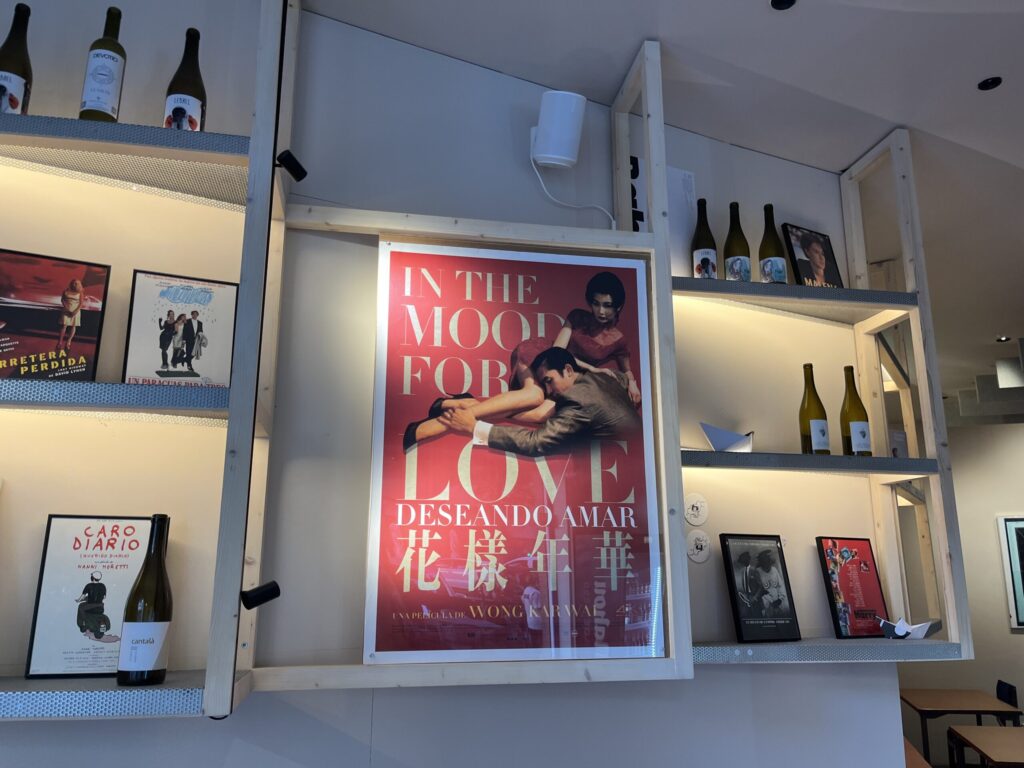
Aside from this, I confess that I struggled throughout the first act. While my baseline Spanish knowledge allowed me to understand occasional sentences, translatable lines were nearly impossible to predict. I often missed moments entirely by means of failed translation and a lack of focus on the actors’ faces.
The breakthrough came when I gave up on my minimal Spanish skills and stopped acknowledging the subtitles altogether. I relied on what I knew about the characters. I had visited this movie on five separate occasions, all at very different points in my life. Perhaps I could use the relationships I have built with these fictional characters to understand them. What do I know about Su Li-zhen as a person? What would she say in a situation like this?
I found additional clues in Wong’s directional choices. I missed many of these choices in previous viewings, instead wasting my time darting my eyes between the English subtitles and the onscreen images.
And to my advantage, much of the film’s most vital events occur under the surface — important statements go unsaid. Emotionally complex scenes get broken down to the most basic of elements. Who is upset? What is it they want?
My aforementioned greater focus on the wordless moments led me to actualize thoughts I had not been able to understand before. For example, my extreme concentration on the film’s repeated exchanged looks between Su and Chow as they passed each other on a staircase led to a realization.
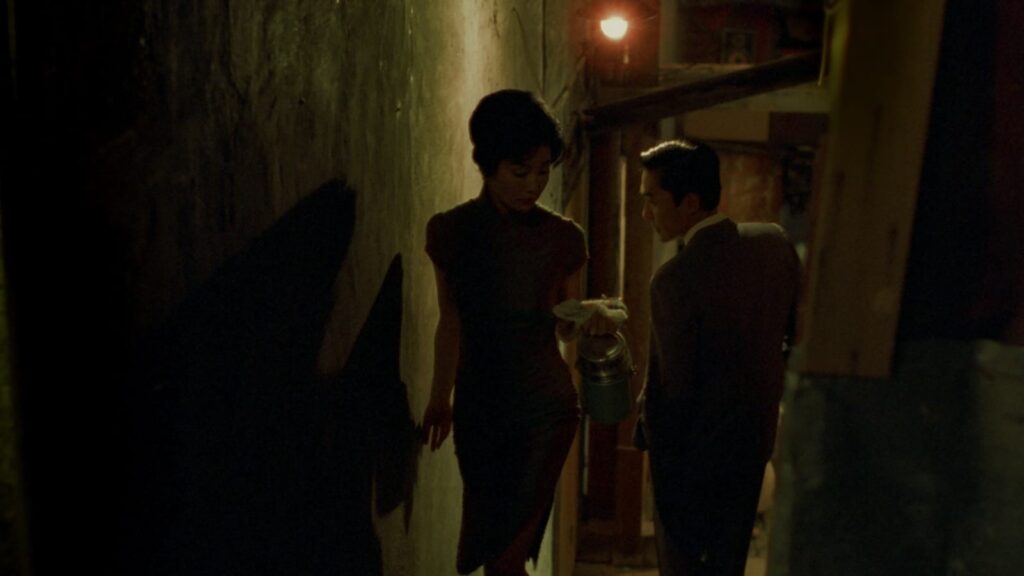
Su initially appears to have little interest in Chow, not acknowledging or looking at him in these silent exchanges, while Chow often looks at her a second time as she passes by. As their relationship progresses, visual cues show Su’s feelings towards him quietly escalate, as if in a way she could not predict.
Chow expresses an identical feeling, only with his words. “Feelings can creep up just like that,” he says to Su late in the story, “I thought I was in control.” In that moment, I knew Chow had said the line even without the help of subtitles. It was too powerful to miss.
My greater focus on Cheung’s facial and body language led me to understand that Su was the one who had the romantic feelings creep up on her. Although Chow was the one who said the words, perhaps he was not even referring to himself. I was seeing these two characters intertwined in a way I could not previously comprehend. And to think I thought I knew them so well.
By the end of the film, I found more meaning in the moments of silence than those with dialogue. In the specific case of “In the Mood for Love,” it felt like the film’s most critical points occurred without words. Does that necessarily make these moments more important? Quizás.
Regions: Spain