
New Directors/New Films April 8-19
In a world where most film directors start by making shorts, just one New York fest shows them all to distributors and reviewers on the big screen
From 1936-56, your critic’s coming-of-age years, Oscar-nominated shorts fell into two categories — one-reelers (11 minutes or less) and two-reelers. Out in Wisconsin and Iowa, at the Saturday matinee, there were only a sliver of Oscar-winning cartoons (Warner Brothers’ Looney Tunes had five). This fan’s favorite 15-chapter serials and Three Stooges comedies, which preceded the featured cowboy western, never made the cut. Film festivals hadn’t started either, so only voting Academy members got to view shorts upfront.
In 2002, the Tribeca Film Festival was launched to help provide some economic recovery downtown from the attacks on the World Trade Center. Programmer Sharon Badal took to heart a universal truth — most creators worldwide who want to make a movie start by making a short. It’s a calling card for the writer, director, producer, cinematographer, editor, music composer, cast — every involved artisan. Sharon set high standards from the get-go, curating the best shorts in Manhattan, siloed into themed categories. But Tribeca never hosted press and industry shorts screenings. Brick-and-mortar venues had long ago replaced shorts with commercial trailers, and what critic would ever bother reviewing a little movie that wouldn’t be playing at the Saturday matinee or anywhere else?

Sixteen years ago your critic joined The Independent, which had always been a hard news indie film journal, with the primary goal of finding and saluting the best shorts already chosen for major New York fests. Over 16 years we’ve had first eyes, and thus first online reviews, on one Oscar nominee, Kevin Wilson Jr.’s My Nephew Emmett, and three Oscar winners — Shawn Christenson’s Curfew, Carol Dysinger’s Learning To Skateboard In a Warone (If You’re a Girl), and Frank Stiefel’s Heaven Is A Traffic Jam On The 405. Not a bad tally. Occasionally a short would migrate from one fest to another, as Curfew did — starting at Tribeca before showing up at the New York Film Festival for an encore showing. And it’s been possible for an Oscar winning calling card to become a first feature, as happened with Curfew and more notably with Damien Chezelle’s Whiplash (2014)– which started as a 17 minute short at Tribeca and became a Sony acquisition, winning Oscars for supporting actor, editing, and sound design.
Last year Tribeca received over 14,000 shorts submissions (can you even imagine watching 14,000 shorts submissions?) and curated a program of 93. Filmmakers travel to Manhattan on their own nickel each year, and receive multiple public showings, every one of which sells out.
This 55th annual edition of New Directors/New Films, co-sponsored by Film at Lincoln Center and the Museum of Modern Art, previewed its entire slate of ten shorts to press and industry on the Walter Reade Theater’s huge screen. It’s the way they were meant to be seen and evaluated — every movie maker (and reviewer’s) dream. It’s the first time FLC and MoMA have done this, and, indeed, the first time any major New York festival has given this kind of promotional attention to the excellence of global shorts. (All 23 feature films in this ND/NF were also shown upfront to press and potential exhibitors on big FLC and MoMA screens.)
Two shorts out of 10 and two features out of 23 make up this critic’s picks. Equal space for unequal time. The way it was always meant to be.
Division: James Paul Dallas: 2026: United States: 15 minutes
One of every movie’s primary goals, regardless of length, is to surprise an audience in ways a viewer will take home and remember. Nearly every Oscar short we’ve spotted in its earliest showing, doc or narrative drama, has made one indelible, unforgettable point. Not ten, or five or three points… just one. Sometimes the concept is revealed at the very end. This viewer, who tries to be super conscious of not writing “spoilers” that can wreck a viewer’s pleasure of discovery, once in a blue moon makes a conscious decision to break the rule, because the reveal is so terribly, terribly important.
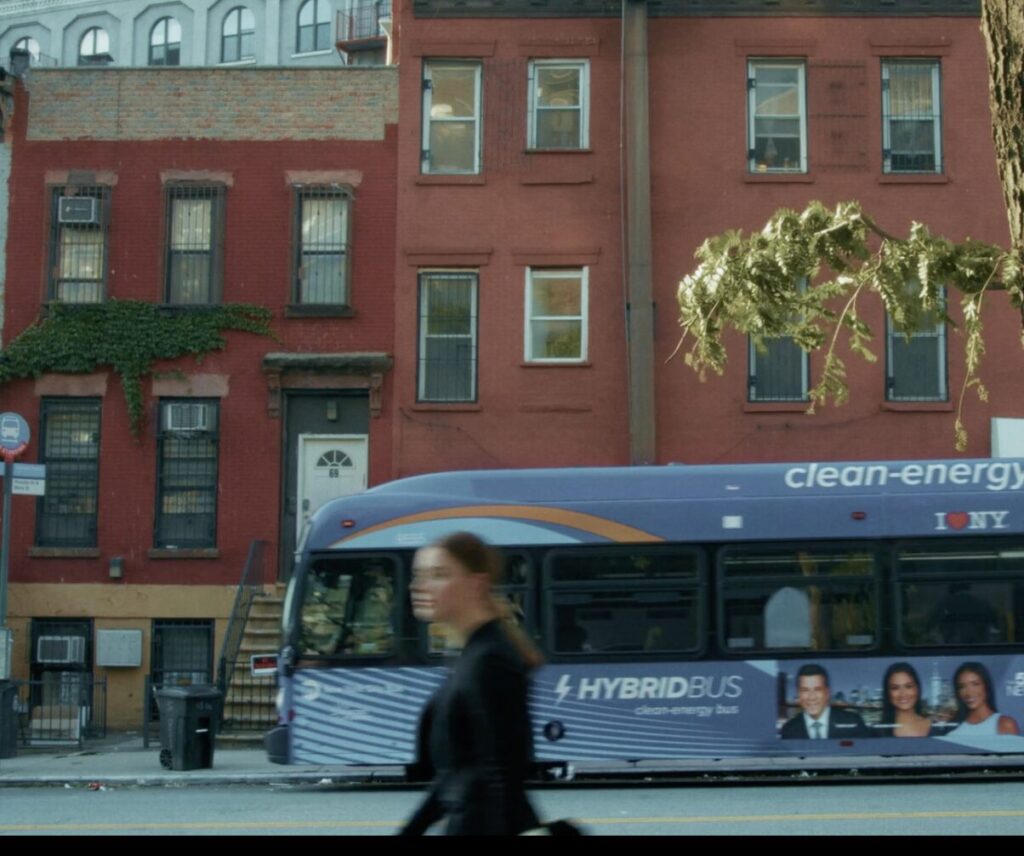
We’re in a modest Manhattan apartment, situated in a small red brick building. A man identified as “Paul” is talking by phone to an unseen friend, whose voice we also hear. It looks like the friend may have moved, as his clothes hangers are bare — though the inexpensive furniture, pictures on the wall, even kitchen utensils, are still in place. As are several walls of the resident’s book collection. The caller is instructing Paul on which volumes he’d like boxed up and mailed to him. He wants the Beardsley, the McQueen, the Japanese prints volume, Moby Dick, One Hundred Years Of Solitude, an early, perhaps leather-bound Edgar Allen Poe edition, some gay non-fiction and the 9/11 New Yorker issue. All in all, maybe 10 to 20% of a lifetime collection on his living room and bedroom shelves.
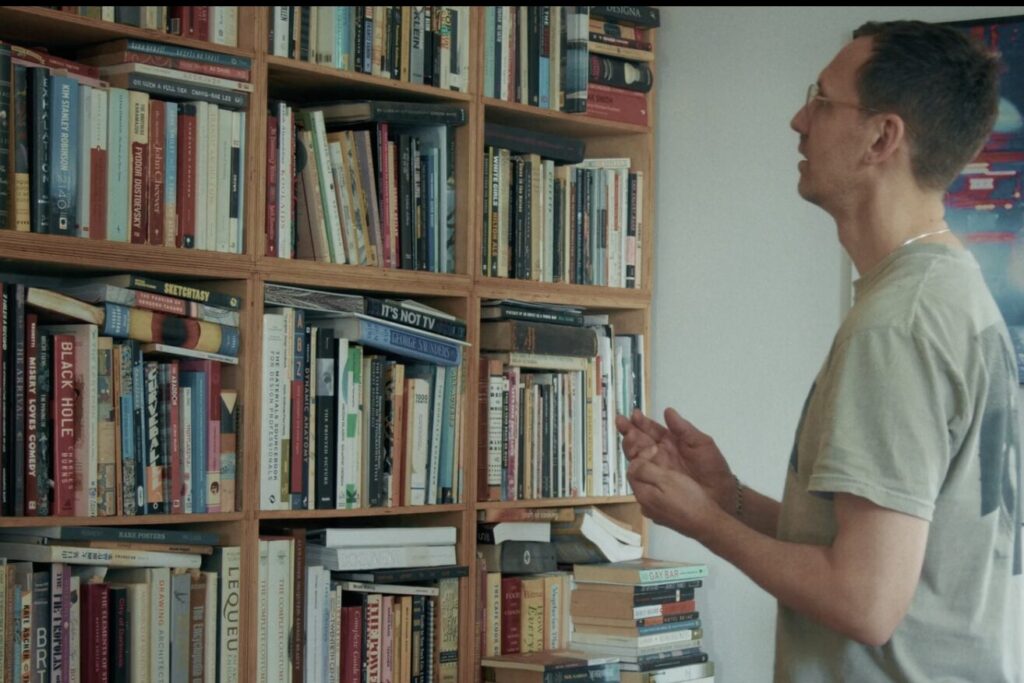
It’s a tasteful, well-cared for collection, and the caller tells Paul it’s been a part of his life during the 25 years he lived and worked in the city. He says he’s missing spring in New York, but spring where he’s living now, while it’s many hours away by air, “sounds pretty good, too”… though it’s not the same without his cat, Whole Foods, and going to work every day. There’s a soft Bach aria playing somewhere. As viewers, we’re waiting patiently to maybe learn why this phone person has left New York City so suddenly. Neither Paul nor the voice on the phone will tell us.
But a silent super does. In April of 2025, the caller packed his bags and fled New York City because he learned he was being targeted by U.S. Immigration and Customs Enforcement. Every American knows it by its common name, ICE. Were all 229 books Paul boxes up and mails, safely received?
James Paul Dallas has made what may well be the first short curated into a major Manhattan film festival, on one of the planet’s most crushing realities. The goal is seeing it up on screens large and small beyond Lincoln Center and MoMA. Division is an easy title to remember because it defines more than the books you separate into keepers versus those you’re forced to leave behind. The film speaks to the people you’re forced to leave behind, the city you’re forced to leave behind, the entire life you’re forced to leave behind. This has to be an early Oscar contender for Best Live Action Short.
Buckskin: Mars Verrone: 2026: United States: 17 minutes
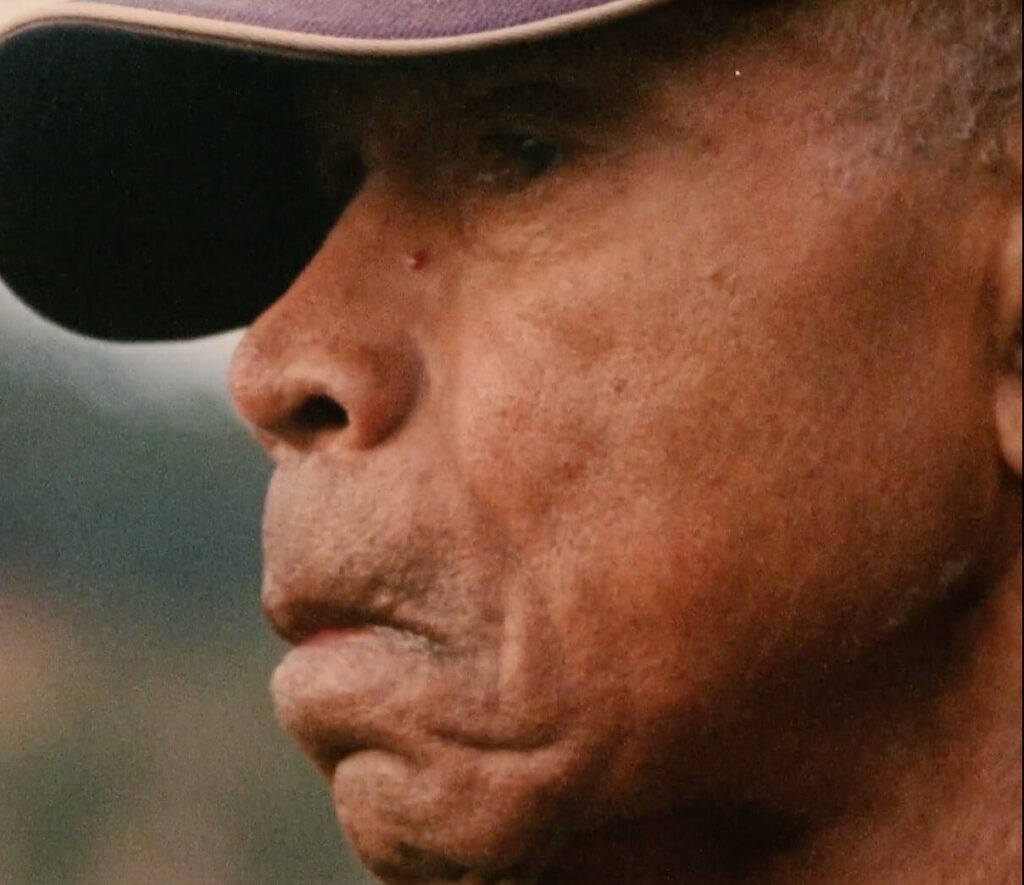
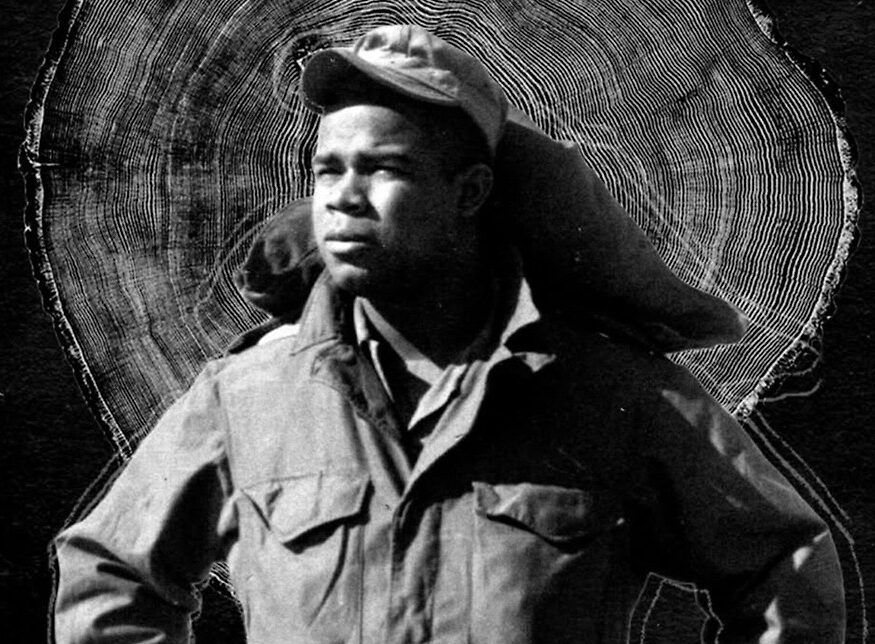
“My grandfather always reminded me of redwoods,” says Mars Verrone, the director, producer, editor, and music composer of this meditative documentary short. She filmed it in and around the forest acres in which her beloved subject spent 30 years as a research entomologist. “Someone’s gotta be first, I just loved being in the forest,” Dr. Carroll B. Williams, Jr (1929-2024) tells her.
Equipped with Bachelor, Master, and Ph.D. degrees in forestry (a first for an African American) from the University of Michigan, Williams was the first Black scientist hired by the U.S. Forest Service. Yale University’s environmental science department also made him their first Black faculty hire. He saw combat as a Marine in the Korean War. After returning to civilian life, Williams joined the University of California at Berkeley, mentoring many Black students. His field specialty was helping guard redwoods, his “masters of the world,” against beetles, budworms and other forest predators. He nicknamed himself “Buckskin” for his own skin color, and at age 94 makes no bones with granddaughter Mars about not being ready to go silently into some dark night.
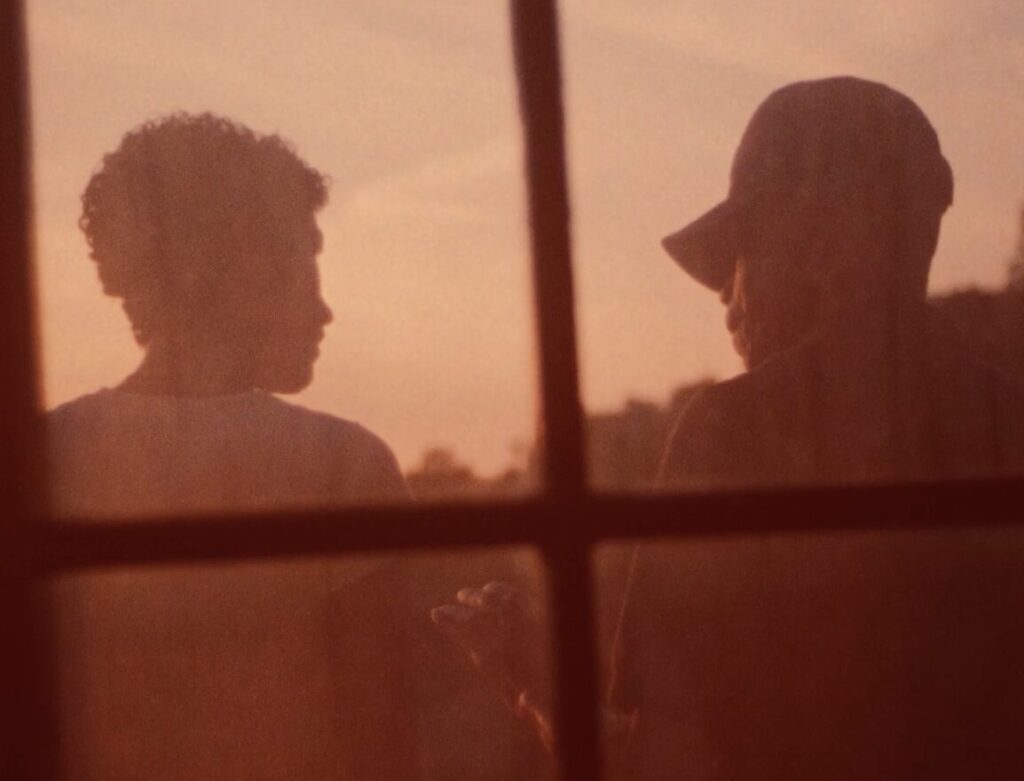
Buckskin is a summing-up documentary cine memoir, a familiar format in which an aging family member reflects on a life’s journey, passing on lessons to a younger generation. Robert Downey Sr. and Jr. (Sr.) and Sarah Polley (Stories We Tell) have given us admirable feature-length cine memoirs. Mars Verrone does it here in a trim, tidy 17 minutes. There’s a quiet rage in this gentleman, expressed in a solemn lecture note of his that she selects: “Poor people in general and Black and third world peoples specifically are seriously impacted by degraded environments and mismanaged natural resources in the United States and throughout the world.”
Veronne knows she’s championing a unique, one-of-a-kind outdoorsman and master forester. She braids snapshots of Williams at various ages, popping on images lickity-split, against slow, dreamy views of insects meandering up and down treebark. Her film image edges suddenly flame and flare. Her music is distinctly other-worldly. Veronne does her own sound recording, too, and you can feel the joy she’s investing in this glorious tribute to her pioneer grandad. There’s one hell of a lot of life in those silent redwoods.
The Prophet: Ique Langa: 2026: Mozambique, South Africa, Qutar: 94 minutes
It seems a lifetime since cinephiles sat down and seriously discussed Ingmar Bergman’s movies. You may recall Bergman’s severe, unyielding Swedish masterpieces challenging the existence of God, as well as “the God that failed” in the lives of clergy. But the vital religious films most moviegoers remember are the ones that visualized mighty suffering in mighty ways — God’s punishment raining a deluge of frogs all over a marquee cast in Paul Thomas Anderson’s Magnolia… Ethan Hawke’s failing upstate New York minister wrapping himself in barbed wire in Paul Schrader’s First Reformed… a bloodied Willem Dafoe as Jesus, nailed to the cross in Martin Scorsese’s The Last Temptation of Christ.
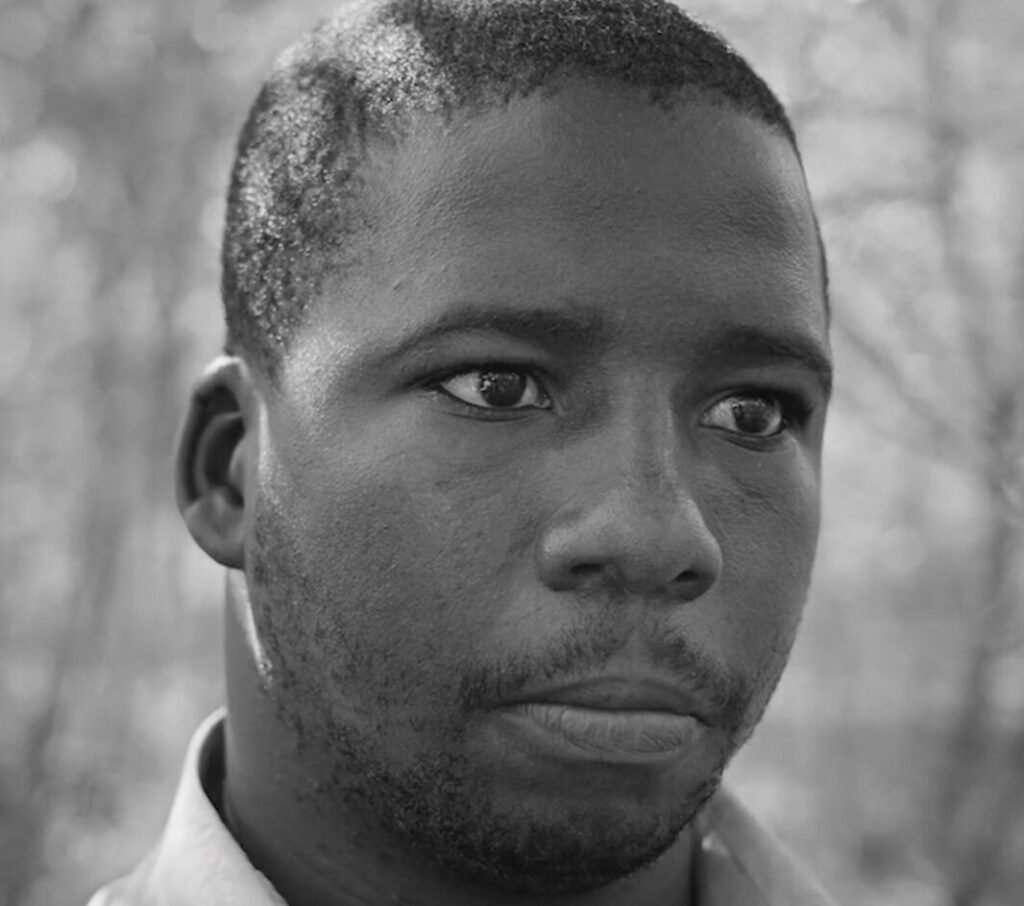
Who’d make a first feature film on a rural Black pastor’s faith crisis in a Martinique village, with a non-professional cast? Would any art theaters outside Martinique play it? Would anyone outside Martinique go to see it? The Prophet is the sleeper drama of this fest, a simple, elegant feat of South African storytelling that took almost nine years to complete. It was worth the wait.
Pastor Heider (Admiro De Laura Munguambe) and his wife Helena (Nora Nhancale) live in a humble home surrounded by fields. They’re expecting their first child, which Helena eagerly awaits. But something is amiss with her husband. He’s acquired a stutter in preaching to a diminished congregation of the elderly in an African dialect, though he’s fluent whenr speaking Portuguese with his wife. He laments he can’t swim. He makes a conscious decision to walk a long distance through open country to visit a conjure woman in a hut. A man endlessly sweeping away dirt from her entrance bids him in. The pastor’s eyes lock with the woman’s eyes. bright with that fatalistic passion and promise that defines every femme fatale in cinematic history. End of scene. We don’t know what happens in her hut.
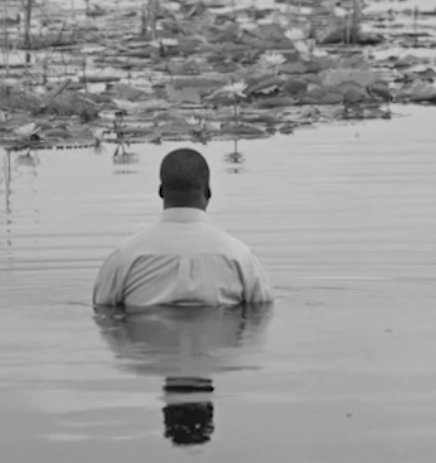
Days later the pastor takes a long time getting dressed while his wife sleeps, and then makes his way out into a river, wading deeper and deeper until he sinks under. We can’t tell whether he’s abandoned his faith in God, or his sleeping wife and their unborn child. What if he’s just forcing himself to learn to swim? Writer/director Langa has any number of conundrums ready for any 2026 viewer whose faith in a higher power is being sorely tested every day.
Langa told The Hollywood Reporter he shot his movie in Manjacaze, the village his dad grew up in. He mentions that the number of houses of worship there is on the rise. “in Mozambique, we have a belief that when someone we love passes, they become a spirit, and then eventually they become an ancestor. They go through their own journey.” Langa mentions Carl Dreyer and Robert Bresson — two directors whose stripped-to-the-bone transcendental movies have long been studied — as influences. But the motion picture The Prophet adheres to most closely is Pier Pasolini’s The Gospel According to St. Matthew, made in 1964. Pasolini cast a local nonprofessional in the lead role, just as Langa does here with the commanding and deeply persuasive Munguambe, an inspired find. Nearly all cast members are Manjacaze locals.The Prophet is fundamental, back-to-basics cinema that’s never gone out of fashion, because it was never in fashion to begin with.
Before reviewing this festival’s most memorable narrative drama, we pause to remember another ND/NF selection six years ago that was never shown.
On Friday afternoon, March 13, 2020, ND/NF finished screening the first of two scheduled weeks of features to press and industry at MoMA. The final picture that day was Gu Xiaogang’s two and a half hour debut feature, Dwelling in the Fuchun Mountains, named after a revered 14th century Chinese scroll painting. The movie is a gorgeous multi-story family drama set and shot in locations along the banks of the Yangtze River around the city of Fuyan (the director’s home town), and follows the adventures of four brothers. Dwelling is a disarmingly beautiful Chinese fairy tale, with the Yangtze its perfect winter / spring / summer / fall backdrop.
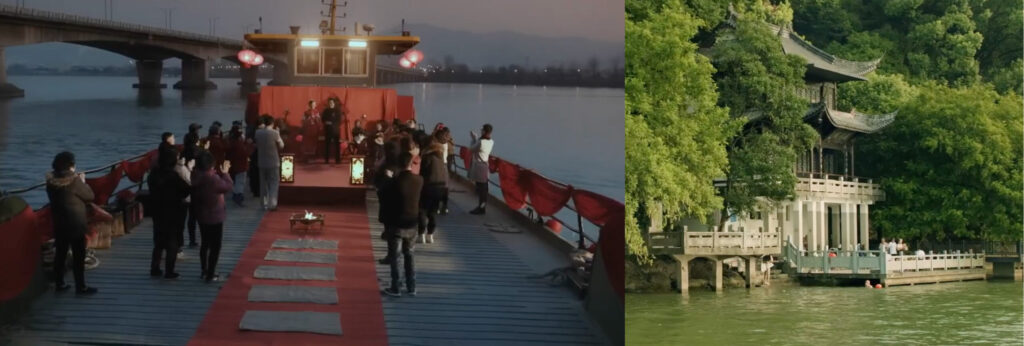
But the Lincoln Center press corp was hurried out of MoMA that Friday afternoon by anxious security guards, because MoMA was closing early. Something about a growing outbreak of an odd disease that might have migrated from China, known as COVID. How strange, we said, thinking we’d be back on Monday for a second week of ND/NF screenings. Nope — the museum and Lincoln Center, like other city institutions and much of New York City, was rapidly shutting down. Nine months later, the ND/NF festival was resurrected, online, and duly reviewed, But all the high-falutin’ doings of Dwelling somehow got lost in the shuffle and never made it back to even small home screens. Gu Xiaogang’s Dwelling, six years later, is an ND/NF orphan, still waiting for its first commercial showing in Manhattan.
Panda: Xinyang Zhang: 2026: Singapore, Hang Kong: 146 minutes
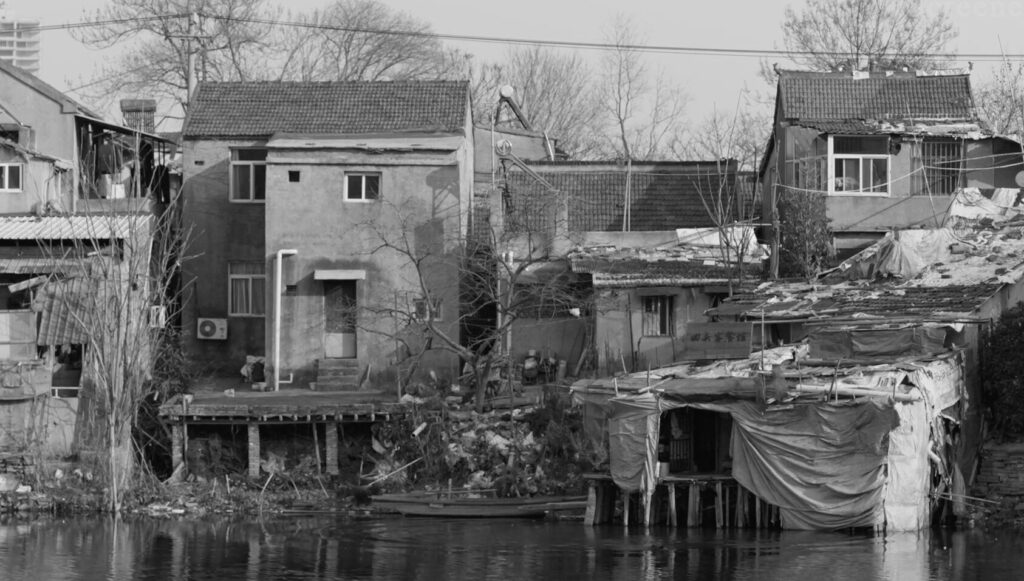
On a foggy dull dawn, the two-decker Yangtze riverboat chugs into its dock at Nanjing, discharging hundreds of commuters on foot, bikes and motorbikes. Most are dressed simply like working people everywhere, and every one is masked up — a grim reminder that the one documentary scene in Xinyang Zhang’s black-and-white debut feature was probably filmed early in the pandemic. Its original title in Chinese translates to Treatise on Cold Damage and Miscellaneous Diseases. Panda isa little more audience-friendly.
In the local market off the waterfront, merchandise vendors are opening up their stalls, and fights are already breaking out over who can set up where. Back in the harbor, a Coast Guard cutter prowls for potential morning suicides off the Yangtze River bridge. Alert pedestrians have already pried one determined chap off a railing. Good samaritans observe that it’s hard for common people to see how the river, like life, bends, that for some it’s 800 obstacles and a free morgue. This is a community where cranes knock down what’s left of ancient buildings, and a falling-apart shack on polluted water proudly names itself the Return Customer Restaurant.
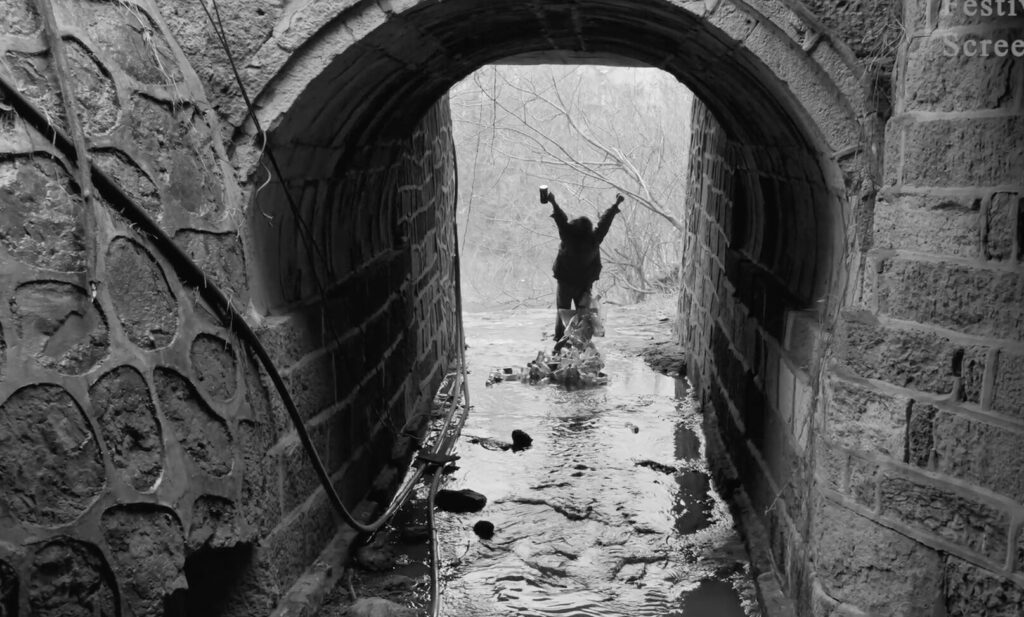
Panda is a two and a half hour journey along the dark side of China’s longest river, an immersion into nightmare art that’s as unsteadying and unpredictable as Dwelling in the Fuchun Mountains was colorful and mannered. Writer/director/co-producer and co-editor Zhang positions it as “an exploration of ‘Chineseness’” that merges Chinese life with magical realism. Panda was the only Chinese film in the Independent and Visionary Berlinale Forum. It’s a deep dive into the lower depths of Chinese culture, and be assured it’s a bumpy but exhilarating voyage in rough seas.
Among the characters weaving their way through the debris are a young market vendor (Jiahe Lyn) who’s having issues with her dad, and an older poet (played by the director) who’s trying to locate the dog who’s bitten off the tip of his finger. There’s a couple who find a life-size mannequin made up like a fabled princess, which they try to carry home, The character you’ll remember longest (he’s also the loudest) is a brash vagabond who brings to mind a young Toshiro Mifune swaggering and hopping around in samurai movies. This Chinese river rat, played by a gleefully ferocious Han Chen, bills himself a “Dragon-taming artist and Taoist immortal.” He sleeps in abandoned junkyard cars and lugs around a noisy trail of discarded bottles and cans tied together, mimicking a dragon’s tail.
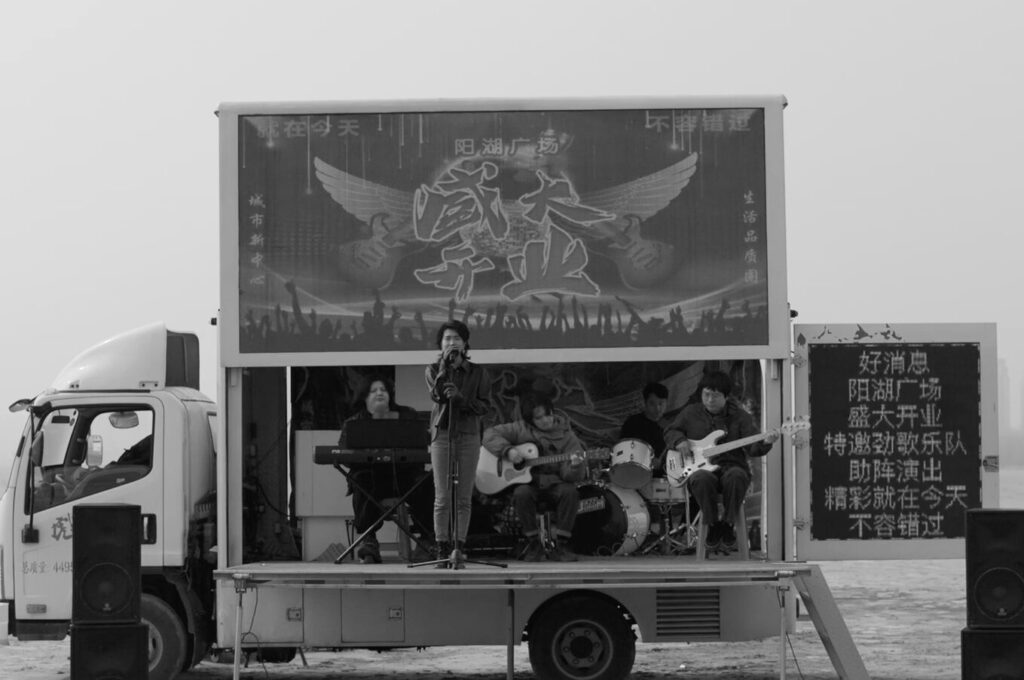
The centerpiece scenes in Panda occur when the Dragon man turns up to watch a touring black metal band, Deep Mountains, playing an open-air gig by the river. He gets in the face of Liu Qiang, the band’s lead vocalist, and demands to join in. He’s pretty good, too, which is about when director Zhang springs another surprise, popping on fully costumed dancers (see photo) in full color, in front of the black-and-white locals watching the band flail away. Liu the vocalist’s not happy about having their touring truck seized by the authorities, and the band doesn’t even have a rehearsal space. Naturally their new Dragon pal leads them to a cozy underground sewer drain, where they can play loud enough to wake the dead.

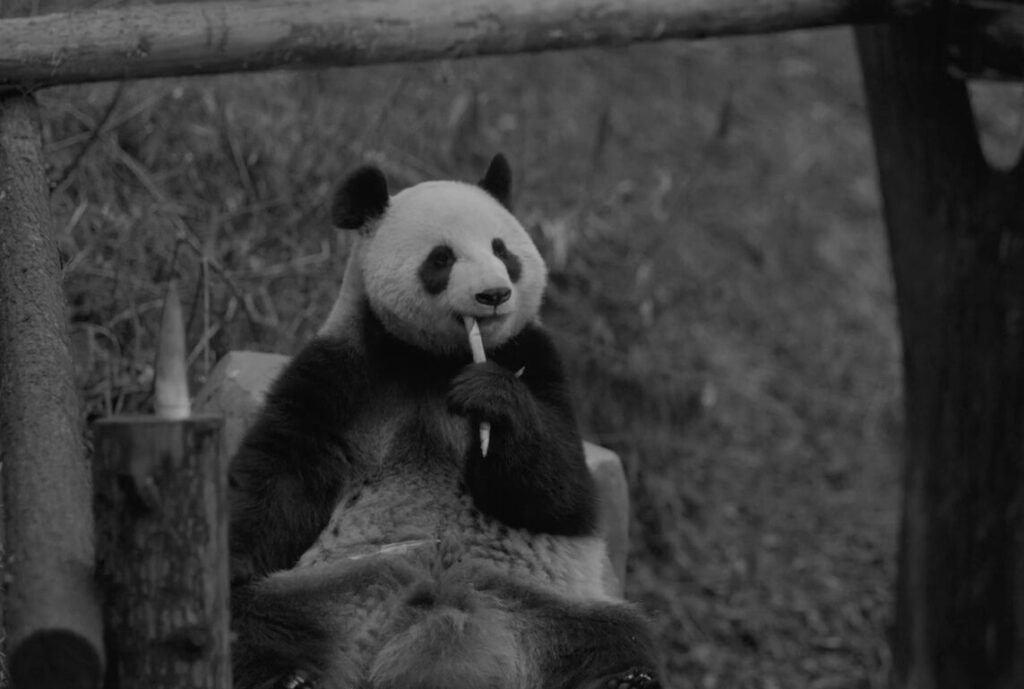
About this time you’re wondering when the panda of the title is going to turn up, and sure enough, Li He does, and naturally Li He’s a talking poet panda. Spouting adaptations of verse from the legendary Xin Oigi, the bear offers Panda’s overriding philosophy: “Fairies, not height, give life to a mountain… A dragon, not depth, gives rivers their soul.” You just don’t find movies like this anywhere but ND/NF.
This concludes critic’s choices. Watch for Brokaw’s picks in Film at Lincoln Center’s Italian Open Roads festival, May 28-June 4.
Regions: New York