
New York Film Festival Sept 25 – Oct 16
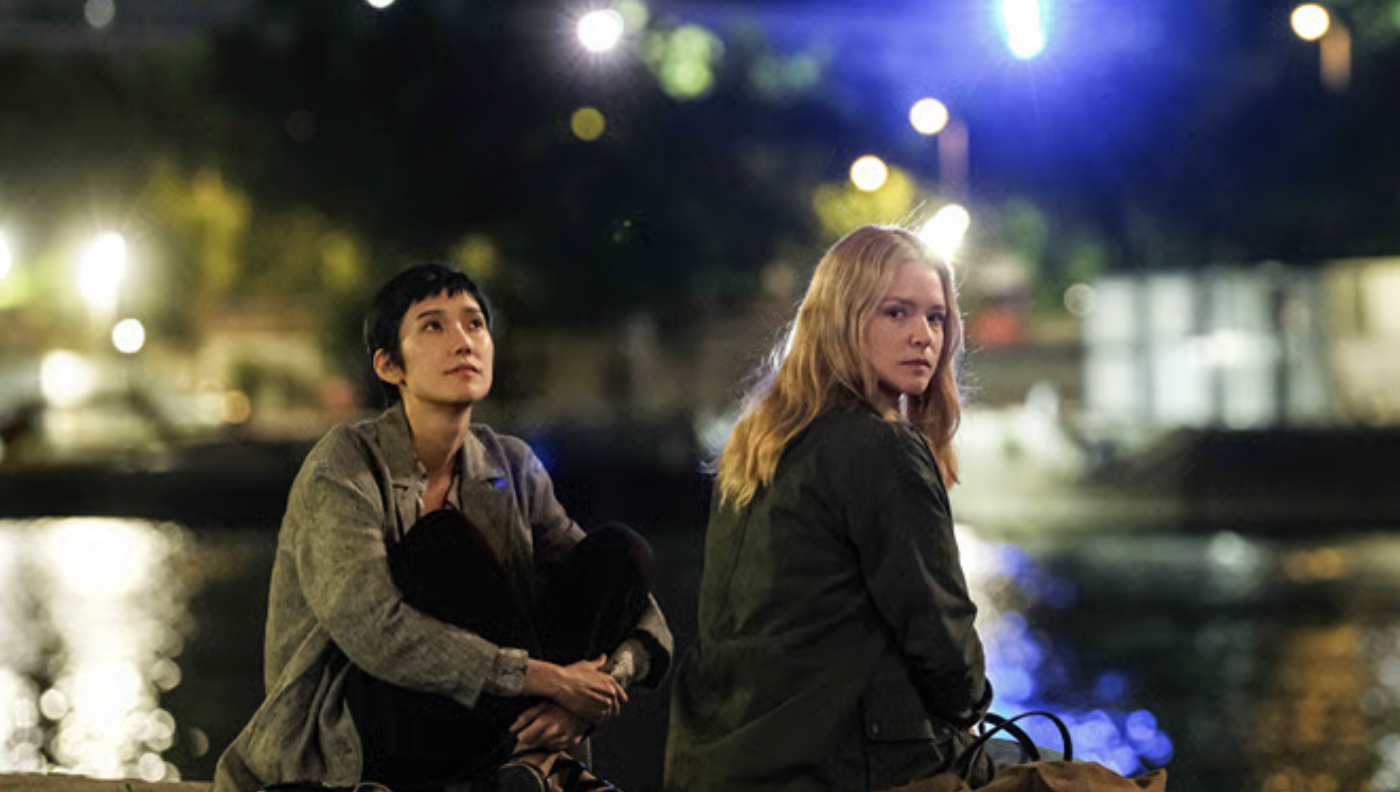
In a metropolis up to its ears in film fests, NYFF remains head and shoulders above the rest
As a launch site for over 100 dramas, documentaries and shorts, the New York Film Festival has built up a healthy immunity against sudden climate change, COVID, traffic gridlocks, higher ticket prices, home viewing, competing festivals, and even the crushing news of Paramount’s owners gobbling up Warner Brothers along with CBS News and CNN for a mere $111 billion. NYFF survives all, attracts a wide diversity of viewers, and amidst over 30 fests in the city and its boroughs (most neighborhood-centric), remains the Iron Horse of NYC cinema festivals.
What’s its secret? Three introductory voices in this year’s 92 page, 4-color program spell it out: NYFF’s Artistic Director Dennis Lim says “You could take any cross section of the Main Slate and come away with a vivid picture of what our present looks, sounds and feels like.” Daniel Battsek, President of Film at Lincoln Center, states “This year’s lineup of 119 films from 46 countries showcases cinema as a global art form, introducing audiences to new worlds, experiences and perspectives.” And Rafael Espinal, Commissioner of The Mayor’s Office of Media and Entertainment, notes “NYFF is a place where filmmakers bring their boldest work, audiences discover new voices, and New York City becomes part of the conversation around where film is going next.”

NYFF tucks in free bonuses to anyone interested in film. Manhattan cinephiles thrive on no-cost NYFF talks/roundtables, and this 64th starred marquee artists who generously gave their time and shared their experience. Ava DuVernay (14th) addressed art’s ability to effect change by always speaking truth to power. Valeska Grisebach (The Dreamed Adventure) explored filmmaking in her dangerous world of mob bosses in Svilengrad, a volatile Turkish town. Andrew Haigh (A Long Winter) and Ira Sachs (The Man I Love) reflected on queer love in period settings including 1990’s New Queer Cinema. Alain Gomis (Dao) with Arie and Chuko Esiri (Clarissa) spoke of the deeply conflicting legacies of colonialism in Nigeria and Lagos.
Over in Roundtable panel/discussions, casting directors Markus Schleinzer (Rose) and Allison Estrin (A Statement) revealed the intricacies of the casting art, now recognized with its own Oscar. Film editors Ted Fendt (Foreign Travel) plus Anne de Mare and Lynn True (Once Upon A Time In Harlem) shared their craft with Jeffrey Wolf, ACE. Scholar/critic Erika Balsom interviewed a panel of alternative filmmakers on the state of cinema at the margins. Film Comment editors Devika Girish and Clinton Krute sifted through the sensuality and desire of fest selections The Devils, The Drift, At Night, and The Unknown. Girish and Krute also moderated a film critics’ panel on the pictures of this fest. Plus the fifth NYFF Trivia Night gave moviegoers chances to win tickets to this Fest. Finally, during a three day workshop of FLC’s Artists and Critics Academies Programs, Filmmaker Stacey Markus led early-career filmmakers in immersive sessions with established film and industry leaders teaching how to craft a movie. A two day FLC Critics Academy led by Girish and Cllinton did much the same thing with beginning critics.
Positive film reviews count. Here are your critic’s eight favorites in his 64th NYFF:
All Of A Sudden: Ryūsuke Hamaguchi: 2026: France, Japan, Germany, Belgium: 196 minutes
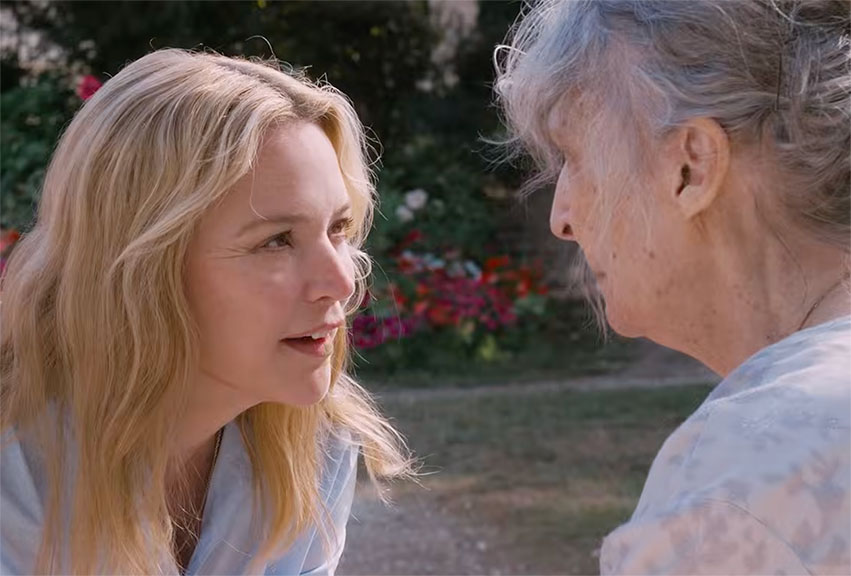
Every aging New Yorker (this writer is 88) is critically aware of two health care truths in today’s Manhattan: more doctors are abandoning Medicare and AARP to become concierge MDs offering personalized attention paid entirely by the patient. And top tier nursing homes like the Alzheimer/dementia Paris facility run by Virginie Efira in All of a Sudden would likely run $20,000 a month in NYC. These are two of many essential reasons to make your way to Hamaguchi’s game-changing drama starting Nov. 25 at both the Walter Reade Theater uptown, and Film Forum downtown.
Efira, a Lincoln Center favorite and repeated critic’s choice (All to Play For, Other People’s Children, Revoir Paris, Madeleine Collins), may be next in line to succeed Isabelle Huppert as the first lady of French cinema. As Marie-Lou, an elder care director here, she’s a tireless, chain-smoking workaholic who speaks in whole paragraphs and urges staff to move into the facility’s campus lodgings so they can be available 24/7. The singular health regimen she recommends, Humanitude, emphasizes gaze (eye contact), speech (repeat everything), touch (gentle), and especially verticality—insisting patients walk even with the risk of falling. The staff pushback in her underfunded franchise operation is acute. Her control administrator warns her she’s burning out. Marie-Lou needs a pal and finds one in a young Japanese theater director with stage 4 cancer (a luminous Tao Okamoto), who may die “all of a sudden”—and the women bond (both speak Japanese) through much of the film’s three-plus hours.
Manhattanites may scoff that this utopian Humanitude exists only in assisted living and nursing homes few New Yorkers will ever afford. But this persuasive master director (Drive My Car) and his co-writer, Léa Le Dimna, make the promise of affordable luxury care beyond the big screen. Efira and All of a Sudden join Kathleeen Chalfant in Familiar Touch, Julianne Moore in Still Alice, and Julie Christie in Away From Her as the defining Alzheimer/dementia dramas of our time.
Fatherland: Paweł Pawlikowski: 2026: Poland, Germany, Italy, France: 82 minutes
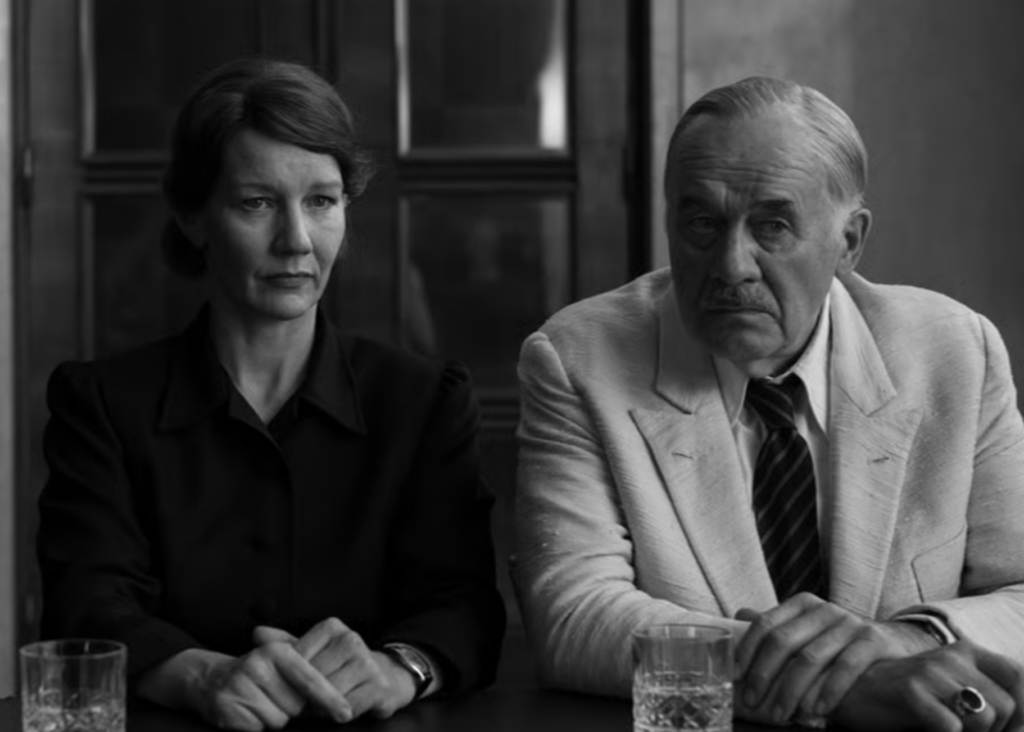
This is the third critic’s choice feature in Pawlikowski’s post-World War II trilogy included in past NYFF and New York Jewish Film Festivals. Ida (2012) centered on an orphaned initiate in a 1960s convent in Poland, who discovers she’s not Catholic but Jewish. Cold War (2018) asked whether a musician and his singer/dancer partner (reminiscent of Pawlikowski’s mother) could find happiness touring the post-War German countryside as Communism rises all around them. Fatherland, shot in the director’s same somber, black-and-white, 4:3 small screen format, is a portrait of Thomas Mann, the Nobel Prize winning author (The Magic Mountain, Death in Venice). Mann’s wartime ideology was clearly anti-Fascist, and he’d become popular with radio audiences for his lectures calling out the Nazi war machine. Acted by the magnificent Hanns Zischler (a veteran of Godard as well as Spielberg films), Mann is traveling in a fancy Buick from 1949 Frankfurt to Weimar in his last years, accompanied by his daughter Erika (Sandra Hüller, ever-expanding her screen portfolio since Anatomy Of A Fall). Erika was a writer/journalist/anti-fascist who’s clearly exasperated by her father’s aloof and compromised speeches that subtly attempt to soften, forgive or even ignore Germany’s role in the war. Her brother Klaus (August Diehl), seen only in the picture’s opening scene, is permanently embittered by his father’s dismissal of him as a gay, failed drug addict. Pawlikowski and co-writer Henk Handloegten have thus fashioned a dramatic (and classic) father/child standoff that gives Fatherland its dramatic heft and contemporary relevance. Music of the era—including John Coltrane— played an important role in Ida and Cold War, and here it’s Bach’s “Jusu, Joy of Man’s Desiring,” used as a possible bridge to reconciliation between Thomas and Erika. Fatherland (even the title has its own built-in irony) is a picture worth viewing and debating in a time where parents are often at ideological and political odds with their own children. Both Film Forum and Film at Lincoln Center will show it starting October 23.
Possible Love: Lee Chang-dong: 2026: South Korea: 164 minutes
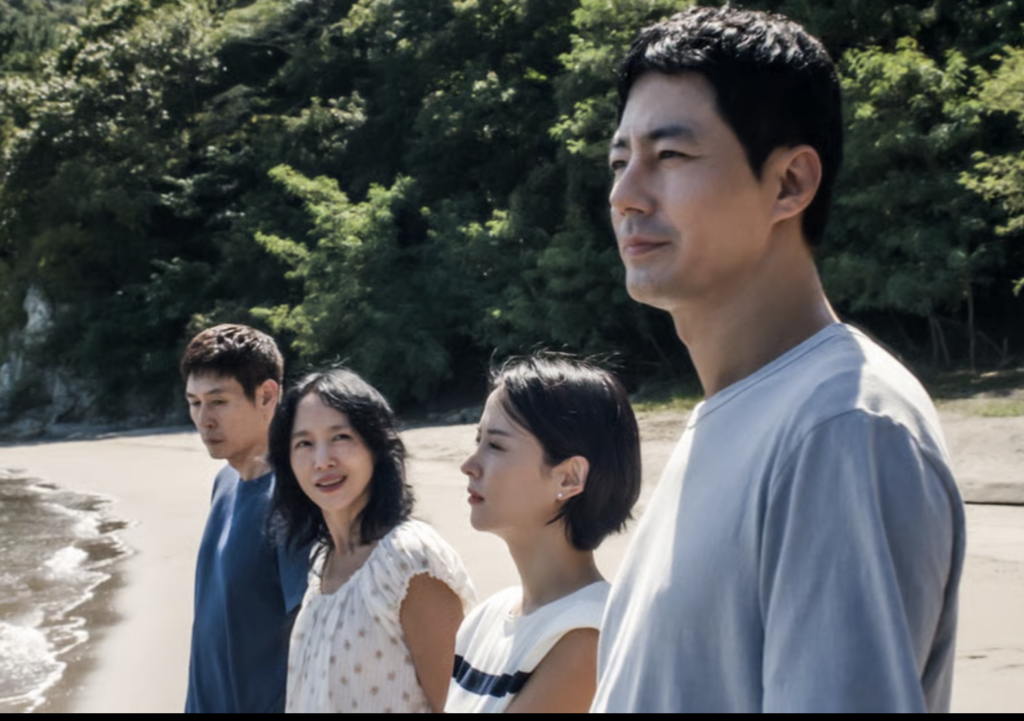
The burning question in this intensely absorbing Netflix-distributed drama is aimed at every documentary filmmaker: how independent should a director be from one’s subject? Sure sounds like a head-scratcher for Netflix subscribers, doesn’t it? Imagine a wealthy upper class couple (Jeon Do-yeon and Sul Kyung-gu, she a documentarian, he a corporate hoo-hah) friendly with a working class couple (Zo In-sung and Cho Yeo-jeong, she a factory worker, he a laid-off union member, who’s suffered a severe beating from an army of union busters). The working couple are both on a slippery slope with alcohol, and each may be an unreliable narrator, yet both agree to show-and-tell their lives for an educational video their well-to-do host says she’s shooting for educational purposes. The subjects should have sensed what they’re being dragged into. The flashback scene of union workers under attack by a repressive company is as harrowing a staged chaos as anything in this festival. And it’s a warmup for what follows when the working husband explodes, pouring out his lifetime of anguish and anger on camera. Lee has built impressive fest chops (Secret Sunshine, Burning) and with his co-writer Jungmi Oh has fashioned a stark and painful portrait of how relations between haves and have-nots can fracture when a movie camera comes between them. Netflix, always with an eye peeled for Oscars, gets that Possible Love may not be just for moviemakers.
Bitter Christmas: Pedro Almodóvar: 2026: Spain: 111 minutes
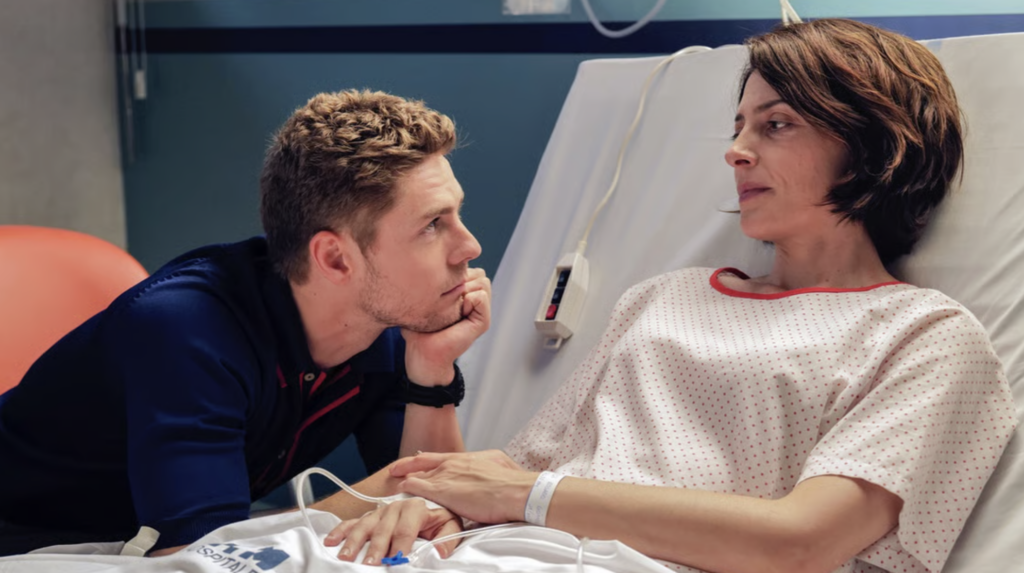
Possible Love isn’t the only drama of the season to poke and probe indie filmmaking with a scalpel. In Bitter Christmas, Almodóvar deep dives into a director’s life burdened with migraines and panic attacks. Elsa (Bárbara Lennie, dangerously combustable) made two movies that tanked but found their fan niches in midnight retrospectives. Mourning her mom’s passing, Elsa’s reduced to directing underwear commercials featuring her loyal firefighter husband (a terrific Patrick Criado) who has a five alarm side hustle as a male stripper. But as it turns out, their adventures —and this is where Bitter Christmas is consistently tricky—are all an invention of another, more successful writer/director, Raúl (Leonardo Sbaraglia). We see Raul from the beginning, typing away on the movie we’re watching unfold. Is Raúl a stand-in for Almodóvar? Well, who else is moving these characters (and many others) around like chess pieces in a game we’re barely keeping up with. The most pushback against Raúl’s cruelties to his creations comes from his 20 year assistant, Mónica (Aitana Sánchez-Gijón), who calls him an alcoholic and a vampire. It’s true Raúl drains the life of Elsa as well as her friend Patricia (Victoria Luengo) and a traumatized young mother, Natalia (Milena Smit). Yet Almodóvar’s art manages to exceed Raúl’s—this stylish, gender-fluid, rat-a-tat-tat puzzle is kind of a high (not surprising given all the prescription tranquilizers Elsa keeps popping). Bitter Christmas is indeed bitter, but it’s a generous gift—if at times an overdose—for every filmmaker who’s ever made a movie nobody went to see.
The Debut : Jesse Eisenberg : 2026: US: 105 minutes
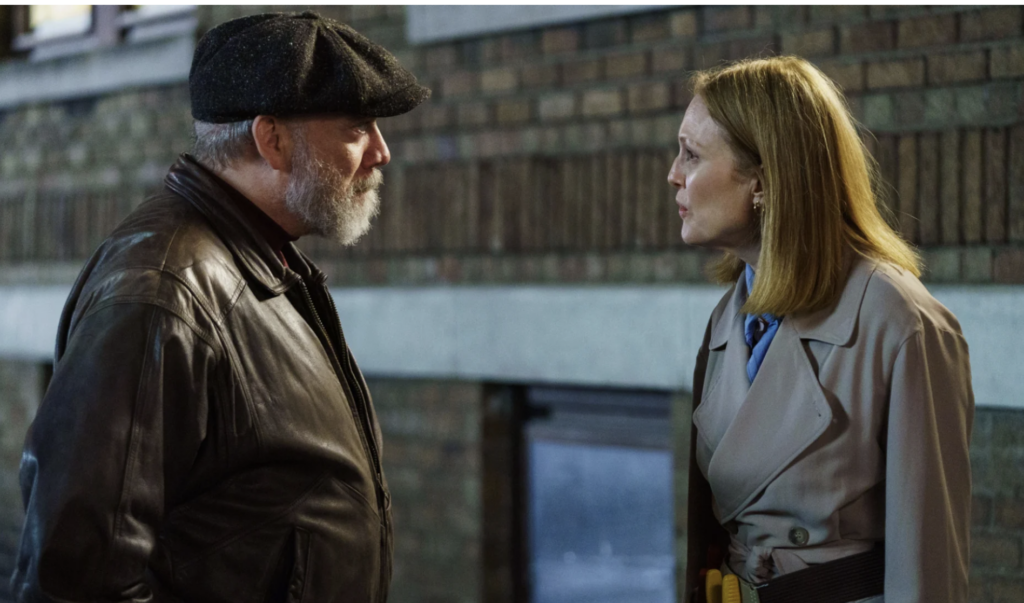
Was there ever a sweet spot in a NYFF this sweet? We’re back in 1990, and Julianne Moore plays Mona, a bored and neglected New Jersey mom and homemaker, trying out for a local musical at the Brook Arts Center. The show, “Nosy Neighbors,” is about affordable housing (ahem) in Manhattan. It has 13 songs and lyrics by (the film’s writer/director) Jesse Eisenberg, who’s also a peppy cast member. Mona auditions for the key role of the building super. So does an experienced actress played by no less than Bernadette Peters, who’s a shoo-in for the signature tune, “The City May Have Chewed Me Up (But Hasn’t Spit Me Out).” But when Peters drops out in rehearsals, Mona—who can’t act or sing worth beans (but was the only other tryout)—gets the role. And so it becomes community theater director Paul Giametti’s thankless task to turn Mona into a Bernadette-size giant of the stage. And, amazingly, he does—Eisenberg’s nimble writing and helming of his sophomore feature ease “Nosy Neighbors” into a vignetted portrait of workaday Manhattanites with plumbing problems. His show is not unlike Eve Mirriam’s 1971 “Inner City”: it’s a safe, amiable platform for Moore and Giametti as student and teacher to build on. And build they do, with bewilderment, anger, fury, rage, starts, stops, resentment and understanding and growth. It’s probably not too early to predict Julianne Moore may be nominated for a second Oscar for playing, of all things, a debuting actress.
A Long Winter: Andrew Haigh: 2026: Canada: 117 minutes
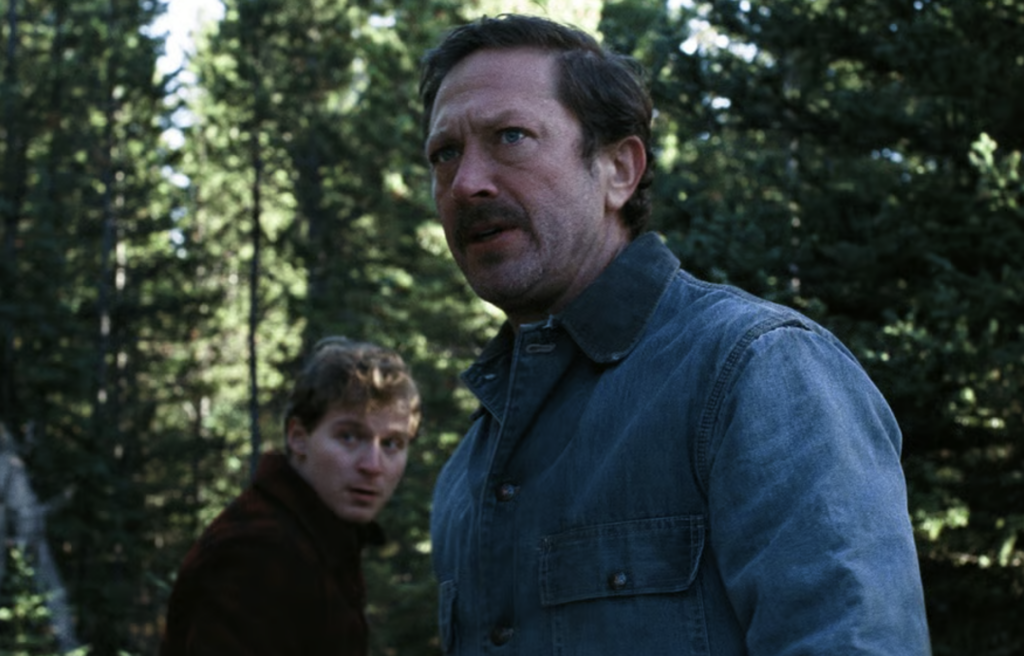
Ebon Moss-Bachrach is one of indie cinema’s most underrated actors, a character wizard on a par with Willem Dafoe and William H. Macy. Here it’s 1951 and Ebon’s a taciturn, withdrawn dad married to an alcoholic mom (Caitríona Balfe). They’re stuck in a remote Ontario mountain cabin in the dead of winter. Their two grown sons (Fred Heckinger and Kit Connor) don’t do much beyond raising chickens and rabbits, and talk about enlisting in the Korean War. One brother is sending covert signals of a repressed homosexuality. There’s a whisper of a town down the road with a movie theater that gave up after showing The Snake Pit in 1948. And then mom wanders off drunk as a skunk into a blizzard and disappears. Based on a novella by Colm Tóibín and shot in below-freezing temperatures in thigh-deep snow and raging snowstorms, A Long Winter invites favorable comparison with Bela Tarr’s The Turin Horse, in which a father and daughter are similarly trapped in an equally brutalizing primal wilderness. A defining scene here that shows the brothers frantically digging their car out of a ditch it’s slipped into, has to have been belly-busting labor for writer/director Haigh and his cast and crew. Ontario’s Fortress Mountain doesn’t feel it’s going to collapse like the recent catastrophe in Nepal, but the drama’s enveloping intensity (aided by Paul Haslinger’s pinpoint ominous music score) will remind viewers that nature can be as treacherous as it is unforgiving.
Gone to Earth (The Wild Heart): Michael Powell, Emeric Pressburger: 1952: UK: 111 minutes
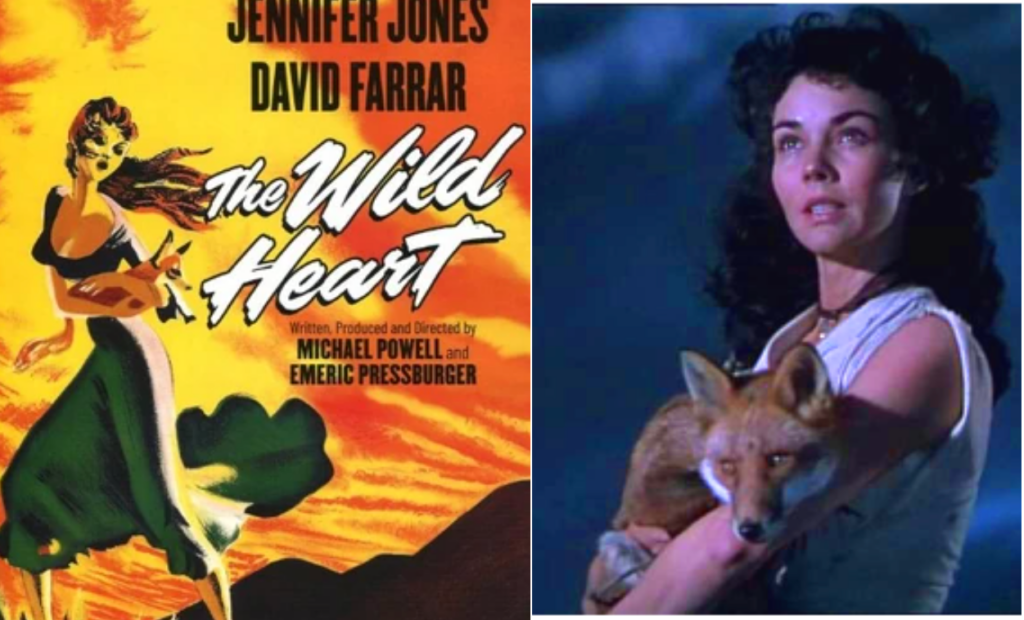
At the age of 14, your critic watched his first coming-of-age British screen drama, falling hopelessly in love with 33-year-old Jennifer Jones. The opulent 1952 production, retitled The Wild Heart in its American release and produced by Jones’s mogul husband, David O. Selznick, casts her as Hazel, the daughter of a rural coffin maker on the 1897 English countryside. Hazel seems more drawn to her pet fox than the local clergyman (Cyril Cusack) who she dutifully weds, all the while drawn to a brutish squire (David Farrar in his best Vincent Price mode), who promptly beds this self-described “bad girl.” Hazel is Powell/Presburger’s first femme fatale. Borrowing a Hollywood noir tradition, Jones stops the action for a ‘specialty number’ vocal, as Ida Lupino, Dorothy Lamour and Lizabeth Scott did in 1940 films noir. The Wild Heart was shot in ravishing 3-strip Technicolor by DP ace Christopher Challis (with the legendary Freddie Francis as camera operator), and the picture’s negative suffered severe cuts by Selznick, here nearly all restored under the masterful supervision of Thelma Schoonmaker and exec producer Martin Scorsese, whose Made in England honored the versatile and endlessly inventive Powell/Pressburger team. It’s a win-win for all, a stunning tribute to the Oscar-winning Jennifer Jones, and an apt revival credit for Rolex, the festival’s signature deep-pockets sponsor.
Godzilla Minus Zero: Takashi Yamazaki: 2026: Japan: 135 minutes

One night in 1979, outside the Walter Reade theater where Mad Max was debuting, this viewer confronted Joanne Koch, the late, beloved executive director of the Film Society of Lincoln Center. “How could you haul this ear-splitting junk-heap onto Manhattan’s premier art cinema screen?” he demanded. Koch never blinked but answered with steely reserve, “Manhattan and the Walter Reade are ready for Mad Max, even if you aren’t.” And of course, Ms. Koch was right. She’d no doubt welcome Godzilla Minus Zero with the same open arms, though it’s taken much longer to get a Godzilla movie onto a Lincoln Center festival screen. The secret sauces of this Godzilla edition are more overt and stark Hiroshima elements embedded in its story. The new twist is a lead scientist, Kanji Murakami (a vigorous Min Tanaka) who survived the atomic bomb America dropped on Hiroshima’s 350,000 residents (killing about one third of the population). The scientist imagines Godzilla exacting revenge against America, hinted at in a glimpse of how the humongous monster might take apart the Statue of Liberty. Warner Brothers asked fest reviewers not to reveal this and eight other separate plot points. But the dire Hiroshima links (including a grieving child at the close), are legitimate reasons for NYFF’s initial interest in the towering big guy with the spiky spines that light up like mammoth pinball machines. The shock-and-awe visual effects and Dolby Atmos soundscape are even more Oscar-worthy than its Oscar-winning predecessor, Godzilla Minus One, three years ago. This edition in the unending franchise is both thrillingly scary and far more historically provoking. Who’d imagine the screen’s most colossal monster earning equal program status with NYFF’s Opening Night, Centerpiece and Closing Night dramas and doc? It’s taken Godzilla a whole lot longer to make it into NYFF than Mad Max, but if ages ago you touted Raymond Burr, a favorite noir bad guy in the 40s, keeping company with the original Godzilla, you’ll likely agree it was worth the wait.
This concludes critic’s choices. Watch for Brokaw’s picks in upcoming Fall/Winter Manhattan fests.
Regions: New York City